
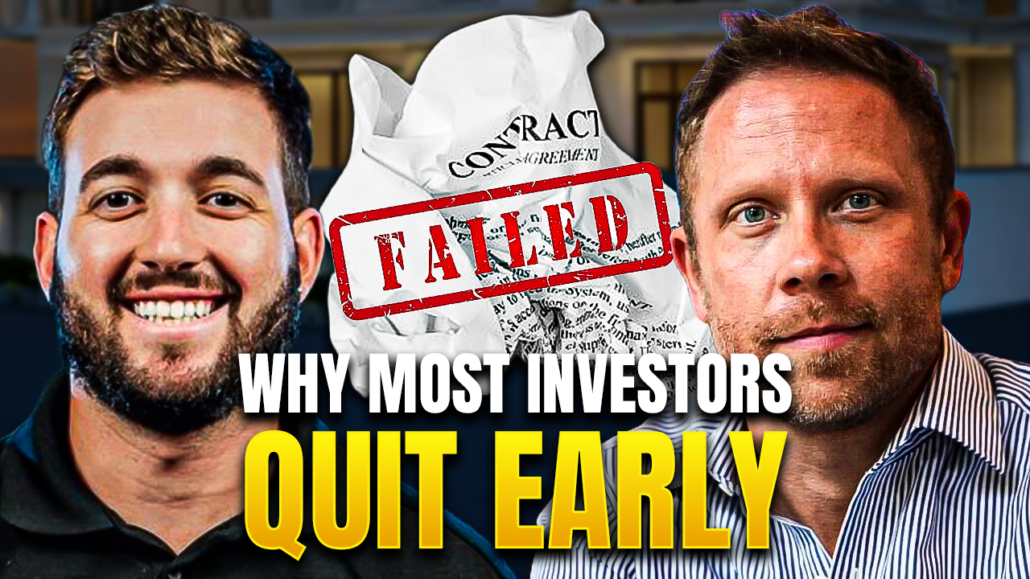
#109 Make Money in Bad Markets | Logan Fulmer
Make Money in Bad Markets | Logan Fulmer breaks down how investors can still win when the market is soft, competition is up, and margins are tight. Logan shares how he went from oil field money and early land plays to building a business around distressed property acquisition—buying deals with title defects, ownership disputes, liens, and lawsuits that most investors won’t touch. He explains why going direct-to-seller is where the real money is, how to balance speed with risk, and what separates top operators from everyone else when the market turns.
===================================================
If you want to learn how to run your business in 5 hours or less…. Go to https://www.5HourBusiness.com
Subscribe to my YouTube channel:  / @tonyjavierbiz
And if you’re into flying and want to follow my Aviation journey, check out my other YouTube channel at / @tonyjaviertv
===================================================
If you want to dominate your Real Estate Market with TV commercials, go here: https://www.ClaimMyMarket.com
If you want to connect with me and my network, go to https://tonyjavier.com/connect
If you want to check out Tony’s Real Estate Resources and Vendors go to https://www.TonyJavier.com/resources
===================================================
Show Transcription:
I’m trying to make millions and millions and millions of dollars a year in money that goes in my pocket. Not just gross revenue, but that is not going to be easy, dude. Go get hired somewhere down at the Genealogy Association downtown or the archives, go down there and get your salary. But if you’re here to make money, you better get on this thing. This is where the money is. It is not in that black box right there. It’s not a license to be stupid. Risk matters, and we can make mistakes like when we’re buying assets. I still try to evaluate a lot of our risk, but one of my business partners is CPA, and then there’s me. I don’t make decisions based on money usually. I don’t make decisions on what other people think. I make decisions about what I want to do when I get up this day. What you’re looking at right in front of you every day affects where you’re going to go more than any external decision.
Noah Kesslin (00:44):
What’s going on guys, today we have Logan. Logan, thank you so much for coming on the podcast. I know you’re doing a ton of deals in Texas. I kind of want to get into how you got into real estate in the first place. What brought you into this niche?
Logan Fulmer (00:58):
I was tired of being poor. I grew up in middle class family, but my dad had financial troubles at some point and it was just a mess, man, I didn’t like that. I remember we got moved out of our house when I was getting off the school bus. The constable came and moved us out, so my dad didn’t pay a seller finance note to his house that my grandma made the down payment for, and that was a shitty time and that stuck with me forever. So between that and a few other things growing up, I thought, man, I got a shot at chance to make that not ever happen to me anymore. And I went to oilfield, got a pretty good job, was earning a lot of money, but I realized I’ve got to do something more. This money, I’m going to work for the same amount of dollars the rest of my life and I’m not really going to get anywhere.
Logan Fulmer (01:37):
I didn’t feel like. So I started looking at real estate. I’ve known people that had done it. I always heard about people getting rich doing it. Really the way most of them do it is they build a lot of wealth through a business and then deploy it in real estate. So it multiplies. I guess. I went the hard route and earned my money in real estate, but at the time I was just earning a bunch of money in oil field, living in a man camp, saving it all after taxes or most of it. And I went to San Antonio, Texas, which is outside of the oil fields. It was the closest big city where I was working a lot and I started buying these little vacant lots and I was concerned I’d inherited about a million dollars early on in my life when I was not clean and sober.
Logan Fulmer (02:08):
So needless to say that money didn’t last. You’d be shocked how quick it could go, but at this point I didn’t want to lose more money, man. I was working hard for it. I wanted to grow it and I started buying these little vacant lots in downtown San Antonio, five 10 grand a piece, and it was perfect timing. I couldn’t have forecast any better, but the market exploded. They became worth massive multiples. One of’em I bought for 10 grand put $10,000 worth of stuff like surveys, and I went and changed the zoning and sold it for nearly $200,000. So there’s a bunch of those that started to stack up. I was like, oh crap. And I got laid off in the oil field. At that point I realized, okay, am I going to be a real estate guy or am I going to be an oil field guy? Well, you know the answer to that now.
Noah Kesslin (02:46):
That’s awesome. What was your life like before investing? I know you talked about not being sober, working in the oil field. What’s the main, obviously financial freedom I’m assuming, but what was the main difference in life quality before coming into real estate to now?
Logan Fulmer (03:05):
Well, I’ll take it two steps back. Before I got in the oil field, I was not clean and sober. So I’m living in this house that I bought with inherited money, shooting heroin every day. That’s what I did for nearly 10 years. So before that, I had a job. I lost the job because of that. That was my life. I had money in the bank, seven, eight, $900 every Saturday so I could get myself through the week and I was just kind of living and it was bad. I mean, anyway, at that point I got cleaned up and after I’d been to rehab about my third time, I finally, I think it took, went to the oil field, worked with a buddy of mine from college, and I mean that was really good place in my life because of where I’ve come from was so bad at that point.
Logan Fulmer (03:39):
I’m clean, I’m sober, I’m working, I’m getting confidence, stability, people were giving me all these new responsibilities. I’m earning money. I feel like a real man now I’m an adult. I’m a grownup and I’m like 25 or 27. But frankly, my quality of life hasn’t changed a lot since that time. My freedom has remarkably changed, but once you get to making a couple hundred thousand dollars a year, that’s the biggest jump. You’re not worried about paying the bills anymore. You can save a little money no matter what. That’s the biggest part. You’re not checking your bank account every time you’re buying something at the gas station. That’s the biggest change to me. Beyond that, I mean today our company does tens of millions of dollars every single year. We’ve got 150 to 170 units of inventory at all times or turning. I don’t need money for the rest of my life at this point, but that just allows me to focus on what I care about. I enjoy coaching. I enjoy doing all these unique projects. I enjoy running this thing. I got four kids, I spent a lot of time with them. I have an awesome wife. The freedom part was really cool. So I live in a big ass fucking house and got a couple cars, but that doesn’t change how I feel every day. The freedom does.
Noah Kesslin (04:44):
Yeah, that’s awesome. First of all, proud of you. I know getting clean isn’t easy at all, especially when you’re so far deep in it.
Logan Fulmer (04:52):
The junkies always die, dude. They go to jail or die. I made it.
Noah Kesslin (04:55):
Yeah, no, I’m proud of you for that. For sure. Of course. What does your business look like today? So going from that to the oil field, kind of explained to the people listening, like where is it now?
Logan Fulmer (05:07):
So there are three legs to this business, but the Golden Goose is a distressed property acquisition. Basically we’re buying property with ownership, title problems, disputes among owners, lawsuits against the property, liens, judgements, breaks in the title chains, just stuff that can’t sell through title insurance and then has title defects. That’s what we buy. We clean up the problems and resell them for pretty good profits. We’ve got a commercial portfolio that’s got office industrial and a little bit of industrial land. It’s like warehousing, flex space, stuff like that. And then we’ve got a land development line, so a couple thousand lots that are development from Dallas to Texas or from Dallas to Austin. We develop and title and then we sell ’em to the big public builders and they go build houses on ’em. So there’s three distinct lines in this business. The other two, the cashflow portfolio and the land development are, I’m not very active in those. I mean I’ve funded and participated, but there are people that run those. A partner of mine runs ’em. I have a significant ownership share, but the distressed property, that’s what happens here every day. We have 25 people in this office. We have three lawyers, private investigative team that are retired FBI agents. We go find people that nobody can find and we fix the problems that nobody can fix and we get to earn the money that nobody usually gets to earn.
Noah Kesslin (06:12):
That’s awesome. And then I know you have a coaching piece as well if you want to touch on that piece a little bit.
Logan Fulmer (06:19):
I don’t know how I left that part out. So we coach two semesters a year. I figured out how to get what took us 10 years to build Distill into a four month program, and our blind survey from last semester had 80% success rate from the blind respondents. Our job is to help them find not the most complicated deals that we execute on all the time, but our job is to get the low hanging fruit, teach them how to find those, solve the problems and make money because most of ’em are coming from the land space, the house flipping space, the wholesaling space, and those space are getting tough right now. Compressed margins, fewer buyers, more competition, and they’re just like, God, I got to fix this business. Well, why don’t you not fix that business? Why don’t you come do this business? You’ve had a great success right there.
Tony Javier (06:59):
Want to get motivated sellers that nobody knows about, introducing 10 x tv. If you want to create credibility in your market, find deals that nobody else knows about and crush your competition, you need to check into TV commercials. It is the new buzz in the real estate investing industry since we introduced it several years ago. I’ve been using TV commercials myself for the last 12 years and it’s absolutely crushed it. So if you want to learn how to get on TV and to do something that little to no people are doing right now, go to claim my market.com. Again, that’s claim my market.com. We usually only work with two investors per market. So if you’re interested, reach out to us and book a call to see if you can claim your market before anybody else does. Now back to the show.
Noah Kesslin (07:41):
So I know you started out with buying the vacant lots, but were you ever in that wholesale fix and flip realm and switch to what you’re doing now or how did you get from buying the lots to where you’re at now?
Logan Fulmer (07:54):
After I was buying those vacant lots, I resold a couple of ’em and brought back surprisingly big profits and I thought, whoa, let me get more of these. But there was a couple year period where I was going to the foreclosure auctions and buying property and listing money MLS. This was early on enough in this last economic cycle that there was enough delta there that was worth it. So I do that. I was flipping a couple houses during those times. I was buying property from wholesalers. I didn’t like house flipping cause it was just the pain and I just hated the process and the chasing people around and contractors and paint colors and shit like that. I hated it. But what I loved is buying property foreclosure auction and listing on MLS next week for a profit. That was a no brainer. And then I would also build relationships with wholesalers and wholesaling was really getting going at that time and the experienced wholesalers I couldn’t do much deals with because I’d have to flip their houses to make money. The inexperienced ones would misprice and sell to me or they would price it in a way where they left enough juice meat on the bone for me and then I’d just buy it from them, pay their fee and go put it on MLS. That’s a lot of where that went. But over time, as we did those, I started to find the best ones were buying these properties from owners who couldn’t solve their problems or didn’t know what to do for pennies and then going through all the bullshit to fix it, the legal issues, the curative issues, and you still have normally significant margin there.
Noah Kesslin (09:16):
What was the main problem that you were trying to solve within the business? To go from buying from wholesalers and putting it on the middle s to finding the distress, the ones that nobody wants to touch, how’d you get from one to the other?
Logan Fulmer (09:32):
I think the problem was I would call wholesalers all day long, get a couple of good deals, but I wanted way more deals than they could give me. And also my business was dependent on other people. It was dependent on people getting deals, people being willing to price it how I wanted it. And at that point I’m like, also at the time though, I’m going to buying from the auction. Another thing that was happening is hedge funds were starting to get involved. Interest rates were a little more acceptable, so investors were getting more aggressive. The internet was changing the way investors learned quickly, so it really changed the entire market. Long story short, the bid prices were going up and I would drive these properties before the auction to make sure this one’s vacant, this one’s nice, I’ll pay this much for this one. I’d make all my notes. And I remember one time we’d get one house, two houses, three houses every month, sometimes no houses, but usually we get something and two months in a row we got no houses and I was so pissed. I’m like, dude, I need some more income. That next month when I was driving around to the houses, I thought, why don’t I just get out and knock? Going direct to seller was a big change. I got one of those deals that month and I didn’t have to bid it. I offered ’em five grand above their debt, let ’em live there for a couple months because I got such a good deal. And then when they left I just put it on MLS. And when that happened I thought, I need to sole source, go direct. And then also in that time, some of the old vacant lots that I bought, I was reselling. They had some title problems that I didn’t know about and to fix ’em. And as I fixed ’em, I learned it’s not rocket science. So with those things happening in tandem, the best deals I did in 2017 were all title problems and at that point I was like, I think I know what I need to do going forward.
Noah Kesslin (11:09):
I love it. I love it. Why do you think so many investors overlook the messed up title space and trying to clear them versus just backing out or canceling contract
Logan Fulmer (11:21):
Because it’s a pain in the butt. They cannot go to YouTube and see how to wholesale or they can go to YouTube and see how wholesale, they can’t go to YouTube and see how to fix extreme tile problems.
Logan Fulmer (11:32):
Hard to get figured out. I had to go and pay lawyers by the hour and ask ’em questions and they could never tell me what it was going to cost to fix it, but I’d bounce questions off ’em, go try it, come back and bounce questions, go try it, pay the bill Along the way. I was willing to take that risk because it’s just how my personality was. So along that way I would discover the Saul. But a lot of people say that’s a lot of work. I’m like, well, so is having a business that doesn’t work and so is being poor and so is being unsatisfied with yourself. That’s a lot of work too.
Noah Kesslin (12:05):
Yeah. What do you think the most common misconception is from the difference between wholesaling or fix and flip or whatever on that part to the messed up title
Logan Fulmer (12:18):
That it’s too hard. Everybody thinks it’s too hard. They get to watch our crazy videos on YouTube and Instagram and we tell the crazy stories, but I try to be real clear so people miss this, don’t miss this. 50 to 70% of our deals aren’t the mega complicated ones. They’re pretty darn low hanging fruit. A couple owners who don’t get along, sometimes a single owner that just has a judgment or lien to get dealt with. We really focus on those because we get more margin from those than the mega complicated ones. Well, lemme say it differently. You get more dollar per hour. The mega complicated ones, we have to have massive margins. We did one that sold two months ago that we bought for $20,000, 7,000 out of pocket, sold it for a million in 17 days, and then we had to pay a $400,000 tax bill and another 20 something thousand to the seller and the net profit was like $409,000. Those are the high risk. High work is a very complicated title issue, but shit only took 17 days of our time worth it.
Noah Kesslin (13:13):
Yeah, that’s awesome. Cool. Now, quick word from our sponsor. This episode is sponsored by 10 X tv, the secret weapon behind some of the most successful real estate investors in the country. Here’s the deal, most investors are stuck cold calling, texting or spending hours chasing low quality leads. But the smart ones, they’re using TV commercials to flip the script with 10 X TV motivated sellers are calling them already warmed up, already trusting them because they’ve seen them on tv. It’s high credibility, high leverage, and way less hustle. This isn’t a theory. The founder of 10 X TV has been a real estate investor for the past 24 years and TV has been his number one lead source since starting almost 14 years ago. Want to find out if your market’s available, go to 10 x tv.co, no M for a free marketing audit and see how TV can become your unfair advantage. Again, that’s 10 x tv.co. Logan, I know you talked about going direct to seller and really harping on that, changing the game. What are some of the key strategies you’ve seen with going direct to seller that is maybe different from buying from a wholesaler or any other means of not going direct to seller?
Logan Fulmer (14:34):
You’re going to get the best deal that way usually, but it takes a little more time. So a lot of people like to use big data and dollars and fancy CRMs and the challenge here, they’re trying to make the job easier and make no mistake, look, I’m trying to make millions and millions and of dollars a year in money that goes in my pocket, not just gross revenue, but that is not going to be easy. Dude, everybody’s gotten used to all these tools and stuff, and I don’t want to say this to deter people. There are easy deals out there, we know how to find those, but you still have to put in a lot of work. We don’t use incredibly complicated CRM. We use Salesforce one of the best. We have a lot of great processes. We have data scrapers, all that crap, but when it comes down to calling people, we call people from our cell phones and we have a manual skip trace tool.
Logan Fulmer (15:20):
We do not use a dialer. The information comes from the CRM to our phone. We do put in the work and we’ve tried every which way to use technology to get better at that. Maybe we’re not good enough at technology, but we are definitely by far the most sophisticated and volumetric person or company that does what we do in the United States. I’ve never seen another like it at all. So maybe there’s somebody better, they’re hiding in a hole somewhere and they don’t talk to anybody, but I can’t find a faster way to speed this up so people have to do the work. That’s the tough part. But if your goals aren’t that ambitious, then fire up a dialer, grab some data and see if you can get some low hanging fruit, maybe make a couple wholesale deals. You can replace your day job like that and go on and be happy, but if you have big ambition, you’re going to have to do a little work and going direct to seller is how you’re going to make the bigger money, but it is going to take a little more work.
Noah Kesslin (16:08):
What do you see, mistake wise, easiest mistakes that you think could be super easily avoided that investors make that you see on a daily basis? From the coaching aspect,
Logan Fulmer (16:22):
Too much research. These deals can be complicated. They can have a lot of owners, they’re going to have title problems, they’re can have stuff you got to find in the land records, the deed records, whatever. And some of these guys are afraid to get on the phone and they just dig into the deed records and when I build out this file, and that’s their excuse for doing the research, I pastor a man, guys, you’re digging around in those deed records I’m calling and I’m earning money while you’re researching. Is your job here to be a researcher? Go get hired somewhere down at the genealogy association downtown or the archives, go down there and get your salary, but if you’re here to make money, you better get on this thing. This is where the money is. It is not in that black box right there. So I tell people, the quicker you get that phone to ring, the quicker you’re going to get some money the quicker you’re going to get that bank account that dings. And that goes for people that are wholesaling or house fixing and sole sourcing too. That’s not just our business.
Noah Kesslin (17:15):
Yeah, I can definitely agree with that. What do you think separates similar topic, but what do you think separates the top operators from everyone else in your opinion?
Logan Fulmer (17:27):
There are two things. The ability to act quickly. The other thing, I know some incredibly smart people, some of my business partners have IQs probably significantly higher than mine, but I move quickly and I make decisions and I’m not afraid to go try something and it not work and try again. And there are guys that are just analytic and and their figure and they’re doing all this and they’re going to set it all up just right. They’re still sharpening their pencil about the right market. And I’m like, I don’t know. I’m over here at closing getting a cashier’s check. Dude, I called him. He said he’d do it. I pieced it together. I didn’t know the answer to the problems by the time he signed, but by the time we went to closing, I figured him out. So some of the wealthiest dudes I know are not the highest IQ at all.
Logan Fulmer (18:14):
The other part is sometimes folks are so bright that they can’t take a risk because they’re terrified of all those potential risks out there. Well, you know what? Go out there and take a stab at it, mess some things up, do a couple things, right, figure it out, but keep going and keep going fast. That’s the wealthiest people I see. I know a guy who sold his company for $400 million in a land deal with me right now. The dude’s pretty damn bright. I don’t want to take anything away from him, but the guy does not mess around, dude. He makes a decision. He goes forward and he’s got his good gut instinct has done well for him, but man, he can charge forward better than anybody I know to the tune of 400 million bucks.
Noah Kesslin (18:53):
I’ve never heard someone talk about it in that way because when I think about it, the bright people, they think of all the ways it could go wrong, whereas, I mean, I never went to college. I wouldn’t say I’m the highest IQ in most rooms, but I am not afraid to try it. So I can definitely see what you’re saying on that front of just, it’s almost like you turn a blind eye to what could go wrong and you’re like, nah, it’s not going to happen.
Logan Fulmer (19:22):
I want to be clear. It’s not a license to be stupid. Risk matters and we can make mistakes when we’re buying assets. I still try to evaluate a lot of our risk, but one of my business partners is CPA and then there’s me. He comes up with every single risk potential possible, wants to have a solution for it and plan it all out and have a lessons learned and all that. I look at all those same things and I decide are they going to sink us or not? And if some of this goes wrong, is it going to bankrupt the deal or are we going to at least break even and move on? He’s looking to have zero risk. I’m looking to take some on, because if you take zero risk, you’re going to miss a lot of deals. And part of the skill that I’ve bring to the partnership is I pushed him to grow and get farther than he ever would’ve. I personally believe on his own, but he also has taught me a lot about managing the risks so that I’m not quite as reckless as I was in the early days. So it’s a nice balance of shoot first, ask questions later, but don’t shoot the villager.
Noah Kesslin (20:18):
I love it. And you kind of touched on this earlier, but I kind of want to go back to it in a sense, the word success, everyone’s kind of got their own definition for it. Everyone strives for it differently, reaches for it differently, hustles for it differently. How do you define the word success and in your life, how do you chase it every single day and what would you tell other people that might not have the same ideal scenario as you but still want to chase for that?
Logan Fulmer (20:49):
Success looks different to everybody. For me, success has put me in the point in my life where I don’t do anything I don’t want to do anymore. I don’t make decisions based on money usually. I don’t make decisions on what other people think. I make decisions about what I want to do when I get up this day. To me that’s more important. I don’t need a helicopter. I can buy a plane. I don’t need a plane. I don’t need any of that stuff, dude. I want the complete freedom to do what I want to do, and I’m an independent man of everything else. That to me is the most important. Now it’s nice to have extra money and my wife wants that on me bag. Fuck it. You can have tier three. I don’t really care, but that’s not what it’s about and that’s easy for me to say that when I have some money today and when I didn’t have money, what drove me is the fear of being poor.
Logan Fulmer (21:28):
And interestingly enough, as I’ve gotten beyond that now, I’ve now understood that there’s still these pieces of my personality. This is a little deep one, here we go. But this is through the recovery process. I’ve learned how to dig deep. I learned that I’m still trying to prove to my dead dad that I’m good enough, and I know a lot of people are afraid to admit those things and it’s kind of scary, but that’s what I wake up and unfortunately that’s part of my personality. That’s okay. I love wanting to do this. That’s what drives me. Everybody’s got their own thing and I’m not going to be the guy that says, I do this all for my family. No, I love my family more than anything in the world, and they have a great support system from this, but I do this from some internal defect that I have. That’s why I’m hungry.
Noah Kesslin (22:13):
First off, I appreciate you being super deep and honest. I think a lot of people are like that. Even my father admits it now. He’s like, yeah, I do most of what I did and what I’ve done because he was the youngest child and so am I. I’m the youngest child. I saw my sister go to college and asked my parents for everything, and I was like, mom, I’m good. So yeah, I a hundred percent can see that. What do you think, kind of switching topics here, going back to what you’re seeing in real estate right now, you said earlier that wholesale fix and flip has gotten really challenging. It’s gotten really, a lot of people are in it. What do you think the biggest challenge in real estate is right now in the market? Currently,
Logan Fulmer (23:09):
The market’s soft and interest rates haven’t gotten low enough to motivate things. It, it’s a really complicated thing, but I try not to get too deep into it. The dummies of the world, which in my world I would call me that when it comes to sophistication about economy, I go look at the MLS days on market are way up, house prices are way down over time and inventory is built way up. That’s all I need to know. That’s what drives my whole damn business, which drives my whole life. I know that we’ve got to do a model that has plenty of room for safety, has the ability to carry assets longer than most people. So that’s why we don’t use a lot of debt. You got to get through that. You’ve got to be able to lower pricing a lot, and that’s what gets us through those trouble.
Logan Fulmer (23:51):
I could care less who’s a president today, although I have my own opinions, it doesn’t change how I behave in business. I think what you’re looking at right in front of you every day affects more than affects where you’re going to go more than any external decision. Even in shredded slaughtered markets, people are finding ways to make money and opportunity and doing okay. Now all boats rise with the tides. When the market’s hot, we all look better. But I don’t know, man. I mean the market’s messed up right now and I don’t know. I thought with our current administration up in Washington, I thought we were going to be having to have a pop and rocking economy right now. Well, it’s not happening. I don’t know what’s going to happen next, man. I don’t know either, but I know that we’re going to show up here. We’re going to continue to do something that works and if we have trouble with it, we’re going to pivot and keep going and we’re going to keep being happy about that and do good. That’s my best answer the market right now.
Noah Kesslin (24:45):
I love it. I love it. I want to challenge you with a question. So let’s say the business completely goes away. You’re going to start from scratch. I’ll give you all the knowledge that you’ve accumulated over the years. You can keep that, but the business itself goes away. All the deals you’re doing right now go away. The partnerships you have go away. You’re just on your own. What would you focus on first to rebuild?
Logan Fulmer (25:12):
Well, the good news is I built this the right way, so I got to clarify on your question, do I get to keep my brokerage accounts? Do I get to keep all my retained earnings and my cash that I have or does that go away with the business because that’s separate, that’s personal, that’s out of the business. Do I get to keep all that or not? If some, I’m going to live off interest for the rest of my life and I don’t give a fuck about all this work stuff,
Noah Kesslin (25:31):
Yeah, we’ll take the money away just because that’s kind of an easy answer for sure.
Logan Fulmer (25:35):
If I don’t get to rely on that, but that’s an important decision. People need to think about that as they’re growing. Do you need two Ferraris because you can afford it or do you need that phantom because you can afford it, or do you need to build your moat and protect yourself and your family? So if you have problems, that’s why I bring that up. Not to say look at me, but it’s because if you look in my parking lot, you don’t see nice cars, but not that kind of stuff. So that’s why I bring it up.
Logan Fulmer (25:59):
So I haven’t actually touched a real estate deal in many years. I mean, our office does it. I answer legal and strategic questions daily. Outside of that, I’m not talking to sellers. I’m not paying off taxes. I’m not doing that anymore, but I’m a hundred percent certain right now, if you toss me in a different city, living in an RV and gave me a budget of $1,500 a month to get by, I would get the delinquent tax list or the mortgage foreclosure list in that county. I would find the zip code that has the most, and I would go walk to all those houses one after the other and knock and make them offers.
Logan Fulmer (26:32):
I Know for a fact within, depending on the amount of resources I have, between seven and 14 days, someone would sign a contract with me. I would figure out who to sell it to within the next week or two. I bet within 30 days I could have 20 or $30,000 in my checking account, and then I would decide do I want to build all this again or not, but at least I can pay the bills for four or five months living cheap like this and let me figure it out.
Noah Kesslin (27:00):
I love it. I love it.
Logan Fulmer (27:02):
Remember what I said At this point, the money’s great to have for stability, but it’s not what creates happiness. Once you get enough of it, you do realize that it does fix problems, but it isn’t where your joy does come from, and I’ve now learned that through going by, going through it. So I ask myself, if I did sell off all this, what would be the next answer? But I build it all again, I don’t know, and everybody says, I’m going to build it, y’all rebuild. Maybe I would. Maybe I won’t. I don’t know.
Noah Kesslin (27:27):
I guess you wouldn’t know until you’re in the position for sure,
Logan Fulmer (27:32):
But I might well think my deceased dad and get back to work. We’ll see.
Noah Kesslin (27:36):
Yeah, I asked someone that same question the other day and he was like, well, to be honest with you, I wouldn’t do real estate again. He was like, I would do anything else, but I would put money into it, but I wouldn’t start the business again, and I was very intrigued by that answer.
Logan Fulmer (27:51):
What did you do in real estate?
Noah Kesslin (27:53):
What was that?
Logan Fulmer (27:53):
What did you do in real estate?
Noah Kesslin (27:55):
He’s a fix and flipper and
Logan Fulmer (27:57):
Yeah, that’s why he said that.
Noah Kesslin (27:58):
Yeah, fair enough. You’ve been very honest, very deep with us. I appreciate that. What would something people would be surprised to learn about you?
Logan Fulmer (28:09):
Dude, I’ve laid it all out there. I’ve gotten it in a while.
Noah Kesslin (28:11):
I know you’ve, anything new that we haven’t heard of?
Logan Fulmer (28:17):
Oh man. You’re going to make me think she, I don’t know, man. I run a couple miles every day. I got four kids. My wife’s first generation American. She moved here from Panama when she was nine. She’s got a Miami social security card. That’s where she got nationalized. We have a pretty mixed family when it comes to South Americans and Europeans. Gosh, I don’t know, man. I’m not of broad ideas.
Noah Kesslin (28:46):
I want to key into the running thing. A lot of people don’t like to run, myself included. I’ll run when I need to.
Logan Fulmer (28:53):
If the cops are chasing
Noah Kesslin (28:55):
Well, yeah, or if it’s included in a sport. I’m a big sports guy, but when it comes to running to run, what’s your motivation to run? Do you enjoy running or is it more of like I don’t, I know a lot of people that run a lot and they do it. They hate it, but then when they’re done with it, they’re like, wow, I accomplished. Do you genuinely enjoy running or what’s the
Logan Fulmer (29:17):
I don’t really love running. I dislike running less than I like sitting still. When I was a kid, I would ride my bike at 15 years old across town, like 10 miles, 15 miles. I just like to move, man, and that’s a good way to do it. I don’t know. I like it.
Noah Kesslin (29:32):
Awesome. Cool. Who do you think has been the biggest influence on you and your journey in real estate?
Logan Fulmer (29:39):
I have a couple of people. My wife, she’s been really, really supportive of all this stuff I want to do. She never says, no, don’t do it. She’s like, that’s the best idea. You’re going to be the greatest. Go do it.
Noah Kesslin (29:47):
That’s awesome.
Logan Fulmer (29:48):
And thank God it always works out. So far, my business partner Bill, we’re radically different personalities and we’ve been through ups and downs over the last 10 plus years doing this business. We’ve held it together. I’ve learned so much from him. I know he has from me. That’s a really neat thing. I love Dale Carnegie. I love one of his books, how To Win Friends and Influence People. That’s a big one. I love that. I don’t know. Those are good influences.
Noah Kesslin (30:16):
Awesome. I know you have a big event coming up in end of January. I’d love for you to kind of touch on that a little bit. Who is the right person to be there, who needs to be there, who could probably get some use out of it when it is, where it is, all that good stuff.
Logan Fulmer (30:34):
If you care about real estate at all, you should come. People that are having a hard time in their fix and flip business wholesaling, they’re making seller finance notes, mobile homes, man. I’ve had people leave apartment syndication businesses to come do this.
Logan Fulmer (30:49):
I hate to use the word event because it seems like one of those speaker events where all these people get up and tell you how good they are and try to sell their stuff. We’ve set it up from 8:00 AM to 6:00 PM as a full day training. We literally go through how I started the model, what it looks like, what a solo operator to a shop looks like, and then we’d go through acquisitions, research, finding people, making offers. I have two attorneys that speak on legal and litigation and then estate matters. We talk about dispo and then we talk about business running. You have a q and a panel at the end. These people are all for my operation. It’s not people from all over the industry just to get the crowd. It is us. We teach people what we do. It’s awesome. Anyway, it’s January 31st. It’s in Scottsdale, Arizona, and if you can’t make it in person, we also have a virtual option so you can watch it from wherever you like. It’s the same price. A pair of shoes, man, I don’t know. I had to make it any more reasonable or encouraging for people,
Noah Kesslin (31:47):
And it’s just a one day event or a two day event. Sorry, I missed that.
Logan Fulmer (31:50):
There are options. We have a VIP dinner the night before. We have a general admission. Then we have an entire day. That’s a smaller group for VIP the second day. We do have that. I encourage people, even if you like your real estate business, dude, pay the 500 bucks and show up because I promise you’ll walk away with at least something that will earn you multiples, that $500. You will question what it is you’re doing. Something will be better about your business and even if it’s not about directly real estate. I built a special thing and I’ve got an interesting perspective and said to my business partners, you’ll take business advice away from as well. By the way, I have Brad Lee speaking there for an hour before lunch. We have a really good lineup. Carlos Reyes, who’s a pretty prolific wholesaler, he is going to be part of the VIP event the second day. Those are the two outside people we have. Outside of that, it’s all us, man.
Noah Kesslin (32:37):
Awesome. I love it. Love it. Well, cool. Where can people learn more about you? Where can people find you? If someone is curious to learn more, where can they go?
Logan Fulmer (32:47):
I had send people to Facebook. My name Logan Fuller. You can see it here. Dump it into Facebook. It’s Logan Bentley, full on there. There’s a lot out there, man. We spent a lot effort going there. You can, oh, you know what? You can now go to YouTube. We have a fresh account. We’re about 10,000 subscribers. We’re starting to grow, but I have a podcast, dirty Deeds where we talk about the dirty real estate problems we fix. That’s where they need to go right there.
Noah Kesslin (33:11):
Awesome. Awesome. Love it. Well, Logan, thank you so much for taking the time. Thank you for coming on and look forward to seeing where this goes.
Logan Fulmer (33:19):
Yeah, yeah. You got it. I enjoyed it. Thanks.
Noah Kesslin (33:21):
Awesome.

