
#123 Automate Your Real Estate Ads | Michael Walsh
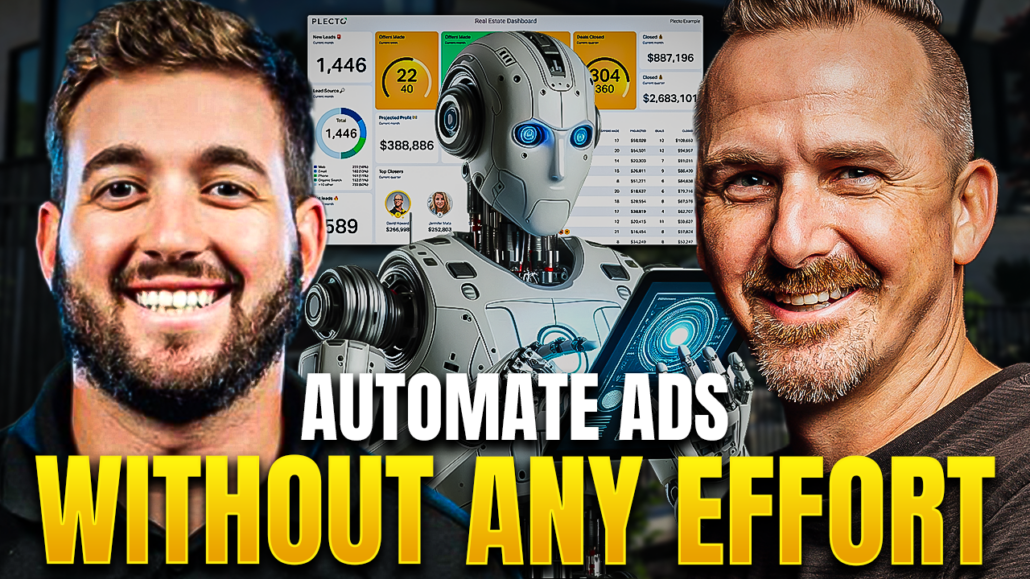
Automate Your Real Estate Ads | Michael Walsh explores how AI is transforming real estate marketing by simplifying campaign creation, automating optimization, and reducing the constant back-and-forth of traditional agencies. In this episode, Michael Walsh explains how his AI ads agent helps investors, agents, and wholesalers build high-converting creatives, launch ads across major platforms, and optimize campaigns daily using real-time data—while still maintaining full human control. The conversation covers Google vs. Facebook strategies, lowering cost per click through smarter keyword selection, the importance of speed-to-lead, and how AI calling can qualify inbound leads without replacing the human element. For anyone hesitant about implementing AI in their marketing, this episode breaks down how to use it strategically and responsibly to scale results.
===================================================
If you want to learn how to run your business in 5 hours or less…. Go to https://www.5HourBusiness.com
Subscribe to my YouTube channel:  / @tonyjavierbiz
And if you’re into flying and want to follow my Aviation journey, check out my other YouTube channel at / @tonyjaviertv
===================================================
If you want to dominate your Real Estate Market with TV commercials, go here: https://www.ClaimMyMarket.com
If you want to connect with me and my network, go to https://tonyjavier.com/connect
If you want to check out Tony’s Real Estate Resources and Vendors go to https://www.TonyJavier.com/resources
===================================================
Show Transcription:
Everything you fill out, all the information you fill out is all brought in by AI. Our AI optimizes daily, and that basically helped to save money, save time, save everything. You don’t even have to technically turn on the AI. You could just use it to do your creatives and let it run the ad. We always say, start with your brand. Let it know what your brand is, what your voice is, who you are. If you get that right, then you go to the next step. A couple things to really think about with Google is first off, you need to make sure that you’re not going after all the big keywords and just leaving the game there. Well, it depends on the AI that you’re using, but most of the times you give it rules. And the rule would be if you are asked if you’re AI, say yes. And here’s what your response is.
Noah Kesslin (00:46):
What’s going on, guys? Welcome back to the podcast. Michael, I know you’re doing a ton in the real estate marketing space, but I am curious how you got into real estate as a niche in the first place.
Michael Walsh (00:59):
Yeah, so I’ve been in marketing for just over 20 years now. I started out in productions, filming videos for nonprofits and creating more documentary style videos. And then I started rolling obviously into marketing from there and deeper marketing. And then about seven, eight years ago, I got into the real estate space because I was at an event speaking and I had somebody in the real estate space come up to me and start talking to me and they were coaching the space and they were asking me for help with their funnels and their ads and everything. And so I sat down, we talked about it. We fixed actually a problem right there and then for them. And he brought me on. And I’ve been in real estate ever since then.
Noah Kesslin (01:38):
Awesome. What was your life like before hopping into the real estate space?
Michael Walsh (01:44):
I mean, it was pretty good. We were doing a lot of fitness. Kind of funny. I feel like in marketing, if you’re in marketing at all, or if you ever hear somebody that was in marketing, there’s somewhere that they crossed the path of fitness along the way. Owned a fitness business, but it was literally my wife was running that business. I was starting to do more of the marketing side of stuff. And then COVID hit and we had to kind of pivot our fitness business a lot and it put a lot of stress on that business. And so I was really happy to have the real estate space because with COVID, as we know, the real estate space did not get shut down. And in fact, it became actually a really good thing during that time.
Noah Kesslin (02:22):
Awesome. And then what does your business look like today?
Michael Walsh (02:25):
Yeah. So today we actually have two focuses. We actually have an AI ads agent. And so as you guys know, AI is like the new buzz. So everybody’s trying to figure out how can I infuse it and do my business? And there’s a lot of promises in the AI space and there’s a lot of over promising and under delivering, I would say. Or there’s a lot of promises and you get in there and you’re like, oh my gosh, I got to build this agent from scratch. This is going to take me hours. So what we have is a already pre-built AI ads agent that can help investors, agents, wholesalers, lenders build their ads. So it helps them to create their ads, create their images, their videos, their copy. And then we’re connected directly through API to many of the big platforms like Facebook, Google, TikTok, YouTube, and all the others. And so you can literally just launch your ad that you’ve just built with AI into those spaces, whichever ones you want to launch to. You don’t ever have to get in those ads managers. And then what happens is the AI, if you turn it on, it will optimize the ad for you. That’s kind of our front end, our main part. And then there’s a lot of people that are like, “Hey, this is really cool. I like how AI is optimizing things. I have one AI infused into my ads because it’s just the way things are going, but I don’t have the time for this. ” So we do have a done for you service, but we cut a lot of the costs of the traditional agencies and we keep it a lot lower cost and we get a lot higher results a lot of times that we’re seeing when people switch over to us as well.
Noah Kesslin (03:54):
So the actual AI bot is not for going out and finding leads, it’s for fine tuning the ad that you are currently running or potentially would be running shortly.
Michael Walsh (04:08):
Correct. Correct. Yeah. The AI bot can … So you can type in, for example, you’re going to put in what you’re doing, what you’re looking at promoting. You’re going to throw in some raw images. So if you’re looking for ugly houses, you’re going to put in ugly houses. If you’re a realtor, I always say put in the nicer houses. And so it’s like you’re going to put that in so the AI can get an example. It’s also going to have your brand. It’s going to ask you for what’s your brand voice? What do you want to portray? How do you want to relay these messages? And then it will write everything. And then it’ll also create your audiences. If you need audiences, it’ll help you to start with your keywords. We have a keyword explorer tool in PPC, in the PPC space built right in. So it’ll help you with all that. And then when you launch it, that’s when the AI actually, I feel, does even more because AI’s good at video, good at images, good at all that, and it can do that. But when it looks through data, that’s where you start to see the magic happen with AI because it can sift through data faster than you and I could even begin to look at it.
Noah Kesslin (05:09):
Yeah. I am curious, what was the problem that you were trying to solve when starting this business?
Michael Walsh (05:16):
That’s Actually a really good question. So I was starting to solve actually two problems. Problem Number one is when you’re trying to either manage your own account or when you’re trying to work with an agency or work with somebody, it’s just this constant back and forth. Everything’s just back and forth. You’re caught up in emails and you’re spending all this extra time. And it’s like you hire somebody or you’re working with a client and you’re saying, “Hey, we can do it faster.” But it’s like you’re just constantly sitting there back and forth. What we did is we made it so that now everything you fill out, all the information you fill out is all brought in by AI and AI can instantaneously start moving on it. So that was one of the big things is speed. The other thing is if you look at most agencies, and I hear the horror stories, we were never like this. We’ve ran ads for some of the biggest people in real estate and in the real estate coaching space as well. And we were never like this, but I had horror stories coming my way that it was like, “Oh yeah, my agency, I found out that they were only checking my ads once a month.” So they would check them once a month and then they would do a few things to optimize them. Our AI optimizes daily, and that basically helped to save money, save time, save everything.
Tony Javier (06:31):
Want to get motivated sellers that nobody knows about? Introducing 10X TV. If you want to create credibility in your market, find deals that nobody else knows about and crush your competition, you need to check into TV commercials. It is the new buzz in the real estate investing industry since we introduced it several years ago. I’ve been using TV commercials myself for the last 12 years and it’s absolutely crushed it. So if you want to learn how to get on TV and to do something that little to know people are doing right now, go to claimmymarket.com. Again, that’s claimmymarket.com. We usually only work with two investors per market. So if you’re interested, reach out to us and book a call to see if you can claim your market before anybody else does. Now back to the show.
Noah Kesslin (07:13):
I know not a ton about that space, but when it comes to the ads, there’s a way to do it manually and automatically, right? There’s like a way to set it up to where if it’s Google ads or if it’s Facebook that they optimize it and I’ve heard it’s not great versus if you’re doing it manually. Is that correct?
Michael Walsh (07:36):
Yeah, there are some, we’ll call them cheat codes or easy switches and you’re right, you’re right. They don’t … On their side, a lot of it’s in testing and beta and stuff. And now a lot’s been shifted with Facebook, for example, and I’ll just kind of pick on it. With Indromenon, it’s the new algorithm. And I’ve had so many people come to me and say, “Hey, we want to try this out, but what happened with in August, our ads went up in cost.” And so what happened was Facebook literally switched the whole entire play to a brand new way of doing things and people are still using the old concepts in the old ways and they haven’t caught onto the new ones yet. What’s happening is Androman’s not looking at audiences anymore. It’s now looking at creative And that’s the focus is the creative. So it’s not like creating 20 different campaigns with a few creatives in each campaign. Now it’s like creating a campaign with anywhere from 15 to 50 creatives in that one campaign, but those creatives can’t all look the same because if those creatives look the same, they get put in the same bucket. That’s how Andromanon sees them. But if they look a little different, then it starts putting them in these diverse buckets and it’s saying, “Oh, well, let’s try this over here and this over here.” And so their AI is going to do that now, but our AI basically will take all of the human side that would be looking at the ads, seeing, oh, look at this spend on this one and this one’s click through rate and this one’s conversion rate and it’s going to start then making the changes based on that data.
(09:20)
And there’s one for that.
Noah Kesslin (09:22):
Okay. I see what you’re saying. Why do you think a lot of investors maybe, one, overlook this part, but two, maybe don’t trust AI yet. I know a lot of investors that are scared to implement it. I mean, what would you say to an investor that’s kind of on the anti-AI bandwagon?
Michael Walsh (09:42):
So it’s one of those things that it’s here and it’s not going away, unless there’s some huge legislation that comes through, which there’s just too much money behind AI that I do not see that happening. So what we need to, I feel like do, and I’ll be honest, in the beginning when it came out, day one, I was really excited. I was pumped up about it. So I was on that, that, “Oh my gosh, this is going to change the world.” And then I had people that were like on the, “I’m not sure about this. ” And I have neighbors that are on the fence. I have friends that are on the fence that are just like, “I don’t touch that thing.” And the thing is you don’t have to give it your life. And that’s the big point that you need to realize with our system, for example, we have human override every step of the way. So you don’t even have to technically turn on the AI. You could just use it to do your creatives and let it run the ad. You could just have an easier dashboard and not even use it to do your creatives, and you could run your ads through an easier dashboard. But when you turn that on, you do have human override. At any moment, you can turn it off, you can go in and change something, you can go in and change the copy manually. All that kind of stuff is given to you. So don’t give it your life, but at the same time, start working with it.
Noah Kesslin (11:08):
What would you say the most common misconception is about what you’re offering with the AI service itself?
Michael Walsh (11:16):
Like just the do it yourself or done with you type service.
Noah Kesslin (11:20):
Yeah.
Michael Walsh (11:20):
I think the common misconception is that what happens is people get in there and they, whenever it comes to marketing, you’re going to have to do something. Even with any AI agent, even a call agent, any agent that you use or you get, you’re not going to just go in there and click one button and the thing’s going to know you inside out. And so we always say, start with your brand, let it know what your brand is, what your voice is, who you are. If you get that right, then you go to the next step. And it’s just a step process. It is much easier than going through a course than going and learning ads and getting into the ads manager. It’s far easier than that. We have people tell us like, “Oh my gosh, I hate the ads manager. I get so lost in it. ” And then they come to us and they’re like, “Wow, just because the user interface is so much easier, I’ll stay just for that alone, but I get all these other benefits too and it’s great.” And so I think that that’s the thing is people just think, “Oh, it’s an easy button and it’s going to take no work.” So it will take a little work and it does take some time, but it’s not near as timely as doing it yourself through the ads manager.
Noah Kesslin (12:34):
Yeah, totally fair. Well, cool. Now just a quick word from our sponsor. This episode is sponsored by 10X TV, the secret weapon behind some of the most successful real estate investors in the country. Here’s the deal. Most investors are stuck cold calling, texting, or spending hours chasing low quality leads, but the smart ones, they’re using TV commercials to flip the script. With 10X TV, motivated sellers are calling them already warmed up, already trusting them because they’ve seen them on their TV. It’s high credibility and way less hustle. This is in a theory the founder of 10x TV has been a real estate investor for the past 24 years and TV has been his number one lead source since starting TV almost 14 years ago. Want to find out if your market’s available, go to 10xtv.co for free marketing audit and see how TV can become your unfair advantage again, that’s 10xtv.co. Michael, when it comes to the actual ads themselves, can you share maybe one or two key strategies that you use to ensure success for your clients?
Michael Walsh (13:47):
Yeah. So which path do you want to take? Do you want to take Google or Facebook?
Noah Kesslin (13:52):
Probably … What are you seeing to be better right now?
Michael Walsh (13:57):
Both of them are good. It depends on what you want. It’s kind of your goal. So Facebook is you’re going to get a lot more at bats for a cheaper price. Google, you’re going to get less at bats, higher price, but the quality is going to be higher as long as you’re running, it’s being ran correctly.
Noah Kesslin (14:18):
Well, we’re a big quality over quantity fans, so we’ll go with Google.
Michael Walsh (14:22):
Let’s go with
Noah Kesslin (14:23):
PPC. I feel like I’m on the prices right right now. We’ll pick Google for 300. All
Michael Walsh (14:27):
Right. Sounds good. All right. So with Google, a couple things to really think about with Google is first off, you need to make sure that you’re not going after all the big keywords and just leaving the game there. A lot of guys, what they do is they pick the, we buy homes or we buy ugly houses, or some keywords like that and they’re costing and then they’re like, “Why am I spending $200 per click?” Well, that’s because they’re spending on the most expensive keywords. What we find works really well is finding not the keywords that are getting 10,000 searches a month or a thousand searches in your area if you’re in a certain area a month, but going down to those cheaper keywords that are getting less searches and getting a lot more of them. So that’s the first thing is if you can go get a bunch of the keywords that are anywhere from a few bucks on up to 10 bucks maybe per click, but you’re only getting 10 per keyword a month, 10 to 50-ish, then what you can do is you can now just get a bunch of those to make up for the bigger keywords and they’re a lot cheaper and people aren’t Using them as much. There’s just not as much competition there. So that’s the first thing. Second thing is where are you directing them? So if you’re directing them to a landing page, you need to make sure that your ad, what is written on that ad that they just clicked on is very, very similar to what you have on your landing page. Because what happens is if it’s even off too much, for example, even in image ads, if you’re off by the image and you go to a different page, then people get a little confused and they’re like, “Hmm, wait, did I go to the right place?” And the same thing goes with Google. And Google rates that as well. And that’s what’s going to actually bring down your cost as well, your cost per click, because your score is going to go up because your page is more engaged with.
Noah Kesslin (16:24):
And
Michael Walsh (16:24):
So you want to make sure that they match each other message wise. And then if you’re doing something like, for example, a form on your page or if you’re doing a call, like if you’re clicking to call, if you’re just Google clicking to call, what you need to make sure you’re doing is you’re answering that phone, you’re responding to that form ASAP. I mean, we’re talking within five seconds. First call, they call you, you answer because that’s going to stop them from searching somebody else. That’s going to interrupt them. And so that’s the big problem with companies that are running ads. Let’s say I’m running an ad and I put in a form and I don’t get contacted for a day or two. How Many forms have they had a chance to put in?
Noah Kesslin (17:10):
Oh, a bunch.
Michael Walsh (17:10):
Yeah. So they’re on the path. And I always use the plumber analogy. If I have a pipe that’s busted in my bathroom and it’s flooding my house, and I get on the phone with a plumber and let’s say I don’t know how to shut off the water in the house. And so I get on the phone and I’m calling a plumber. I’m looking on Google, calling a plumber, calling a plumber. If they don’t answer, I’m going to the next person down the road. I’m going to the next person.
Noah Kesslin (17:35):
Oh, 100%.
Michael Walsh (17:36):
And so if the plumber answers right away, then I’m done. And so even if you can’t answer, have AI answer. Have it qualify them. And there’s a lot of … We actually work with a AI calling company and they’re their own proprietary software and their AI callers are excellent and they’re great for taking calls and just qualifying the lead for you and handing it off to you.
Noah Kesslin (18:03):
So on that front, I want to touch on that a little bit because I mean, we’ve been talking about doing it for Tony’s flipping company and talking about doing AI agents or whatever you want to call them to call. My problem with it is when I get a call, and this definitely could be a self-limiting belief, but when I get a call from AI and I know it’s not a person, I’m immediately pissed off. I don’t want to talk to them or I want to hang up. The odds of that happening, I feel like with an elderly person or someone that we might be going after, I feel like that goes up a lot, the odds of people. No, you’re right. And I’ve talked to Steve about this, Tring, a couple times. And he always says, “Well, yeah, but you’re going to be able to talk to so many more people that it kind of cancels out. ” And that makes sense. Is there any other rebuttal besides that that you would say? Okay, I would love to hear it.
Michael Walsh (19:01):
But putting it at the right point. So if I’m just cold calling you with an AI cold caller, yeah, you’re going to hang up just as fast as you’re going to hang up on a cold caller, you’re going to probably hang up, possibly a little faster if that AI is not really, really good. And that’s why I don’t like using a lot of the stuff out there because a lot of them just, they’re just not good enough and they just don’t have the voice, they don’t have the tonality, they don’t switch the emotion, stuff like that. And so that’s really important. But when you add it to, let’s say I’m calling a number, now I have a choice to either pick up with a live person every single time, I have a choice to send them to a automated press one, do this, do that. I’ve even had people and heard people send them back to their website and say, “Fill out our form.” So I have a choice of doing these things, but if I can’t pick up myself, if I’m only sending it to a call center where, I’ll be honest, if I call a call center, I’m going to be frustrated. I know I’m going to be like, “Oh no, here we go. This person can’t help me. ” But if that AI caller answers, if they’re an answering inbound only and they’re answering and they’re saying, “Hey, we see that you, because now you’re having this call from an ad, we see that you are interested in blank, in selling your home, to get you to the right person, we need to gather the right information from you. ” And that’s what it’s doing versus saying, trying to pitch them, trying to sell them, stuff like that. And I’m not a fan of trying to close somebody on the phone with an AI caller because the way I see that is we’re going to have an influx of lawsuits in about three to five years of all of these people that their elderly parents were taken advantage of by AI and it’s like, no. So I’m not a fan of that part, but I think gathering the information. And I know the company that I work with, they have one client that’s doing, I think right around a million calls a month and they have a lot of stats to show on the inbound side of things and how well it works for them.
Noah Kesslin (21:19):
So obviously, okay, no one’s assuming they’re going to be closing deals, it’s more the first initial. And I’ve listened to some of them, some of them sound great. I mean, I’ve even heard demos of it saying like, “Hey, are you AI?” And it doesn’t directly say yes, it doesn’t say no, but it’s kind of just like very in the middle.
Michael Walsh (21:49):
No, I see your pain there. I see you’re struggling with it. And I think-
Noah Kesslin (21:54):
But it makes a lot of sense too. In a
Michael Walsh (21:56):
Perfect world, you answer every single time. Two in the morning you might not want to. And the big thing, I don’t know if you’ve seen the missed call text back where people use, where you call … If I call in, then they text me back and then I have to engage now in text. The problem with that is a lot of people that are calling in don’t want to be in text. They want to be on the phone. And so it may not convert the same way, but yeah, in a perfect world, you pick up every single time, but having somebody or something else to pick up keeps you from losing that and up on that lead no matter what as well. Even if that person cuts off the phone, you have their phone number, follow up when you can.
Noah Kesslin (22:56):
Yeah, you can still call back for sure. One thing I’ve seen, and I don’t know if it’s possible, but one thing that would make me definitely more comfortable with it is if it was like it answered and when it said like, “Hey, are you AI?” Yes. However, if you want to speak to a person, you can just press seven or whatever that number is and then it routes to someone and if they don’t pick up, it comes back and say, “Hey, our team isn’t available. I can have them give you a call back at so- and-so time.” That to me sounds reasonable.
Michael Walsh (23:24):
No, that does … Yeah, I think you could do that too. Well, it depends on the AI that you’re using, but most of the times you give it rules. And the rule would be if you are asked if your AI say yes and here’s what your response is. I know the company that I work with, they do live direct. So they’ll literally take the information and then if you’re available, they’ll forward it on. They can forward it on to you. They can send it to your inbox. They can kind of however you choose for them to do it.
Noah Kesslin (24:01):
Gotcha. They’ll
Michael Walsh (24:01):
Send it to you.
Noah Kesslin (24:02):
Gotcha.
Michael Walsh (24:03):
Yeah. It’s a new world. And right now we’re in the growing pains, I would say. And that’s why if it’s one of those things that you’re like, “Hey, I don’t want to do AI. I can’t pick up my phone all the time.” Then I would always tell somebody, “Yo, hey, don’t do call ads. Instead, have them fill out a form and you call them.” I probably would not have AI call them if they filled out a form. That one, I’ve never tried that. I’ve never done that just because that does seem to me, I totally agree with you.
Noah Kesslin (24:35):
More on the cold caller side. Yeah.
Michael Walsh (24:37):
It’s like way, you send me an AI to talk to me. I wanted to talk to somebody. Why are you wasting my time at that point?
Noah Kesslin (24:43):
So it’s mostly just live calls. Okay.
Michael Walsh (24:46):
Inbound, inbound, they’re calling you. You can’t pick up, you need something. It’s way better than press one for, press two for.
Noah Kesslin (24:53):
Yeah. Yeah. Fair enough. I want to switch more to the personal side. When it comes to the word success, I feel like everyone’s got their own definition for it. Everyone strives for it differently. How do you define success? How do you measure success and how do you strive for it every single day?
Michael Walsh (25:12):
Success to me is not money. It is not fame. It is not wealth. It is not a fortune. There are many successful people throughout history that have none of those things, But what they do have is character. So every single day, if I can look at myself in the mirror, if I can look back on my day and I can say, “I did well today. I did well by people. I treated people how I’d want everybody to treat me, how I’d want them to treat my children.” When I can look back on days like that, that’s success for me. And that’s more successful than a car that I drive or the money that I earn or the wealth that I build or the portfolio that I have. And I feel like when people start looking at it that way, they start to see what’s in front of them versus everything that’s on the other side of the mountain instead of what’s in front of them. And so I try to always put, for me, it’s God first, family second, then comes all this craziness of business and life.
Noah Kesslin (26:26):
Awesome. I love it. I love it. Who has been the biggest influence for yourself in this space?
Michael Walsh (26:34):
Wow. I have a lot of people that have really touched me, friends. I mean, all these people I can call friends in this space. I mean, Carlos Reyes, Sal Shakir, Pace Morby, and these guys, I feel like I can call them friends. I feel like I can talk to them closely and stuff. But for me, it’s really, I’ll have to say, it’s my wife every single day. She’s got my back and I know that. Not every day is a day where you walk out of the office feeling like, “Oh, I crushed it today.” In fact, in business, it’s many days that you’re sitting there saying, “Dang it. ” I feel like I got nowhere. I have that so often where I’ll look at my wife and I’ll be like, “It was just one of those days I got nowhere. Nothing done.” And she’s like, “Well, what did you do? And I’ll list out what I did.” And she’s like, “Well, that’s quite a bit.” I’m like, “But that’s not what I was supposed to work on. That’s not what I wanted to work on. That’s not what I was focused to work on when it started. Just all these fires happened, all these things happened, and I had to take care of them.” And she’s always there in that, and she’s my rock in that. She’s also my business partner in everything we do. So she is literally that person for me.
Noah Kesslin (27:54):
That’s awesome. I love it. I love it. If someone is interested in having you implement AI to their existing ads, or if they want to start ads with you, where can people learn about you? Where can people find you? If someone does want to sign up with you, where can they go?
Michael Walsh (28:12):
Yeah, so they can go to our website, uprankpro.com, U-P-R-A-N-Kro.com. And you could also find me online at realMichael Walsh. Pretty much, I think my handle’s that on everything now.
Noah Kesslin (28:26):
Awesome.
Michael Walsh (28:26):
I lost it on one of them, but I got it back.
Noah Kesslin (28:30):
Awesome. I love it. I love it. Well, Michael, thank you so much for coming on. It was a pleasure talking to you. I’m trying to get over the hesitation on AI. It’s just such a cool thing that it’s hard not to … Obviously, I still use it on other stuff, but getting over that on the phone side, I’m trying. I’m trying. I really am. But no, I really appreciate you coming on and appreciate y’all for watching, and we’ll see you next time. Absolutely.
Michael Walsh (29:01):
Thank you so much.

