
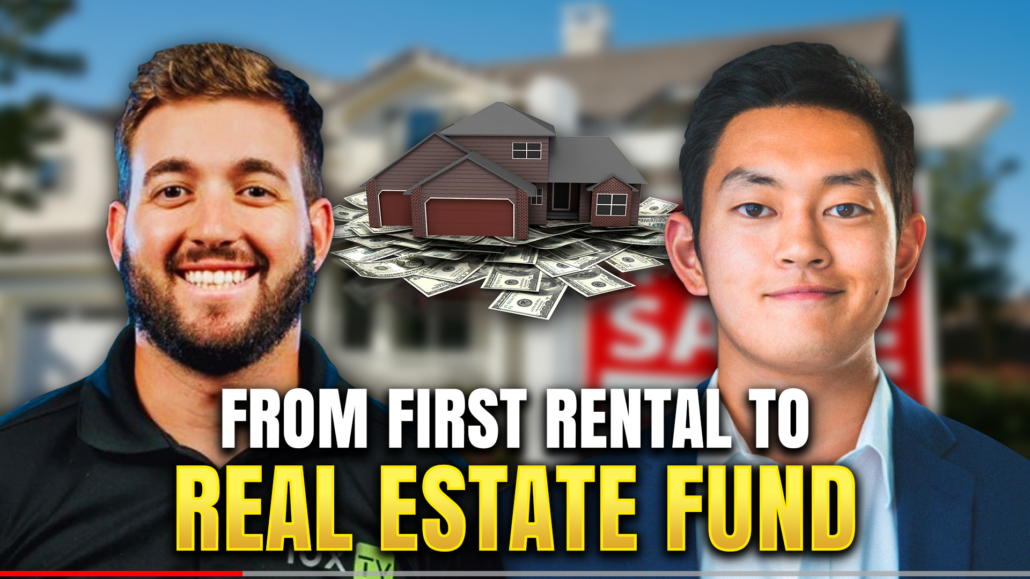
#127 How to Raise Private Money for Real Estate | Hayato Hori
How to Raise Private Money for Real Estate | Hayato Hori breaks down how investor Hayato Hori scaled from wholesaling deals to building a private equity real estate fund focused on multifamily properties in the Midwest. In this episode, he shares how he built trust with investors, raised private capital, and transitioned from selling deals to owning larger assets. Hayato also explains common mistakes investors make when relying too heavily on spreadsheets, the importance of strong operator relationships, and why trust and execution are the keys to long-term success in real estate.
===================================================
If you want to learn how to run your business in 5 hours or less…. Go to https://www.5HourBusiness.com
Subscribe to my YouTube channel:  / @tonyjavierbiz
And if you’re into flying and want to follow my Aviation journey, check out my other YouTube channel at / @tonyjaviertv
===================================================
If you want to dominate your Real Estate Market with TV commercials, go here: https://www.ClaimMyMarket.com
If you want to connect with me and my network, go to https://tonyjavier.com/connect
If you want to check out Tony’s Real Estate Resources and Vendors go to https://www.TonyJavier.com/resources
===================================================
Show Transcription:
In order to raise capital, people need to trust you. They need to see that you’ve done these things before and you have these execution plans in place. And at the end of the day, they need to know you as an operator. Everyone comes from different backgrounds. Some people might be doctors, some people might be lawyers, some people might have their own business, and not everyone is at the same understanding of one another in terms of the real estate knowledge. A lot of investors overlook it just because when you raise private money, it means you have responsibility other than yourself. There are plenty of people willing and wanting to lend you money if they get a great return. The biggest mistake that investors, even you or experience make is …
Noah Kesslin (00:46):
Hiato, thank you so much for taking the time. I know you’ve done hundreds of transactions up in Chicago, but I am curious kind of how you got into the space in the first place.
Hayato Hori (00:58):
Yeah, absolutely. So I bought my first rental property actually out of college and I was looking for stuff in California, and obviously it’s California, but you’re not going to find anything there. And I was like, okay. And my roommate at the time, he was flipping properties and selling them turnkey. And so he was doing it not in California either. He was doing it in the Midwest. And he had a property … Well, Memphis, Tennessee’s not really the Midwest, but he had a property in Memphis, Tennessee where he’s like, “Hey, this could be a great turnkey deal for you. ” And I looked at the numbers and I didn’t really know too much about real estate then, but I decided, “Hell, you know what? The best thing is I’m going to be learning how to manage a property, what it’s like to actually own an asset and worst case scenario, I’ll lose 20, 30 grand that I put in, whatever. I can make that back.” So that’s what I did. Bought my first rental property. I bought it for $70,000. It rented out for $750 a month, cash flow about 200, 250 bucks a month. And I was like, “Wow, this is great.” And that’s really my first exposure to buying real estate. And from there, I was working, I started a corporate job, but then I was like, no, I always wanted to do my own thing. I started many different ventures while in college, like e-commerce, doing drop shipping here and there. And I always just knew I wanted to do something myself. And then I started a real estate company and I started wholesaling properties. And so I started selling off market deals to retail investors and institutional investors and got up to a point where we’re doing 10 to 15 deals on a monthly basis, which was great. And what really changed for me was when I started selling to these institutional funds, they’re buying 10 to 30 deals on a monthly basis and I was selling them maybe like three to five of my deals on a monthly basis. And I thought I was crushing it. I was like, “Wow, this is great. These guys are continuing to buy from me. This is amazing.” And then they started pretty much at the same time I started my company, but fast forward five years down the line, they had $2 billion under management. And I looked at my company, I was like, “Wow, we’re spinning our wheels looking for the next 10 to 15 deals to just continue keep paying the payrolls that we need to cover expenses and all that. ” And at that point I was like, “Something needs to change.” And now we also started real estate fund, a private equity real estate fund where we now acquire multifamily buildings, primarily in the Midwest in Chicago is where we’re quite focused on at the moment. And we have decided to really scale up our real estate operations that way, as well as having seen what it’s like on the other end.
Noah Kesslin (03:58):
That’s awesome. I know that you mentioned that you started in college kind of, but what was your life like before investing? You mentioned that you kind of always knew you wanted to do something on your own, but what was it like before versus now after?
Hayato Hori (04:13):
Yeah. Before getting into real estate and before I even knew what I really wanted to do, I thought I wanted to be a professional soccer player. I mean, I started playing when I was three and I was playing in a professional youth team in Singapore and I was like, “Yeah, this is what I want to do. ” And then I started looking up what the salary was if I did become a professional soccer player, because the next level up from the Youth Academy team was like the second tier and then all the way up to the first tier. It’s called S League in Singapore. And I was looking at the salaries that you could make and I’m like, “I don’t know if I could survive there. And I don’t know how much farther I could go. ” And it’s amazing to even be in a place where you can get selected. And I don’t even know if I would have been selected to go up that level, but that’s when things started shifting for me. And when I went to college, I was like, “Man, I don’t know what I’m supposed to be doing.” That’s blood, sweat, and tears and time that I put in throughout my entire life. And now I’m in college, I don’t know what to do next. And so then I put all the efforts and focus that I had playing soccer into entrepreneurship because I actually enjoyed creating something out of the blue and trying to solve problems and making money while solving those issues. And so that I had a lot of fun with. And that’s what I think honed my skills to become an entrepreneur and actually really just take action and take my focus elsewhere from soccer. And I still play soccer to this day, but to something where I felt like I could contribute to society in another way.
Tony Javier (05:50):
Want to get motivated sellers that nobody knows about? Introducing 10X TV. If you want to create credibility in your market, find deals that nobody else knows about and crush your competition, you need to check into TV commercials. It is the new buzz in the real estate investing industry since we introduced it several years ago. I’ve been using TV commercials myself for the last 12 years and it’s absolutely crushed it. So if you want to learn how to get on TV and to do something that little to know people are doing right now, go to claimmymarket.com. Again, that’s claimmymarket.com. We usually only work with two investors per market. So if you’re interested, reach out to us and book a call to see if you can claim your market before anybody else does. Now back to the show.
Noah Kesslin (06:32):
What was the major problem that you were trying to solve when starting this business? I know you mentioned fast forward five years, you had nothing to show for all the work that you had done. So what was the main problem when switching to the private equity component o+f it?
Hayato Hori (06:51):
Yeah, I guess the biggest issue is when you’re selling deals, you don’t need to necessarily raise capital for it. So in order to raise capital, people need to trust you. They need to see that you’ve done these things before and you have these execution plans in place. And at the end of the day, they need to know you as an operator and know exactly what the game plan is so that they feel comfortable investing alongside with you. And so all these things was the biggest, I think, challenge per se in transitioning from just a wholesaling company into owning private equity real estate fund. But having had all those experiences in the past and being able to have completed other deals, not just wholesaling on top of it, had a lot of great effect when we did go out there and said, “Hey, we do have the execution plan and we do have the experience and we’ve done this before, so we know we can do it again. We’re just raising capital to buy this asset and do the same thing that we did just with our own money previously.”
Noah Kesslin (07:54):
What’s the hardest part about raising capital that you’ve noticed?
Hayato Hori (07:58):
I think speaking the other person’s language, because everyone comes from different backgrounds. Some people might be doctors, some people might be lawyers, some people might have their own business, and not everyone is at the same understanding of one another in terms of the real estate knowledge. And so being able to speak their language and speak in a way that they understand what they’re getting into, I think is the most important part. And that’s the hardest, I think, obstacle to actually overcome as well when speaking with people, because you really do need to know what is it that they’re actually looking for? What’s their goal? And sometimes it’s not us that they’re looking for. It doesn’t align. Maybe they don’t meet the accreditation status or maybe they want to fix and flip properties, and that’s not necessarily what we do. And so we refer them elsewhere and provide them help where we can. But a lot of times, if it’s not a fit, we’ll just tell them that way. And that, I think, really builds trust with people as well, because we’re not just selling to selling. We’re really believing in the assets that we’re acquiring. We put our own money into these deals as well, alongside with investors so they can feel comfortable coming into deals with us.
Noah Kesslin (09:15):
Well, why do you think so many investors maybe overlook raising private money?
Hayato Hori (09:22):
I think a lot of investors overlook it just because when you raise private money, it means you have responsibility other than yourself. And so for people who are afraid to maybe raise private capital, they are most likely afraid that maybe they won’t be able to execute on what they know or what they’re planning to actually achieve. And so I think that is the biggest fear that a lot of people have when trying to raise private capital. I don’t think it’s the raising capital part. I believe it’s more so, can I actually fulfill the duties that I do have once I borrow this money? And so the only way that you really get around it is if you have a ton of track record on your own in the past that you really feel confident enough to borrow other people’s money from and then go from there.
Noah Kesslin (10:17):
Well, what’s the most common misconception about private money or raising private money for that matter?
Hayato Hori (10:26):
I think the biggest misconception is that people don’t want to give you money. That’s not true. A lot of people are looking to give money. They just don’t know where and they don’t know who to give it to and who they trust. And so I think there are plenty of people willing and wanting to lend you money if they get a great return, but trust needs to be built on both sides. The private lender needs to trust you as an operator to execute on it and actually give the returns that you’re promising to that investor. And you also need to trust that the private lender won’t pull any ridiculous terms on you, right? And so it kind of needs to go both ways, but I think that’s a big misconception that you cannot raise private capital or people don’t want to give you money.
Noah Kesslin (11:14):
Yeah, 100%. Just a quick word from our sponsor. This episode is sponsored by 10XTV, the secret weapon behind some of the most successful real estate investors in the country. I’m curious if you don’t mind sharing a couple strategies of how you’re finding deals in Chicago or anywhere else that you’re buying deals in the Midwest.
Hayato Hori (11:36):
Yeah. In the Midwest, we have a lot of connections out there just because we’ve completed collectively a thousand plus deals in those markets. And so we have brokers, wholesalers sending us deals all the time. Obviously, I also have experienced going direct to sellers and reaching out to them if needed. But at the moment, we’re getting a lot of deals already just from broker relationships and wholesalers, and that network has provided us many, many deals for us to go through, especially in those Midwestern markets.
Noah Kesslin (12:09):
I love it. I love it. Well, what do you think is the most common mistake that you see investors make that you think could be easily avoided?
Hayato Hori (12:19):
I think the biggest mistake that investors, even you or experience make is they trust the spreadsheet too much. And the only reason I say that is, for example, Zillow, they try to go into the flipping business and they lost $881 million doing so. And it’s because they relied on their algorithms to get them the margins that they needed and really, truly just relied on it. Real estate at the end of the day, in my opinion, is an operational business and you have to be great at executing, otherwise the real estate will not perform. It’s a tangible asset. So you have to go in there and do the maintenance work that is needed. You have to do these unit turns. And if you can do them a day faster, a week earlier, all those things translate into what you actually underwrote in your spreadsheet, but unless you actually do the work necessary and actually execute on it, whatever you put in the spreadsheet won’t come to fruition. So I think that is the biggest mistake that a lot of new investors also make as well when they start analyzing deals and they say, “Hey, this thing cash flows 250 bucks, 350 bucks,” but they don’t really account for the maintenance work that’s needed or they don’t really even put in the necessary CapEx to make sure that they don’t have a big deferred maintenance that comes afterwards, right? And so all of those things I think is really important and don’t just look at the spreadsheets as my philosophy. You have to really be good at the operational side as well.
Noah Kesslin (14:04):
Yeah. Speaking of that, there’s a lot of top operators and a lot of onesie twosies in this business. What’s something that you think separates the top operators from everyone else in your experience?
Hayato Hori (14:18):
I think speed to execution and also the trust that they build. The best operators that I’ve seen have great trust with all the relationship that they have, whether it’s with their property management company, contractors, or capital partners, investor partners, the people who go farthest I think in the real estate business are the ones who earn trust. And the only way to earn trust is if you actually follow through with your word. A lot of people in the industry too don’t follow through with their words. I’ve had contractors steal money from me. I had lenders pull things that they shouldn’t have. And so that breaks trust. And in real estate, it’s actually not that big of a circle. Things come around and you really do hear about them. And so my philosophy is you want to build that trust first and the networks that you have, you need to cherish them, really protect them and really just follow through with your word. And that’s the way that I believe you can really go far in this space.
Noah Kesslin (15:20):
Yeah. A lot of people measure the word success very differently. They strive for it differently. They define it differently. How do you define the word success? How do you measure it? And how do you strive for it every single day? I
Hayato Hori (15:36):
Think success for me comes in two ways. One is for the investors that we have. If the investors are getting a strong return, that’s success to me. And for me, success is really, am I enjoying the process? Am I actually heading towards the goal that I wanted to set forth for myself? And am I getting closer to it? And am I enjoying the journey while I go through it too? Because I think it’s really important to just enjoy and have a great time building the business that you’re wanting. Otherwise, I don’t see the point of it. And so I think it needs to be twofold where you do obviously have investors or we have investors at least that we need to make money for. But at the same time, I also want to enjoy the process and continuously learn so that I can be a better operator, better business owner, a better entrepreneur, and continue to sharpen my skills. And I think that’s what success is for me.
Noah Kesslin (16:38):
Yeah, 100%. Well, what are the biggest changes that you’re seeing in the market right now?
Hayato Hori (16:46):
The biggest changes that I’ve seen, at least in 2025, in 2026, I think it’s a little bit too early at the moment, but in 2025, what I saw was I live in Miami and the Sunbelt regions, there were a lot of supply that was made in these markets like Houston, Texas, where you are in Dallas, Texas, and Miami, Florida, and Atlanta, Georgia. And so these areas where there was a huge influx of supply, rents have started to kind of ease, plateau, and even slowly started coming down in some of these areas, and the vacancies have increased a bit in these areas. Now, this might be temporary just because the net migration is so strong in these regions and a lot of builders have halted some of the supplies that they were planning to actually put forth in these areas. So I think it will pick back up in very shortly, to be honest, but that’s what we saw in 2025, where in these areas, vacancies did increase and the rents kind of stabilized and even dropped in some of these areas as well.
Noah Kesslin (18:00):
Yeah. The new word is AI. Everyone’s talking about it. How do you utilize AI in your business? How do you think it’s going to affect the real estate market over the next five years? But ultimately, how are you guys using it? How do you plan to use it in the future?
Hayato Hori (18:18):
Yeah, I feel like a lot of people are throwing out AI just to sell it. And for us, really, we utilize AI where we really do see a big added benefit in terms of reducing our time to actually complete a task or fact checking things that we weren’t 100% sure of. I think those are the two main ways that we typically utilize it. We don’t trust or rely on AI to do the full underwriting for us, or we don’t fully trust AI to come up with the best comps or anything of that nature. We still do those things quite manually. Now, I do pull those information through AI just to see what they come up with, but it’s more of a fact checking thing than it is relying on AI because AI still makes quite a lot of mistakes, like even ChatGPT or Gemini or whatever you use, Claude, it makes simple math errors as well. I’ve had many times where I said, “Hey, add up the rent rules and it didn’t add up numbers correctly.” And so I think for us, it’s really important that it at least reduces our time to complete tasks or it adds extra scrutiny to whatever we’re doing. As long as it can do those two things, that’s where we try to implement AI and really make things a little bit more efficient.
Noah Kesslin (19:45):
Yeah, 100%. I want to challenge you with this next question. If we were going to take away your business, you have to completely restart from scratch. You get to keep all the knowledge that you’ve learned over the years. What would you focus on first to rebuild what you have now?
Hayato Hori (20:06):
I would focus on the networks that I have. So if I lost everything and I didn’t have the contacts and I had to start all over, I would start there. I would start from building my contacts once more and really, really understanding the local operators in the team, really understand the market, and also understand what it is that makes that market special. Whereas the next spot that might appreciate over time, what’s the best team in the area? Who do I utilize as my contracting team? Whatnot. Because whenever we do look at a different market, that is pretty much what we have to do. We have to go and start scratch and find these great local operators that can also support us. And so that’s where I would always start first. And then from there, we can then speak to investors, get the investments that we need. But I think that is always secondary to finding great teams and being operationally excellent first and knowing a team that can actually help you support do that because that is where all the execution and the numbers actually come to fruition on your spreadsheets from. So that’s where I would start.
Noah Kesslin (21:24):
Yeah. Yeah. What drives you every day to keep innovating, to keep growing and to keep getting your investors that great return?
Hayato Hori (21:37):
Yeah. Well, honestly, I think I just like solving problems and whenever you start a business, you’re always just solving problems. And so one of the big missions that we have at Red Brick Equity is to provide more affordable units in the market. And the way we do so is we turn the units, we make them really, really nice for the tenants to call home and we get more units available so that the renters can actually live there. And there’s a big housing shortage and crisis and affordability issue in the states. So we try to at least be one part of the solution there and help these people actually get a place that they can comfortably call home. So that’s one aspect of it. And then the other part of it is the business execution side and solving problems there because the way I kind of look at it is more of a game where a problem arises, okay, how do I solve it? And the future problems, okay, these might come up. How do I solve them? And it’s like a puzzle that I get to solve on a daily basis and it just keeps my brain going.
Noah Kesslin (22:47):
I love
Hayato Hori (22:48):
It. That’s what I enjoy.
Noah Kesslin (22:50):
That’s awesome. If someone’s interested in what you’re doing, wants to connect with you, where can they go? Where can they learn more about you? And ultimately, where can people reach you?
Hayato Hori (23:01):
Yeah. I’m on social media quite a lot as well, but I think the best way people can reach out to me is going, you can email me at hiata@redbrickequity.com or you can go to podcast.rebrickequity.com and there’s a ton of free resources that we provide for you.
Noah Kesslin (23:19):
Awesome. Awesome. I appreciate your time. This has been great and we’ll see you guys next time.
Hayato Hori (23:26):
Thank you for having me.

