
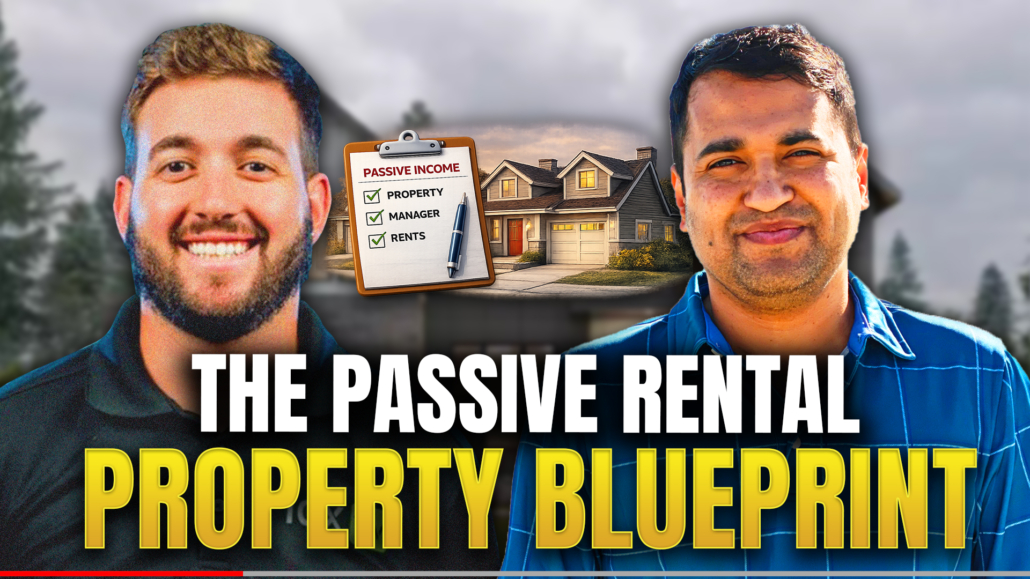
#135 How Emran Chowdhury Built Passive Income with 23 Rentals
How Emran Chowdhury Built Passive Income with 23 Rentals breaks down how Emran went from working a demanding W2 job to building a long-term rental portfolio across multiple states while spending only about an hour a week on the business. In this conversation, he shares how house hacking started his journey, why property management became the key to time freedom, how he finds strong cash-flowing deals, the power of 1031 exchanges, and the mindset shifts that helped him scale without being tied to day-to-day operations. It is a practical look at building real passive income through buy-and-hold real estate investing.
===================================================
If you want to learn how to run your business in 5 hours or less…. Go to https://www.5HourBusiness.com
Subscribe to my YouTube channel:  / @tonyjavierbiz
And if you’re into flying and want to follow my Aviation journey, check out my other YouTube channel at / @tonyjaviertv
===================================================
If you want to dominate your Real Estate Market with TV commercials, go here: https://www.ClaimMyMarket.com
If you want to connect with me and my network, go to https://tonyjavier.com/connect
If you want to check out Tony’s Real Estate Resources and Vendors go to https://www.TonyJavier.com/resources
===================================================
Show Transcription:
People always get confused about these two things. When you are learning about the business and actually when you are operating. I don’t calculate anything because that’s the reason I invest in real estate because I get that appreciation. If you are trying to make 5% work, it doesn’t work of your time because you can get treasury bond or actually stock market index fund. If the deal doesn’t work, understand those scenarios, how to make it to work. Don’t force me.
Tony Javier (00:25):
Welcome to the Real Estate Masters podcast where we bring you the top real estate investors in the country. If you also want to be in the top 1%, you are in the right place. Listening to podcasts like this is exactly what helped me to scale my real estate investing business to seven figures, flip over a thousand houses, and more importantly, step out of daily operations of my business over a decade ago so I could start and grow other businesses. So get ready to learn from the best and start building a business that works for you and not the other way around. Enjoy.
Noah Kesslin (00:58):
What’s going on guys? Welcome back. Imran. Thank you so much for taking the time. I’d love to kind of start podcasts, just kind of getting into how you got into real estate in the first place.
Emran Chowdhury (01:08):
Yeah, thanks for having me. So yep, 10 years back when I was working as W2 employee and we bought an just house and then at the time I was thinking, can I rent it out at least one room? We had a basement. So I rented out. It covers almost 50% of my mortgage. I thought, oh, it’s cool. So can I do it more? That’s what I get into the real estate. I was really interested and then over the last 10 years I did close to 50 deals. Right now I have like 23 single family homes in four different estates in USA.
Noah Kesslin (01:37):
Awesome. Awesome. And I know you mentioned you only spend about an hour a week on your business. When it comes to retiring and at an early age, I feel like a lot of people get into real estate for time freedom. How are you able to achieve that with such a simple kind of strategy?
Emran Chowdhury (02:00):
Yeah, that’s a great question. So yeah, when I first started, I started in Seattle, Washington. The price to interest was not good there, but what I was doing actually, so I was buying a couple of more rental there in Redmond and also Seattle was Seattle. Then I found out that actually it’s taking a lot of my time to manage those properties, finding the tenant, marketing, showing the property and then actually collect the rent. There is a maintenance issue. So when we were in Washington, I personally manage all those properties. But at the same time, I was thinking this is not a good use of my time because I want to invest in real estate and I don’t want to day to day manage all these properties and then it doesn’t make sense. So when I started looking outside of like Washington, at first I looked into Ohio where I bought like two duplexes, like 20,000, $25,000. And then I was not in Ohio. So I said, the only way I can manage it if I can find a property management company. So that’s where actually all it started. After a couple of years, I actually started like transfer all my property to the property management company. So now I have like 23 properties. I don’t manage any one of them. So all are managed by the property management company in four different estates. So mainly one hour I spend per week on the acquisition side and also talking to the lenders, get actually favorable terms and also the tax filing. So those are the things I spend time on. What I enjoy, all the day-to-day operation management, all these things actually are managed by the property management
Noah Kesslin (03:22):
Company. How important is it for you to find the right property management company? Because property management is not an easy business. And there’s a lot of people that don’t not say know what they’re doing, but aren’t doing it as officially as they can. How important was that in finding the best possible option for you?
Emran Chowdhury (03:42):
Yeah, this is a really great question because when I started in Ohio, the first property management company I worked with, after a couple of years I thought actually they are not managing my property way. And the good thing is since I managed my property first two years, I know actually all the things I need to look for when they’re managing the property. So next time when I was looking for whatever management company, I had call with them. I was asking all these questions. “What is your vacancy rate looks like? How many property are you currently managing? Do you also invest in real estate? “So these are the things I was asking a lot and then get some clarity. And then when I found out there are actually some good property management company out there and some of them also actually those who are affiliated with some sort of real estate brokerage company. So those are better because actually they already know all the real estate transaction side, not like mom and pop property management company. I would say if someone wants to follow my path like spending only one hour, it’s really, really, really important to find a good property management company because that will actually make or break your whole journey.
Tony Javier (04:50):
Want to get motivated sellers that nobody knows about? Introducing 10X TV. If you want to create credibility in your market, find deals that nobody else knows about and crush your competition, you need to check into TV commercials. It is the new buzz in the real estate investing industry since we introduced it several years ago. I’ve been using TV commercials myself for the last 12 years and it’s absolutely crushed it. So if you want to learn how to get on TV and to do something that little to know people are doing right now, go to claimmymarket.com. Again, that’s claimmymarket.com. We usually only work with two investors per market. So if you’re interested, reach out to us and book a call to see if you can claim your market before anybody else does. Now back to the show.
Noah Kesslin (05:32):
When it comes to acquisitions, how are you finding your properties?
Emran Chowdhury (05:37):
I use different methods. At the beginning, I used to going through all the MLS listing and one thing actually during the pandemic, I got my real estate license in Seattle. So what I did actually is to go to, if there is any property comes, I’ll go to those listings, see those. Then when I was doing out of state, I was mainly asking all the property management company as well and also trying to find out actually I got some help from bigger pockets to find out who are the investor friendly real estate agent. And when I talk to them, the first question I ask, how many real estate investment body do you have? If they have five to 10, they already know all the process. And if they are really new, it’s really hard to work with them at the beginning. But yeah, if you can spend some time, but that’s the way actually I was getting into all this real estate. And when I talk to the realtor out of state, they already have investment property. They already know actually about the area, what is the process to find the real … And then actually they set up me with all the MLS listing and also like outside of MLS and then wholesale those kind of scenario. But mainly I was getting from the property management company where they have existing owner, they want to get rid of their portfolio. And if it makes sense, that’s what I used to getting these properties.
Noah Kesslin (06:55):
Yeah. Well, what was the main problem that you were trying to solve when starting this business?
Emran Chowdhury (07:02):
The main problem I was trying to solve actually, I was working as W2 employee, so I was working almost 50, 60 hours. So can I replace my income with like one to two hours work? So that’s the main reason. So mainly the time freedom and also obviously location freedom. I don’t want to be in that place where actually my properties are. So yeah, right now I have like five different estates, all the properties, like I have only couple where I stay and all others actually four different estates where I don’t even visit.
Noah Kesslin (07:35):
Well, what do you think the most common misconception is from an investor standpoint of how you operate and there’s so many niches within real estate. What do you think the most common misconception is about what you do?
Emran Chowdhury (07:51):
The common misconception I see all the time, I would always say for any business, you need to have some sort of like knowledge, basic knowledge about the business. And people always get confused about these two things when you are learning about the business and actually when you are operating. So people get confused, oh, I want passive income, but I don’t want to learn all the steps to go into that pitch. People are thinking, so when I tell everyone or actually the other people about the entrepreneur or real estate investor, I spend one hour, but it didn’t happen one day, right? So it’s not like actually I started investing tomorrow and then actually I just spending one hour. At the beginning, first six months, I was learning like crazy. I was finding properties, learn about all the tax strategy you need to implement, what are the advantages about long-term hold, what are the advantages about like short term, how can you find like fix and flip, what are the disadvantages, how much time commitment you need to do if you are in like full operational mode. So people have the misconception that, oh, I want passive income, but I don’t have time to learn this thing. But yeah, you need to spend like at least six months to one hour to learn all the things and you can’t call it passive at the beginning, but you can be there in that place, like I would say after a year or two.
Noah Kesslin (09:07):
A lot of people with rentals are only clearing a couple hundred bucks per rental unit or house. What are you seeing to be the best strategy for this? Obviously it’s how you buy it and how you structure it, but how are you finding … You mentioned the acquisition and finding rates and terms. What are you looking for necessarily in a deal for you to be like, yeah, that’s worth my investment?
Emran Chowdhury (09:36):
Yeah. Right now my filtering criteria actually got strict here as I bought more unknown properties. Right now I’m looking for at least like 15 to 20% cash on cost cash return. But if I don’t get like at least 20%, then actually I try to avoid those deals. And when you talk to like other realtors who are not experienced investor, what they do, actually they will present you the deal, something like they will calculate, oh, these are the mortgage you are paying it off, right? You are getting tax deduction. I don’t calculate anything because those are not like, that’s the reason I invest in real estate because I get that depreciation and I can get all these things. So I don’t calculate all these things, but main goal is actually if it is false below 15% cash on cash, I’m just skipping the rate.
Noah Kesslin (10:24):
Gotcha, gotcha. What are some of the biggest strategies or lessons that have made the biggest impact on your investment strategies over the past year and a half?
Emran Chowdhury (10:40):
Past year and a half, let me go a little bit back. So 2024, one half year back actually, I did a 1031 exchange and I did another 1031 exchange is actually 2021. So as I mentioned, I bought like two rental properties in Seattle, except for buy my residence. So when I sold my primary residence, we had like around 400K capital gain and I learned about the tax strategy and everything that actually for primary residents you don’t have to pay capital gains tax for married and for single itself 250 ga at that time. So we did that and we bought like almost three properties. And then I was thinking, oh, I’m selling another property. How can I don’t pay that capital gain tax? The only way to do it actually 1031X check. So I sold another property in Seattle and actually I 1031 exchange to six more properties. And then 2024, one and a half year back, I sold my last property in Washington and I actually 1031 exchange to eight more properties. So basically my two properties helped me to buy 14 more properties without any extra investment from my side. And these two property had like around like 400, 500K capital gain. And if I pay taxes, that will be like 150 gay, 200K, right? So if you are paying taxes, then actually you are growing very slowly. But that’s the thing actually I like about long-term investment, that actually you only pay capital gain, you don’t pay short term. If you do fixed and free for wholesale, you always pay actually short term capital gain. And then those are the things I was really mind boggling for me because what you can do, actually you can do so many things. It’s like Warren Buffet where actually he bought like Barkshire Hathaway, he don’t sell anything stock because he’s holding it for like 50, 60 years. And he doesn’t sell stock because actually he needs to pay a lot of taxes if he wants to like get rid of the stocks. Same thing for me that actually, can I do it, hold it for the long term and I don’t need to pay taxes at this moment. Yeah, obviously if I want to sell it and I don’t want to change it, I need to pay it access. But most of the people I see actually they don’t know this strategy that actually you can do 1031 exchange and then build a portfolio from a very small amount to a very large amount in few years.
Noah Kesslin (13:02):
Yeah. Well, what do you think is the most common mistake that you’re seeing investors make that you think could be really easily avoided?
Emran Chowdhury (13:12):
They want to try hard and sold to make the deal work. Obviously if the deal doesn’t make sense, you need to know before even actually analyzing bill what’s your criteria, right? So as I mentioned, mine is 15%. Yeah, you can go at less 10%. If you are trying to make like 5% work, it doesn’t work of your time because you can get like treasury bond or actually stock market index fund. You can get five to 10% return without any work. So why do you want to spend that much time unless you are getting a huge return on later?
Noah Kesslin (13:47):
Yeah. A lot of people define the word success differently, they measure it differently, they strive for it differently. How do you measure the word success and then how do you strive for it and define it in your life?
Emran Chowdhury (14:05):
That’s a good question. So I have a interesting realization that actually after earning a basic income, like where you can cover all of your basic expenses, if you are not happy with your life, you will not be happy after you have like $10 million. So you need to figure out actually what makes you happy. So as soon as you have like your basic things covered, you have like massive income of like $100,000 per year. If you are not happy, there is no way you’ll be more happy if you have like 10 million or $20 million. So I define success like this way, am I happy right now? And then the other thing I also want to always think about like Jeff Bezos regret minimization framework after 10 years or 20 years, will I regret the decision that actually I didn’t take this chance of doing the business?
Noah Kesslin (14:54):
Well, what do you think is the biggest change you’re seeing in real estate right now?
Emran Chowdhury (14:59):
Right now, there’s a lot of like last three, four years, the interest rate was really high, inflation was really high. So people get confused with these two that actually the interest rate is too high. They think actually they will be able to make money. Yeah, there is always a possibility of deal, but you need to be really careful because I did couple of investment outside of my like single family homes in the apartment syndication, but most of them actually the company, they didn’t make money because when the interest went higher and stayed there for longer or four, five years, when they wanted to refinance, they could not able to do it, right? So they lose the apartment. So the problem is that actually people always think that actually it didn’t happen last 40 years, it wouldn’t happen again. So that’s the main misconception. So if the deal doesn’t work, understand those scenarios, how to make it work, don’t force it. So there’s the main thing I want to mention.
Noah Kesslin (15:59):
If you were going to start from scratch today, you get to keep all the knowledge that you’ve learned over the years, but all the properties, everything goes away. What would you focus on first to rebuild?
Emran Chowdhury (16:15):
Yeah, that’s an interesting question. Yeah. I thought about this before that actually tomorrow morning, if I lose everything, I don’t have anything, I don’t have any money. And yeah, that realization came from other part also. People always complain me they don’t have money, but I always tell them actually money is not the problem, knowledge is the problem because if you take away all of my money, all of my property, I can still start investing from tomorrow. The main thing I would focus on actually at least getting a place to be in, stay in, and at first I’ll focus on housing. So at least find a house where actually I can do a fixed little bit or actually rent out a couple of rooms so that actually my rent is covered. So that’s the main thing. Now I know a lot of places where I can get loan like DSCR loan where actually it’s only based on the rental income, it’s not based on your W2 income. So now based on my knowledge, I don’t need any money to start investing in real estate, but I will start with most likely house hacking for six months, then actually upgrade to a new house and then do that again. And then for a couple more, I’ll do most likely do BR method. Refinances take out the money and then actually buy more rental properties. But yeah, I think I can make it work in next three, four years again, all these things.
Noah Kesslin (17:33):
I love it. I love it. What drives you personally to keep innovating and just kind of moving forward?
Emran Chowdhury (17:43):
The good thing, obviously like location freedom and also the time freedom, because I can decide where I want to spend my time and also money some of the time. That’s really important because if you are not bound to some other people’s rules, you can decide what lend you want to drive in, right? So it doesn’t need to be follow other people’s paths, right? So it gives me immense pleasure that actually I can innovate in my own way and nobody’s telling me actually how to do it because when you are successful and sometimes it takes longer. People actually always like underestimate that actually, oh, I will be financially free in a year. That doesn’t happen. So it takes five to seven years if you work for it consistently. But if you want to … Yeah, sometimes you get lucky, you can do it in a year, but that’s lack because then if you are losing it, you will not be able to rebuild it. So you want that knowledge to compound. And compounding knowledge is the main thing which I’m really proud of that actually I learned over the years.
Noah Kesslin (18:50):
Or who has been the biggest influence for you in this space? Who has been the biggest mentor for yourself?
Emran Chowdhury (18:59):
I was looking into at the first bigger pockets and also I was reading Richard at Port Ad. So all the concept in this book actually was helpful to understand how the business works outside of W2. And basically all the investor community in the bigger pockets and also when I reach out to the other people, the realtor who are actively investing in the market, those knowledge actually was really … Because I was getting like 10, 15 years of knowledge in few minutes, right? I can reinvent the wheel, I can learn all these things, learn about the market, but when I’m investing out of estate, I find a good realtor who’s experienced in the real estate investment and then actually get their succession to do the work. I’m not like trying to tell them, “Oh, you need to find this property or buy this property function.” If they’re saying actually that will not be a good investment, I’m trusting the adjustment, as long as I’m finding actually the correct person to work with.
Noah Kesslin (20:00):
Yeah. Most of the people that we have on here are in the lending space or in the fix and flip and wholesale space. If someone’s interested in learning more about your model and learning more about yourself, where can they go? Where can they reach you at?
Emran Chowdhury (20:20):
I’m active in LinkedIn and I also have an entrepreneurship mastermind program where I teach all this thing about real estate stock market and starting online business from scratch. So in the cohort basis, what I do actually, it’s a three month program where I teach actually 5% at a time and only want to include only 5%. I don’t want to go more than that so that I can have enough time with them to help them grow their businesses, start like real estate or stock market and get some idea how the business works and then give them proper guidance. And I’m really glad actually some of the people took my advice, joined the cohort and then actually they build a real support for you. Although they are not like in there, but so in couple of years they will be in a good situation like me.
Noah Kesslin (21:04):
Awesome. Awesome. Any final advice for investors looking to grow, scale, or maybe simplify their business? One
Emran Chowdhury (21:14):
Last piece of advice for the investor, obviously keep learning because even for, I always give this example of Warren Buffet, he’s like in the industry for almost 60, 70 years, but he’s still going to the office. So this January, he like retired from CEO. So 94, if he can learn, you can learn any … And if you worry like your 20s, 30s and 40s, it’s like prime time to gain this knowledge. And over the years, this knowledge compound and then like next 40, 50 years, you can use this knowledge. So learn as much as possible and keep an open mind all the time. And don’t think that you know everything because economy can change, the whole world order can change, the currency, all these things can change, but nobody can take your knowledge that way. So that’s the main thing. And as long as you are learning and also you are enjoying. If you don’t enjoy, don’t go for it. Whatever you enjoy, do it. But yeah, try to think about how to make this process as enjoyable as possible and figure out what is your happiness criteria. I love it.
Noah Kesslin (22:19):
I love it. Emron, thank you so much for joining us today. Everyone, thanks for watching and we’ll see you next time. Yeah,
Emran Chowdhury (22:26):
Thank you very much.

