
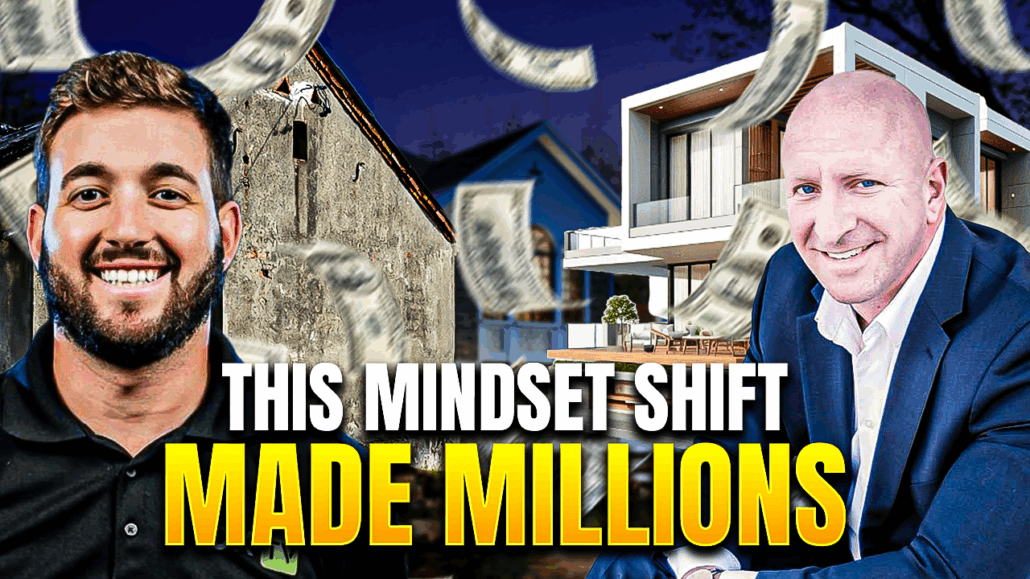
#82 Why TV Advertising Still Wins for Real Estate Investors | Rick Howell
“Why TV Advertising Still Wins for Real Estate Investors” breaks down how top operators leverage credibility, personal branding, and consistent messaging to outperform competitors. In this video, you’ll learn why many businesses still rely on TV advertising, how TV ads for business build trust instantly, and why a strong TV commercial can outperform digital channels when targeting motivated sellers. If you’re in business, marketing, or real estate, this episode gives you a clear breakdown of what actually drives results.
===================================================
If you want to learn how to run your business in 5 hours or less…. Go to https://www.5HourBusiness.com
Subscribe to my YouTube channel:  / @tonyjavierbiz
And if you’re into flying and want to follow my Aviation journey, check out my other YouTube channel at / @tonyjaviertv
===================================================
If you want to dominate your Real Estate Market with TV commercials, go here: https://www.ClaimMyMarket.com
If you want to connect with me and my network, go to https://tonyjavier.com/connect
If you want to check out Tony’s Real Estate Resources and Vendors go to https://www.TonyJavier.com/resources
===================================================
Show Transcription:
Noah Kesslin (00:00):
What’s going on everyone? Welcome back to the REM Podcast. My name is Noah and today we have
Rick Howell (00:06):
My name is Rick Howell.
Noah Kesslin (00:08):
Rick, thank you for coming on to the podcast, taking the time. Today, we’re just gonna kinda talk about real estate. I guess I wanna start off by going deeper into yourself and why you got into real estate.
Rick Howell (00:25):
It’s a good question, man. years ago, I was a construction worker, electrician. Started in 1996 and went through the apprenticeship. Apprenticeship at that time was seven years. Went through seven years apprenticeship, kind of topped out, became a foreman, was running crews and all that stuff. And at that time, I had a son when I was 17 years old. That’s what kind of led me to the trades to begin with.
and everything was going great. Life was great. And then for a lot of people that are my age, remember the world changed with 2008, nine, 10. And it got to the point where on the job site.
Regardless of where you’re at, leadership or just starting off, every time a job would be winding down, rumors would start, layoffs were coming, you know, the guys like to stir up trouble, know, they start planting little seeds that you’re getting laid off, you’re getting laid off, you know, because in the construction world when times get bad, that’s when all the backstabbing and all the funny stuff happens.
So I was just kind of looking for a hustle to look to, I wanted to find a way to make money on the side. My son was just coming through high school at that point in time. We had a travel baseball team. I was coaching a baseball program for 10 years, just a lot going on. And I wanted to find a way to make extra money on the side.
I had no idea it was going to be real estate, but what happened was there was a guy on our job site that was rehabbing houses on the side with his son, just kind of flipping a house here and there, no rhyme or reason. And I would always ask him how he got started. You know, how’d you, how’d you get into that? What’d what’d you do? What’d you do? And he didn’t know how to tell me like how to go do it. But what he did do was he said, man, here’s how we got started. And he gave me the book, Rich Dad, Poor Dad. And I read that book and that’s how
Rick Howell (02:08):
the whole journey started. Yeah.
Noah Kesslin (02:10):
That’s awesome. know there’s a, and you kind of touched on it a little bit, there’s usually a problem, you know, and then someone finds a solution and turns it into a business. What was that main problem that you were trying to solve when you started your business?
Rick Howell (02:24):
What if getting laid off when I started the business I didn’t know we were starting a business to be honest it was a It was how do I make extra money on the side and what can I do in the spare time because in the union? They really frown on doing side work right so when you do electrical work on the side
You can get in big trouble for that here where we’re at in the union world. So was trying to find a hustle to make money on the side and that was, well, I’m going to learn how to flip a house. So the pain was what if you got laid off and you go from making X amount of dollars, really good money to I think at that time, unemployment was 350 a week or something, right? For your, for if you’re, if you’re unemployed and what happens is you get to live in that lifestyle of making, you know, $1,500 a week. You live that lifestyle when they cut three quarters that away from her, when you lose three quarters of that from getting laid off.
that was the pain just trying to find a side hustle so I didn’t have to worry about being being nervous to go to work or getting laid off every time a job was coming to the end.
Noah Kesslin (03:20):
Hmm. Yeah, it’s definitely a challenge, especially with kids for sure. What do you think the biggest challenge starting your business was?
Rick Howell (03:26):
Yeah.
Rick Howell (03:32):
Starting, not really knowing direction. I’m more of a ready, shoot, individual, right? So when I read the book, the book talked about all these things. It introduced wholesaling. It introduced all these different strategies on how to make money in real estate. But it didn’t really give you, it set you up to go to an event, right? It set you up to learn more. The biggest challenge at that time was direction.
not knowing what to do because being a construction guy, I knew construction. We knew how to physically do the work, but we didn’t know how to turn it into a business. That’s what I would say.
Noah Kesslin (04:14):
Do you think a lot of investors get that when when they’re first starting in the business?
Rick Howell (04:21):
Yeah, I think looking back now, mean, we’re talking almost 15 years ago, right? A little over 15 years. Looking back now, I think that everybody’s different. So we get that kind of question. We get that question all the time about, you know, getting started in real estate. Everybody’s different. Every person is different. Every experience level of life is different.
My recommendation to people is go with what you know, right? If you’re sales and marketing, if you’re a sales guy or you’re in marketing or you got the white collar background, you’re communicating and talking to people, I would say more of the wholesaling aspect would be a good path to get started in real estate. If you come from construction, see we didn’t get into wholesaling or even know how high level wholesaling was until…
Almost seven years after starting Real Estate, we jumped right into rehabbing because our background was construction. So that came easy to us. It was a no-brainer. That’s what I would say. People not knowing what direction or the sales and marketing guy trying to force himself into being a rehabber because that’s what he thinks where all the money is or a construction person forcing themselves into a sales and marketing role because that’s what they think the path is. Knowing who you are first.
Noah Kesslin (05:38):
awesome. What’s one main difference about your business from the day you started to today and what does your business look like today?
Rick Howell (05:50):
So when we started, was, when we started, was back then, you could get on the MLS, the Realtors Marketing Platform, and you could find deals anywhere, right? Because at that time, there was foreclosures all over the place. We didn’t know anything about direct to seller marketing. We didn’t know any of that until…
I’ll lead up to that, we had a construction guy that was working for us, and at that time we were giving money up front. And I dropped off a check for $15,000 to give him, he was supposed to go by cabinets, granite, some other things for a house. Now we’d been doing this, but mind you, at this time, we’re only doing two or three deals a year. It wasn’t like a full-fledged business. It was a hustle, it was a side hustle. And…
He decided that was the time to keep my money. And we unfortunately he stole from us.
So all this, I believe the man upstairs works in a particular way and here’s how this path went. Kept our money, never showed up to the job and I was in a bad place and at that time it was either go knock on his door and handle the difference or I went and talked to my attorney and a lot of other people and everybody said you got two choices. You can either make an idiot out of yourself and go confront the guy and chances are something bad’s gonna happen and people are gonna get in trouble.
Or you can chalk this up. That’s how I learned what a write off was. Right. He said, or you can chalk this up as a write off. And this is going to be a $15,000 loss. And that’s how I got educated on what that meant. And, you can learn from it and move on at that exact same time. About three weeks after that, I was at a wedding complaining about this exact same situation to a friend of mine that flips houses down in Columbus. And these guys were probably doing, I don’t know, they’re doing big volume back then and probably 30, 40 deals a year.
Rick Howell (07:43):
And Derek was like, well, have you ever thought about hiring a coach? And I said, what’s that mean? He says, well, that’s how we got to where we are was we hired a coach and I’m like, what’s a coach? And he told us to come. The company was Fortune Builders. And I’m like, what is that? So I was the easiest close ever. I was Googling and calling them trying to find out how do I learn that they’re going to teach me how to build this business. And that that’s how it all started was learning that I wasn’t a business person. wasn’t a sales and marketing person. None of that.
I was a guy that read a book that learned how to find a deal on the internet or on the MLS and go buy it. One thing we did learn was we used our own, we used other people’s money, meaning our own equity lines to buy these houses. And we thought we had a business. Well, what I learned was we didn’t know anything about business and we didn’t have a business and I needed help. And the way that we learned we needed help was getting $15,000 stolen from me.
Noah Kesslin (08:32):
Interesting. What do you think your two key strategies are today in your business that really just help you perform?
Rick Howell (08:41):
key strategies are number one, knowing how to communicate with people. Are exit strategies you mean? Like for the actual business itself? So a real estate’s a relationship business. Real estate’s a relationship business. I’d say that one key thing is knowing how to filter out the noise and all the BS. There’s a lot of BS out there. being authentic and knowing who to surround yourself with and who not to surround yourself with.
Noah Kesslin (08:47):
Just anything in the business, anything that you think.
Rick Howell (09:05):
In this world of real estate investing, there’s a lot of pretenders and a lot of people that like to say they’re doing certain things to make themselves look a certain way and they’re just really not. So one thing I’ve learned is put yourselves around the right people that can help you reach their goals with you in turn helping them with whatever they’re trying to achieve, number one. And number two, stay laser focused on you and what your goals are and your family. See, our goal is not to be these big 50 deals a month or whatever.
whatever these astronomical numbers are.
That coaching program that I hired was it taught us about freedom and lifestyle by design. That inspired me. we are, we want to hit certain numbers as far as being money driven, but we focus more on lifestyle. We focus more on, my son runs majority half of my business. My sister runs a majority of the property management and books. And then there’s me with a team of amazing contractors and we live good lives, but we, chase the freedom more than the ego or the big, the big.
gross numbers, I would say. So know who you are first and stay laser focused on your box rather than getting shiny objects in them and chase syndrome and chasing around what other people, what we think other people are doing.
Noah Kesslin (10:22):
That’s awesome. What mistakes do you often see investors make in the mic, you know, just starting in real estate or at the top of the food chain? You know, what what what do you see people do that you would do differently?
Rick Howell (10:37):
Now, shiny object syndrome.
So, uh, I’ll share a story. lost a quarter million dollars on a deal, uh, back in 2019, 18, because we thought that, uh, a lot of people in real estate and they chase the easiest path. They chase the, uh, look at me. I made all this money, but there was no time invested. I was sitting on a beach drinking my ties while my business is running. It’s all bullshit, right? But the, I saw the same thing. I was traveling the country coaching and teaching real estate investors.
I met somebody in Indianapolis and over there the profit margins were much higher. profit, excuse me, the product, the way the houses were rehabbed was the same, but the entry point was the same as where I’m at in Toledo, but the profit margins, the sale prices were much higher. So in my mind, greed and shiny object syndrome, I thought that we were gonna do less deals over there and make a boatload more money and I wasn’t gonna be hands on with the construction, right?
make more money, do less work, just like they say on the internet. Well, what that turned into was I brought one of my lenders and myself, the construction management aspect, and the other gentleman provided the deal. So we made a entity, the three of us, and we started doing deals over there. Sure enough, the person that we partnered with on the ground over there didn’t have the credibility or the experience that he said he did. And we learned really quick that job took,
Three years it went underwater to almost $200,000 on the first day and the reason that happened was he skipped the home inspection. We inspect every house we ever buy and here’s why.
Rick Howell (12:20):
He skipped the home inspection on the front end. And what happened was the city of Indianapolis came out about a week later and they were walking the property, which I didn’t know they did at that time. And they found out that the house was built on two foundations. So it went from a rehab to a scrape, which means knock the whole house down and rebuild it as a new construction. So we were under underwater, crazy numbers, like the first seven days of being on the project. And this went on for three years. Yeah.
Noah Kesslin (12:47):
Cheers.
Rick Howell (12:48):
Yeah, so I would say to answer your question, I was long-winded, I share that because shiny object syndrome. Chasing the easier, bigger dollar because it’s sexy and you think you don’t have to do as much work. That would be one thing that I think a lot of investors get caught up trying to do.
Noah Kesslin (13:03):
Speaking of that, when it comes to top operators and in this space, there’s a lot of people that say they’re a real estate investor and are real estate investors. So what do you think separates those two categories besides obviously doing deals? But what would you say separates the top dog and someone that’s just a real estate investor?
Rick Howell (13:29):
Someone that’s calling themselves a top dog isn’t going to call themselves a top dog. You’ll never hear that in any business. The people that are crushing it are more focused on crushing it and growth and producing and growing, whatever their niche is in any business, than they are going out and telling people how good I am. People know how good you are by…
your results and if they allow you to know their results. And what I’ve noticed is by helping other people grow. The coaching program that we were with and that I had worked for was the theory was make everybody you come in contact with feel significant and help them take a next step, whatever that might be.
And that was ingrained in us. So any relationship we come across, it’s always, how can I help you move forward with what you’re trying to do? And when you do that to enough people and you build your culture like that, you help enough other people get what they want. In turns, you’ll get what you want. So the people that are really the big, big, the industry leaders and people that call themselves that. I mean, I would, I would just be mindful of.
If you really care, double check that and make sure that you’re following the right people because the big dogs aren’t out there telling people they’re big dogs.
Noah Kesslin (14:52):
Fair enough, fair enough. When it comes to the word success, a lot of people have different meanings for it, definitions for it. How would you define the word success and what does it mean to you and where are you trying to go?
Rick Howell (15:07):
Success today is different. Success today is now watching my son, helping him double and grow his income level and his life. They’re getting ready to get a house and he’s got a nice little life going and know, success to me, my KPI, so they say it, is the growth of my son and his income.
My next KPI is my sister’s lifestyle, right? We’ve created a lifestyle by design for her to where she operates all of our books, our property management, all the behind the scenes stuff, but she works based on.
activities needed to be completed rather than just punching a clock. Right. So those are my two KPIs right now. And for me personally, it’s just constant growth, man. We started a podcast. That’s going to be a new project. I would say projects. The podcast is a project for me.
the monetary, we don’t really chase money anymore. I think it’s more of an experience lifestyle. If you have to ask me what success means to me, it’s the ability to do what I wanna do, when I wanna do it, with who I wanna do it with at any time. That would be my answer.
Noah Kesslin (16:16):
That’s awesome. That’s awesome. What do you think the biggest challenge in real estate is right now? What are you seeing in the market right now?
Rick Howell (16:25):
I would say it’s market based. So every market around the country, we’re blessed to be in the number one market in entire United States of America, right? And it’s Toledo, Ohio, and it’s the most affordable market in the United States of America.
I see, I would say knowing your niche and being able to pivot because I see all over the place that people are complaining about finding deals. You see two sides of it. I just did a podcast the other day with a friend of mine that’s doing multi-seven figure new builds out in Sacramento. And so you go from a market like Toledo to a market like Sacramento, totally polar opposites. Well, they’re crushing it, right?
we’re crushing it and it’s because people learn to pivot right so being able to add revenue streams to your business through your real estate so for example if you are marketing for rehabs and maybe so you don’t have the the numbers up as high as your rehabs maybe learn how to do a an auction an auction arm where you can make money off auctioning properties or maybe you bring on a real estate agent on your team to where you cannot maybe you
You can’t buy houses, but now you can have your agent list them for you. Just learning how to take the marketing and the resources that you’re creating anyways, and learning how to pivot and still monetize those.
Noah Kesslin (17:47):
That’s awesome. Everyone’s talking about AI now and that’s the whole buzzword if you want to call it that. How are you using it in your business if you are and where do you think that’s going to take real estate in the future?
Rick Howell (18:01):
Good question. So I’m probably like gonna piss everybody off when I say this but the we I use chat GPT I think I think chat GPT is pretty cool, but we’re an in-person company and there’s no AI There’s no nothing that’s gonna take away when someone calls into our office needing help with my son and I go sit down in their living room
It’s not going to touch it. We, I think that we’ll end up using AI more in our marketing aspect, but I have learned this even on social media, the AI created content pushed out on social media sucks. The algorithms don’t carry it, right? They want the natural, they want the, they want the, the real life stuff. That’s right now. Not to say it’s not going to change. I’m not a big tech guy, but
We have investors in our market that come to this market and we smoke them because people love buying into the local family owned brand rather than talking to a robot on the phone negotiating deals. So that’s just my opinion. If you’re local, I say learn how to build a local personal brand and we’ll talk more about that in a minute, but nothing’s going to take away the belly to belly in person, in person.
connections. That’s just, that’s just my opinion.
Noah Kesslin (19:18):
Yeah, totally agree with that. When it comes to AI videos and stuff, you’re right. It even goes to so far as like, you know, most platforms care what platform
Rick Howell (19:20):
Yeah.
Noah Kesslin (19:46):
Can you hear me?
Rick Howell (19:48):
There you go, you’re back now. He froze up for a second.
Noah Kesslin (19:51):
There we go. Sorry about that. Most platforms care about what platform you record your content on. Like TikTok really cares that you record and edit on TikTok. YouTube not quite as much, but TikTok really cares where and when you’re recording. And they really like take that into account with how much they push you for sure.
Rick Howell (19:55):
That’s all right.
Rick Howell (20:21):
Yeah, yeah, I think it’s really interesting. I think there’s a lot of value in it for certain things. I just, in our business, I think it can be used for a lot of marketing aspects, but like for example, with your product, with the TV commercials.
I don’t think we’d be sitting here today if I was talking to an AI generated partner. There was no related, like you took the time to build a relationship and gradually that turns into business. Right. And I don’t think anything’s ever going to take that away.
Noah Kesslin (20:51):
Yeah, a lot of people think AI is going to take sales and I think it could take backend away if there’s a way to have it do your books or something that is non-business to whoever you’re trying to sell. I just think the personal aspect of it is never going to be wavered. And maybe AI gets to the point where you might not know, but
for now at least. I personally hate when I hear an AI person on the phone. I’m like all right I almost want to hang up and you know most of the time you kind of have to go through it. But yeah I definitely agree with you. I think the personal aspect of most companies depending on what you’re doing but most the just the personal connection is half the battle. So.
Rick Howell (21:46):
Right. Yeah. think, I think it’s, I think AI is offered a lot of people, AI, what it’s done is offered the shiny object chasers to go start AI coaching programs. Not everybody’s an AI coach. You know, I mean, that’s what it is, you know.
Noah Kesslin (21:48):
But it’s not really worth it.
Noah Kesslin (22:04):
yeah. I know a lot of people that are using AI to start businesses as far as like, you know, I’m a master at making websites and like, I make the website for me. It’s like all that’s super crazy. Well, if you were starting from scratch today, restarting the whole business, what would you focus on first?
Rick Howell (22:16):
Yeah.
Rick Howell (22:28):
Restarting the whole business. I would go the exact path that we did because I would have raised my hand and asked for help sooner, but with me personally and my construction background, I would have definitely went the rehabbing path first.
If I was giving advice to somebody just starting off in real estate now, I would say you have to understand what your background is first. But the most important thing you can do in real estate other than learning how to raise capital is to learn how to find deals. When you learn how to find deals and you learn how to talk to sellers and solve problems, you can literally write your own check. The most important skill that we teach people in our coaching business is how to find.
and solve the problem, right? Because there’s people out there that need you to solve their pain and when you can do those two things, there’s plenty of Rick’s and Noah’s and Tony’s out there that are looking to buy deals. Once you can learn how to find it and talk to the seller, you can generate as much income as you want.
Noah Kesslin (23:29):
awesome. That’s awesome. What’s something that people would find interesting about you?
Rick Howell (23:36):
Interesting about me. boy. It’s a good question, Noah. Let’s see here. Interesting about me. I really don’t know. Something interesting is that we try to build the boring, most boring business as possible. That’s the goal is to just kind of be repetitive and boring as possible. We call it the boring flip.
If it’s talking about me personally, I would say I’m a fitness enthusiast and I knew newly learned about hot Pilates, right? That’s my new thing. I started a fitness journey about three, three or four weeks ago. I was feeling like I was in a rut in the gym. I’ve been in the gym for 30 years and I just felt like I was just getting old, man, you know, 47 years old and another young man turned me on to hot Pilates and I’m hooked, right?
Noah Kesslin (24:17):
Yeah.
Rick Howell (24:34):
So I’m a fitness enthusiast. That’s all. I’m kind of boring, man.
Noah Kesslin (24:39):
awesome. feel like, I don’t know, I personally I never really liked the gym. You know, like going in it. Like I’d rather do something that’s sports or you know something outside that has to do with working out when you don’t really feel like you’re working out. But for some reason the gym just, and I used to go all the time, you know, but I don’t know. just, I guess I’ll have to try hot polates then.
Rick Howell (25:05):
man, it’s a game changer. I’ll tell you what, and I was like the insecure one, right? I go into this room, it’s 110 degrees and they call it hot Pilates for SEO. It’s really a hit class, right? But I’m like, the one dude was like, man, you’re gonna wanna take your shirt off. And I’m like, man, I ain’t taking my shirt off, you know? And I feel like I’m in pretty good shape. I ain’t taking my shirt off. I looked around, everybody’s got their shirts off. I had no idea it was about to come.
Well, he wasn’t on yet. Right. So they turned the heat on next to three minutes into this workout. I’m doing burpees and jumping up and down and all this shit I probably shouldn’t be doing. But you know, all of a sudden I’m like, take the shirt off and it’s just hot dude. And I’ll, but I’ll tell you what I’m down 10 pounds in about three weeks, 10 pounds in three weeks. And the good thing, what I learned was Noah, I was looking to surround myself with people like more high level people, if that makes sense. and, people that go number one, it’s not cheap.
Noah Kesslin (25:48):
Wow.
Noah Kesslin (25:55):
Yeah.
Rick Howell (25:59):
And number two, people that go to those types of classes and push theirself to like die for an hour are just different types of individuals. And also they’re about their time. So you’re in and out 60 minutes. They’re about their time. So it was more about networking and stuff, but so far so good,
Noah Kesslin (26:17):
Yeah, I feel like the gym, you people spend hours in there. So I guess you’re right. I mean, they really value their time for sure.
Rick Howell (26:24):
Yeah. Yeah. Yeah. And in hot pilates, you’re not taking your phone, you’re not scrolling, you’re not, they’re not taking, you know, it’s just, it’s just different. So I’m to ride that wave as long as I can and see what, uh, see how I’ll let you know in a couple of months, how it all shakes out.
Noah Kesslin (26:37):
I’d love to, for sure. What drives you personally to keep innovating, keep pushing forward and moving forward in business?
Rick Howell (26:47):
Growth. So I became addicted to, I think education almost, like learning, moving the needle. That first, when I read Rich Dad Poor Dad is when it all started. Now I hadn’t, that was the first book.
hardcover book that I had probably read like since, I don’t know, maybe elementary, like in high school, how many of us really sat down and read books, right? But when I read that book, man, it just became starving for learning what’s next, right? Because that book will lead you to the next thing, to the next thing, to the next thing. And now it’s just about growth. So fitness happens to be my thing right now. That’s like my growth thing for the moment. For business.
It’s my family. I love the fact like my son right now is absolutely crushing it and he’s crushing it through our marketing channels through I mean everything that
And I shouldn’t say our he’s the marketing guy, right? He handles the acquisitions. He handles making sure all the website SEO and all that stuff is up to par. And he handles all that. Now he’s reaping the financial benefits. That’s what drives me, man. And when I look back at the end of the year and he gets pissed at me because he always says, you know, why do you want to know how much money I’m making? Well, I’m like, I’m kind of writing your checks, you know, I said, but it’s not about how much money my son’s making. It’s about that’s the KPI that I track, right?
Like that’s what drives me is people talk about the visions and all this stuff. We have a family-owned business and we’ve created opportunities for my son, my sister, and our team of amazing contractors. That’s the win.
Rick Howell (28:24):
Right? That’s the win. So now it’s just, you know, how do we sprinkle in? And this is where you guys come in. How do we sprinkle in next year? Maybe doing a few more deals, right? How do we sprinkle in maybe a few more Reynolds? Because ultimately the deals, the thing like the real estate is just the widget, man. I mean, people get caught up. We’ll stay real estate. I don’t care whether you’re selling hot dogs, whether you’re selling coffee mugs, where you’re selling whatever the real estate is just the thing.
Noah Kesslin (28:40):
Right.
Yeah.
Rick Howell (28:48):
It’s how do you improve the process to make the thing move off the shelf more, right? So this year we’re gonna look at our numbers and you’ll be happy, I’ll share this with you off this, we’ll share the numbers in the production and then next year we’ll say, you how do we add 25 or 30 % to that again? And then that’s the growth. But the KPI that I track is my family’s lifestyle, their freedom and their income. Yeah.
Noah Kesslin (29:11):
That’s awesome. That’s awesome. When it comes to mentors, who do you think the biggest mentor for you has been in the business?
Rick Howell (29:19):
Tham, Merrill and Fortune Builders, hands down. Than Paul, Conrad, JD, that coaching program is why we’re here today. And we’ve actually built hours, hired those guys to help me build the Level Up Academy with the same concepts and principles that they had much smaller scale, obviously. But the reason I say that is because it’s not necessarily about the learning, things. Real estate doesn’t change, right? How you find a house, how you fund a house, how you flip a house and all that.
The knowledge, you can get the knowledge off YouTube, you can get the off anywhere.
But when you create culture of number one lifestyle by design, helping people feel significant and just fulfilling what you actually say you’re going to do, that company had the biggest impact on me personally as a person and financially. And the reason that is, is because not only was I a student, but when I was offered the opportunity to go travel the country with these guys and speak and coach and teach for all those different hundreds and hundreds and hundreds of events all over the country.
But be in the office in San Diego and see real time what it looks like. Like what’s a real, what’s a Cadillac of real estate education look like? Everybody’s trying to chase that. It’s not obtainable. It’s just not. But the one main thing that I noticed to this day, the reason the impact was so big on us is because when I invested that kind of money.
to learn how to build a business out of real estate. I looked at two things, credibility, which was are these people doing what they’re teaching? And even to this day, they’re still doing 25 to 50 houses at a time in San Diego. They never got away from the baseline, which is real estate. And then it led into education. So hands down. Now there’s others that have helped along the way. would say there was a gentleman, shout out to John Martinez. John Martinez was the
Rick Howell (31:09):
the real estate sales guru that most of these people that are all selling his stuff now, but John Martinez sold his company to another person that I invested in learning from, which was Jerry Green. Jerry Green had a really good, has a really good coaching program. And then from there to help learn the concepts of coaching, I would say, let’s also give a shout out to a Tom Kroll in Coaching Inc.
That would be my core group that has helped level up to where we are today for sure.
Noah Kesslin (31:44):
That’s awesome. That’s awesome. When it comes to the business and making it run, obviously marketing is a big part to do with that. What are you guys doing currently and what were you guys doing before what you were doing currently and what was the difference?
Rick Howell (31:57):
That’s a good question, Noah. That’s a hell of a question. So humbly, you guys changed our entire business. We run TV and we are all personal brand now. And that’s because of TV. Prior to that.
It was you know the trajectory of being a newbie that you start off with the bandit sign. This is this is it This is the true story how it works you start off with the door knocking and then it rolls into some bandit signs and you got these bandit signs all over town and that sucks because you got everybody and their mom calling and cushing you out, but then you do a deal
and you make money. Okay, then you learn, and this was the beauty of having a coach at this time. Then you learn, okay, I take a certain percentage of that and reinvest it into the next marketing channel, which then you might evolve into a direct mail, right? But you only have a little bit of money, so you’re sending out 500 postcards a month or whatever. Then you get another deal. Then you reinvest that and you’re just investing. Well then, when COVID happened, prior to COVID,
We’re still traveling the country three times a week or three times a month. And it was really all direct mail at that time. And we’re just learning about cold calling. When COVID happened.
I started, you know, the whole fortune builders thing went away because you could not do any in-person events anymore. So then that transpired into man, how do I automate more of this? So here comes the learning about VAs, text messaging platforms. See back then you could text message and there was no problems. So it was all cold callers, me cold calling with cold callers and then text messaging. And then…
Rick Howell (33:31):
The other pivot happens, right? All of a sudden, what are those companies called? The carriers. The carriers change all the rules. So now texting doesn’t work anymore and you have to have all these different rules and cold calling sucks and all this. And I was at an event and I learned about Tony the TV guy. said, well, who the hell is this TV guy? Right. And the reason I was interested in TV, but the main reason that I had looked
at what Tony and you are doing was because I learned that Tony went through Fortune Builders as well. And I was like, you know what? They attract a certain type of human being, right? That’s just what they attracted. They attract a certain type of human being. So I deep dove into TV and the conversation with you. Now I was the skeptical. I thought that we knew it all. No, I was like, man, we’re the code callers, man. We got text messaging and we got this and we got that. And I got, you know, Facebook lives and we’re real estate investors.
Well, once I learned about TV, we became real estate investors because I didn’t really realize how miserable me and my son and everybody was cold calling and texting and chasing leads and trying to persuade people into selling their houses and all this kind of crazy stuff. didn’t even realize what was happening because that was normal, right? People coach you to persuade people to sell their house, right? They teach you strategies to manipulate people to sell their house. Completely bullshit.
TV commercials gave us the opportunity to be saviors for people, because the conversations change because they’re calling you because they need a service. And now all you need to do is understand how to solve problems, right? And not to say that it’s easy, you’re calling, people are calling you because they need your help. It’s your job as a real estate investor to build the strongest, most positive personal brand that you can.
That way you surpass other people and your credibility is higher than other people in your market. And your job is to just get in front of people and solve problems for them. TV commercials hands down has been the best marketing strategy in our business. I’m forever grateful and know this, they don’t tell me to say this. People listen to this podcast, they didn’t tell me to say any of this. This is real stuff. We’ve eliminated.
Rick Howell (35:50):
all of our marketing channels except for the personal branding stuff that all starts with the TV commercials. There you go. I’m getting a realer than that.
Noah Kesslin (35:57):
That’s awesome. That’s awesome. Where can people find out more about you? Where can people connect with you?
Rick Howell (36:07):
Yeah, let’s chat. All social media platform, just my name. If you’re interested in seeing what our rehab business actually looks like, it’s just Howell Properties LLC. You can see real time what we have going on. And if anybody’s interested in hearing this podcast and learning how to either get started in real estate or improve their systems and processes that they currently have.
Maybe you’re like me and you’re doing a couple deals a year and you’re interested in maybe taking it to that next level. Let me know, I’d be happy to help you with that. And we have a school, Level Up REI Academy. It’s just the levelupreiacademy.com. Take a look at that and let’s schedule a call if I can help you in any way.
Noah Kesslin (36:45):
Awesome. Any final advice for a real estate investor either looking to grow, looking to scale or newbie fresh coming in? Any advice, final advice?
Rick Howell (36:56):
Stay laser focused on what you’re trying to achieve and when you decide, number one, find someone to learn from, right? Doesn’t have to be, and whoever you decide to learn from. And stay with one or two learning resources. If there’s any, I see so many people that follow a little bit what this guy says, but don’t worry about him. This guy over here, this guy over here, this guy over here. Find one or two people to learn from until you can no longer learn from them, so you’ll pass up.
your coaches and your mentors. Eventually, you’ll outgrow them. That’s what happens, right? Not that you’re better than them, but you’ll outgrow. That journey has come to an end. Pick one or two people to learn from, ride that journey till it’s over, and then level up to the next person. Avoid jumping from shiny objects and from shiny mentors.
Noah Kesslin (37:43):
Awesome, Rick, I appreciate you for coming on and yeah, thanks everyone for listening and we’ll see you next time.
Rick Howell (37:51):
You got it, bro.

