
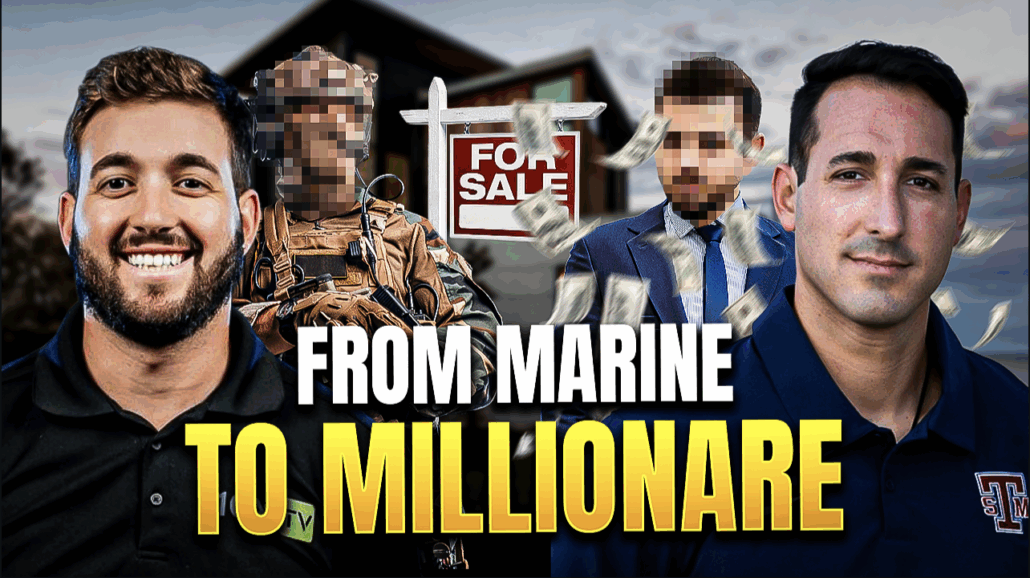
#85 Stop Chasing Deals: Build a Real Estate Business That Runs on Data | Greg Namrow
Stop Chasing Deals: Build a Real Estate Business That Runs on Data dives into how serious investors turn side hustles into real businesses with systems, KPIs, and disciplined asset management. Greg Namrow shares how he helps real estate investors make data-driven decisions, tighten operations, and survive any market cycle. You’ll also hear how performance tracking, portfolio reviews, and even channels like TV advertising, TV ads for business, and the right TV commercial strategy can support credibility and long-term growth. If you want to scale responsibly instead of guessing, this episode is for you.
===================================================
If you want to learn how to run your business in 5 hours or less…. Go to https://www.5HourBusiness.com
Subscribe to my YouTube channel:  / @tonyjavierbiz
And if you’re into flying and want to follow my Aviation journey, check out my other YouTube channel at / @tonyjaviertv
===================================================
If you want to dominate your Real Estate Market with TV commercials, go here: https://www.ClaimMyMarket.com
If you want to connect with me and my network, go to https://tonyjavier.com/connect
If you want to check out Tony’s Real Estate Resources and Vendors go to https://www.TonyJavier.com/resources
===================================================
Show Transcription:
Greg Namrow: (00:00)
The purpose behind my consulting firm and structuring is helping my clients succeed and build out their businesses faster, cleaner, be able to separate emotion from data and make decisions based on performance metrics, not just gut feeling or market noise, or a podcast that you use in a chasing deals would be the number one mistake that I see. Clients make chasing deals instead of building systems. Full-time investors will treat it like a business. They track KPIs, they manage their teams, they make data driven decisions. Stay in the game, stay disciplined, stay curious. The market is always going to fluctuate. It’s gonna change, but consistency and continuous learning. The biggest challenge right now is having the types of discipline that we were just talking about.
Noah Kesslin: (00:40)
What’s going on guys? Welcome back to the REM podcast. My name is Noah, and today we are with
Greg Namrow: (00:46)
Greg Naro.
Noah Kesslin: (00:47)
Awesome. Greg, thank you for coming on. I’m curious what drew you to this niche,
Greg Namrow: (00:53)
Uh, in the, the real estate space? Generational wealth creation, I think coming from the East coast and, and moving out to the west coast in southern California in 2012, I served, uh, six years active duty in, uh, in Marine Corps, six and a half years active duty, and then another couple years in reserve. So total of just over 10, around 10, 13 years, I, I, I, so I served all encompassing, but during my transition in 2016, I believe from active duty into the reserves, did a pretty simple assessment in corporate America and, and, uh, figured it was not gonna be a good fit for me. But I, I also tried, right? I gave it, I gave it the old, uh, college try with the suit and tie and, and, uh, and, uh, went into the W2 lifestyle. I made it about a year and a half before I, I truly found that to be acidic to who I was as a person.
Greg Namrow: (01:38)
It’s just no matter how fired up you get in the morning, you, you can’t get jazzed up about making a hundred phone calls and cold, cold calling people and having people hang up on you all day as a recruiter. So I decided to pivot and send myself back to grad school, and during that time period, I started to learn more about, uh, residual passive income. I would, you know, take my small family then I have a larger, larger family now, but we had just gotten a dog myself and the girlfriend now my wife, an older dog, and you would walk the beaches in the shore of, uh, LA Jolla, and you just look up in the houses and, and the people that were, you know, uberly successful, one could say, or maybe living a, a certain lifestyle that if, if I can’t get to that level, maybe I can get to the tier just beneath them. And if you do even, uh, an inch deep of research on some of the people that own some of these properties, you’ll find that they have a substantial amount of real estate inside of their portfolio. A little bit of a light bulb as I went back to grad school to get my MBA, I’m gonna focus into real estate and I haven’t went back.
Noah Kesslin: (02:27)
Awesome. And what does your business look like today?
Greg Namrow: (02:30)
Today is a unique business that I run, which is a, a fancy way for me to tell you. It’s a weird business that I run, but it works. So I run a consulting firm for real estate investors specifically, and inside of my consulting firm, primarily it’s a fractional C-O-O-C-E-O business. So I get hired by certain firms that can range from tax and accounting groups, property management groups, or communities and investors. And I will work with them to essentially enhance or streamline their business procedures as a CEO or COO figure. And then I can be retained long term, or I can be touch and go and, um, however, you know, the client sees fit in working within these different communities and, and different groups. I’ve had the opportunity to meet incredible investors that I still work with today since launch of my firm in 2017. So it’s been eight years that I’ve been working as a, as a consultant.
Greg Namrow: (03:16)
And I’ve, uh, developed, uh, my own mastermind, approximately 30 people inside of it called the Tactical Investor Mastermind. And that is a network of service oriented people, so people who are current or active duty military and are looking to achieve financial independence or, or their respective passive income goal buyer real estate, small business entrepreneurship, and working within a, a mastermind to get that done. And then I’ve also, uh, dipped my toe into the prop tech space, which is, uh, an efficiency baren that I need to get into. I had to get into because of some of my intricacies, I, I could say, or my, my gifting curse and that I have some OCD tendencies, which are really good for, for business and startup, right? And streamlining and building proficiencies, efficiencies not so good for my, for my personal life and, and, you know, doing the laundry or loading or unloading a dishwasher, my wife hates some of the, some of the oddities that I, that I bring to the table, but kind of draw, drawing a full circle and, and building a flywheel was the concept that I wanted to put together so that anybody that essentially comes into my atmosphere there hopefully should be a multitude of ways that I could provide value.
Noah Kesslin: (04:15)
That’s awesome. What’s the main problem that you were trying to solve when you started your consulting firm?
Greg Namrow: (04:22)
When I started my consulting firm, I’d say the, the main problem that I was trying to solve were inefficiencies would be essentially frequently asked questions or FAQs that didn’t need to be so frequent. Essentially, essentially build building in a layer, a layer of intuitive intuitiveness for my clients to where there were less questions because more answers were being provided on the front end. So it looked like tutorials and videos and mind maps and different demonstrations to help, uh, educate newer investors, middle of the road investors, varsity level investors on varsity level tactics to minimize your tax burden year over year, or to connect them with a bookkeeping agency that might help offload some of their trials and tribulations and filing the taxes every single year to legal components and, uh, and access to deals. That was the original purpose behind my consulting firm. And, and structuring is helping my, frankly, helping my clients succeed and build out their businesses faster, cleaner.
Greg Namrow: (05:14)
And since that time, my focus primarily, if I had to hyper niche it down into one thing, it would be into asset management. There’s something about being a consultant, particularly in the real estate space, in advocating for a client to make an investment decision and then going to sleep at night, restful like, you get a good job. I’m not great at that. It’ll actually, no joke, keep me up at night. So developing originally, of course, spreadsheets that turn into a web-based platform that would help investors or clients that I work with assess investment opportunities that they took down, uh, maybe, um, a year, 18 plus months ago. And assessing market stipulations aside, is this investment opportunity, opportunity performing as you thought it would in accordance with your assumptions or forecasts or not, right? And then, and then determining what decisions need to be made off of
Noah Kesslin: (05:59)
That. Awesome. Why do you think so many investors maybe over overlook that part of the business?
Greg Namrow: (06:05)
I think they have a lot going on in their life. I think very few of the clients that I work with primarily are, are real estate professionals. I think, you know, we can, we can help them or even their, their spouses or partners assess whether or not they are qualified to become a real estate professional. But across the board, you’re looking at, you know, a 42 and a half in the median range of a 42 and a half year old individual in this country who is working a W2 gig and maybe has a pair of golden handcuffs plastered onto their wrists essentially. And that kind of stuck in their corporate gig until retirement. Or maybe they are, um, active duty military and they’ve gone over the 10 year threshold and they figure why not stick it out to receive a pension, uh, in 20 years.
Greg Namrow: (06:41)
And it’s not good or bad. I’m not, I’m not, uh, uh, poking holes in any, uh, strategy that might be implemented for their generational wealth or their success in business or, or, or, or in the military or their, uh, employment. But it really, it led me to want to give back in a proper manner that made sense given the individual that I was working with. So all that generally to say is that I wanted to build tools and systems to help people like me, veterans are busy professionals, actually see if their investments are working for them instead of just assuming they are.
Noah Kesslin: (07:10)
Awesome. What do you think the most common misconception is about what you offer?
Greg Namrow: (07:15)
That it’s just another software tool? I think in reality it’s a discipline system, part tech, part mindset that’ll force investors to treat their portfolios like a real business instead of just a side household. Hmm.
Noah Kesslin: (07:27)
Okay. Can you share maybe like one or two key strategies or lessons that really made the biggest impact on some of your clients?
Greg Namrow: (07:36)
I would say first would be the implementation of some sort of cadence of accountability, a weekly or monthly portfolio review that’ll mirror a business p and l meeting, something like that. And then second would be to be able to separate emotion from data and make decisions based on performance metrics, not just gut feeling or market noise or a podcast that you use on a
Noah Kesslin: (07:59)
Gotcha. How do you feel about the current market right now?
Greg Namrow: (08:03)
Cautiously optimistic Fundamentals matter. So easy Money era is definitely over. People that did really well maybe five years ago are, are kind of showing their beliefs here now a couple years later. But right now it’s about discipline, clean underwriting, strong operators, making strong decisions, and buying for cash flow, not speculation.
Noah Kesslin: (08:24)
Awesome. What, what do you think is, um, you know, a common mistake that investors make that could easily be avoided
Greg Namrow: (08:32)
Chasing deals would be the, the number one mistake that I see clients make chasing deals instead of building systems. Too many investors that I work with focus on the next acquisition instead of tightening the operations and tracking performance on what they already own, thus the, the hyper focus and, and and niche into asset management
Noah Kesslin: (08:50)
When it comes to real estate investors, you know, there’s, there’s a lot of people that call themselves real estate investors, but you know, there’s a, a very big difference between someone that does it full-time and makes a lot of money and someone that’s just calls themselves real estate investor. What do you think that, what do you think separates the top dog, if you will, from someone that just claims they’re a real estate investor?
Greg Namrow: (09:11)
Comes down to intent and execution. Full-time investors will treat it like a business. They track KPIs, they manage their teams, they make data driven decisions. And I’ll try not to say that too often during the podcast here. People that are one foot in or hobbyists will treat it like a side project and hope for something like appreciation to build about,
Speaker 3: (09:29)
Want to get motivated sellers that nobody knows about, introducing 10 X tv. If you want to create credibility in your market, find deals that nobody else knows about and crush your competition, you need to check into TV commercials. It is the new buzz in the real estate investing industry since we introduced it several years ago. I’ve been using TV commercials myself for the last 12 years and it’s absolutely crushed it. So if you wanna learn how to get on TV and to do something that little to no people are doing right now, go to claim my market.com. Again, that’s claim my market.com. We usually only work with two investors per market, so if you’re interested, reach out to us and book a call to see if you can claim your market before anybody else does. Now, back to the show.
Noah Kesslin: (10:11)
When it comes to the word success, I feel like a lot of people have a different definition of it. Me personally, I’m very big in lifestyle by design and, you know, having a lifestyle that, you know, I could really enjoy. How do you measure success? How do you define the word success, and then how do you use that to help your clients and then help yourself as well?
Greg Namrow: (10:32)
Success for me is alignment. When how I spend my time matches what I say matters most to me, it’s less about net worth and a lot more about freedom, the impact into my respective communities and being fully present with my family. So I, I like to break that up into success tranches essentially. And, and I’ll just start with lower level example, and I, I used to call it, um, we used to call it me, my idiot friends in the Marines used to call it, um, being Lieutenant Rich, which was, we were training so hard and so often for upcoming deployments that really couldn’t be dumb with money. We, we couldn’t spend money, uh, as quickly as it was coming in. Not that we were making, um, you know, you can, you can look up what a, what a oh one or oh two in the, in the Marine court makes.
Greg Namrow: (11:16)
So it’s not, we weren’t driving around in Bed Mac, everybody, but it was, it was being able to go out maybe once every other month with friends. And when the bill would come in from the bar, it never really mattered what it was because we knew that we were responsible enough that we weren’t ordering bottle service. We had had a couple drinks to go dinner, and we lived down the street from the bar. We were gonna, we were gonna walk home, didn’t matter if it was $150 transaction or $350 transaction. I understood at that time that my credit card, no matter what, was gonna go to zero on the first. And, and I didn’t have any debts at that time. I paid everything my, that is in success for that. It is not easy to get there. In fact, I think probably close to 98% of, uh, people, especially in this country, are not quite there to pay off their credit cards every single month. I, I’m, you know, I’m part of that, uh, majority, but I think being able to assess these different tranches and tiers and then work through them progressively is what’s important. Staying disciplined in that manner to assess, am I heading in the right direction, yay or nay, and then what, what changes or adjustments need to be made.
Noah Kesslin: (12:17)
That’s awesome. I know, uh, I, I want to touch on the military piece a little bit. My, my best friend just got outta the military himself out of the Marines. So I understand what you’re saying a little bit just from, you know, him and i’s conversations, but how did you navigate coming out of the military to civilian life again, and then, you know, after that, starting a company, like what was that transition like? And if you don’t mind sharing kind of like hardships that you felt or had to go through because of how intense that training is and, and almost where your, your mindset goes a certain direction because of how you were taught for the last, you know, God knows how many years, I think you said 10 years. Like how did you navigate that?
Greg Namrow: (12:55)
It was super, and I’m sorry for the language. Hopefully that gets bleak. If we get, it gets bleak out, it gets bleak out. I don’t think, at least I’ve never come in contact with anybody who has come off of active duty into the civilian sector and said it was easy day. Everybody’s had their, their rough times during that transition. And I, in no exception, I think a lot of it comes down to luck and making your own luck. I was early to see that the corporate America gig that I was working, I, I worked two separate gigs and corporate America and e-commerce and then before that in, in recruiting. And I, I almost instantaneously knew that it was not gonna be a fit for me. So rather than playing it out longer, I, I just made the decision to pivot quickly because I, I had the eligibility and the bandwidth to take those risks.
Greg Namrow: (13:39)
I, I, I was not married, I didn’t have kids, so, so each circumstance could be a little bit different for, for those listening, obviously. But during that time period, I, I was able to take a calculated risk and essentially bet on myself to, to start a consulting firm with proper guidance in an industry that I, that I wanted to get into without knowing that it could be incredibly lonely. Frankly, in the last eight years I’ve been running a consulting firm. I’ve hired people and fired people, and I was, you know, I’m lucky enough to work with people inside of my mastermind and my ops team that are uberly talented. I need to come up with a plan to, to compensate and have these people stick around a little bit longer into the new year, right? Like, there, there’s, there’s a feeling of, frankly, of loneliness and entrepreneurship that you’re not going to assume comes with working in the business sector, coming from something like the Marines.
Greg Namrow: (14:25)
Uh, I’m a, a trained marine infantry officer. It’s what I did for 13 years actually in the Marine Corps. And if you looked up what I was supposed to be doing, giving my training over that time period, I should have been a cop or a sheriff or, or in charge of people with guts, right? Like, that is what the internet told me i, I was going to do. And, and as somebody who wanted to raise their hands, say, Hey, what, what if I want to do something else? I knew it was gonna be a tough road. It was just a matter of betting in myself, educating myself, and then determining what courses made sense and evaluating, right? It wasn’t about making decisions and saying, oh, I hope this goes well. It’s about making decisions. And then looking back 3, 6, 9 months down the road and assessing, were these the right decisions for me to make? Is it getting me closer to my passive income goals? Yes or no? And then adjusting,
Noah Kesslin: (15:08)
Do you think, going through the, in your words, the shittiness of it now looking back at your military training, are you able to take some of the lessons and some of the things that they taught you to, I mean, further help your career than someone that maybe didn’t go through all that training? I mean, this
Greg Namrow: (15:24)
Is not a recruitment statement. Uh, in, in whatever free time I had in life, I’m a entrepreneur. I’m a father of two gremlins. I I have that big 70 pound dog and I, and I love my wife, who is my best friend. I, with whatever free time I have, I coach high school football down the street at the, at the school that’s local to where I, where I live in, uh, Southern Orange County. And I’m happy to tell the people not happy about it. It’s just the truth. I can’t lie to these people that the people that I love or surround myself with, the Marine Corps’s the best thing that ever happened. I was definitely not on the right trajectory coming outta high school into college, getting in trouble in college, and I went into wings my junior year of college over the summer, and then I came back from my senior year and my world had been shifted, my perspective had been shifted.
Greg Namrow: (16:07)
It’s the first time I’d ever run into a true meritocracy where nobody, nobody really cares. When you go into the Marine Corps about who your father mother is, where you come from, how much money you have, how hard you work, how much you want to be here, who, um, served in the military prior to you, uh, if, you know, if you’re the smartest guy in the room or you’re the fastest guy in the room, it doesn’t matter. They their expectations. How mean can you do the right amount of pull-ups or not? Can you run this far and under this time with this amount of weight on your back or not? Can you score at when you’re done with the run, we’re gonna put you in a classroom, we’re gonna give you an exam. Can you get a 70 or 80 or above or not? And if you can’t, that’s okay, it’s a strike one.
Greg Namrow: (16:39)
Maybe it’s strike you in the third strike, you might have to go away. And it does not matter, you know, if you’re Rudy, you really, really, really wanna be on the football team. Nobody cares. There are standards and there’s expectations. That was the truly the best thing to happen to me in the Marine Corps. And I don’t use that as a infomercial, especially around high school boys that ask me about it. I, I, I tell ’em, you don’t have to go to military academies. Um, the Marine Corps, I needed a Marine Corps. I don’t think the Marine Corps needs me. And, and I use it today, now, not just in my, in my business life. It, it, it influences everything I do in business in terms of efficiencies and the way that I speak to people. But I would argue more importantly, it impacts the way that I, I parent my kids.
Greg Namrow: (17:14)
I, I, I believe in the marine corps’s training and everything, baseline training and uh, and expectations and standard settings. And, and no, I’m not setting a bootcamp in my house for my, for my two kids, but just watching them grow and, and learn from me, and understanding that there is a right way to do things and laziness won’t be tolerated in my house, even for a 3-year-old, I know how crazy that sounds. But hopefully my, my kids will turn out to be, uh, our normal human beings. And part of that is based upon my experience in the Marine Corps. And, and hopefully that is coming through in a, in a loving and nurturing manner because everything that I went through over the, over the past 13 years, it has absolutely benefited from my training in the Marines to be directly implemented to not just how I run my business today and mastermind and my PropTech platform, but again, more importantly, I would, uh, offer to you is, is how I pair my children. That’s
Noah Kesslin: (18:04)
Awesome. When it comes to, you know, back to investing, when it comes to challenges and looking at challenges through a different mindset, what do you think the biggest challenge you’re seeing right now in real estate?
Greg Namrow: (18:15)
I’d say the biggest challenge right now is, is having the types of discipline that we were just talking about, but while under pressure, it’s having to split under pressure. The rising rates, fluctuating rates and, and tighter lending underwriting are, are exposing some of the weaker operators in the space. So the winners will be there, rather, the winners will be those who can stay liquid, uh, manage efficiently and don’t chase deals that don’t quite meet their purchase criteria or, or their buy box staying disciplined, essentially.
Noah Kesslin: (18:45)
Yeah, I definitely agree with that. As far as AI goes, I know we were talking about it a little beforehand. How do you see technology, AI specifically, you know, revolutionizing or changing investing over the next few years?
Greg Namrow: (18:57)
It’s inevitable. An alarmist, I like to, I joke within my mastermind, I like to be, at least at minimum, a top three person in their life that’s screaming from the rooftops, these robots are coming to kill us. I remind people that Terminator two is a, is a, is a real movie, and people should watch that movie because it, it’s coming for us. But jokes aside, AI is going to be used to separate operators from optimizers, essentially. It, it won’t, it will in some capacity replace people. Fortunately, unfortunately, depending on how you look at it. But it won’t replace good operators necessarily. It will expose inefficiencies and it, it’ll expose inefficiencies fairly quickly. Automating things like data analysis or forecasting and, and reporting is to be done in seconds, not in, not in weeks, not in days. Investors can make smarter, cleaner, faster decisions with real time clarity using ai, and it would be, at this point, neg negligible not to be using artificial intelligence to help you.
Noah Kesslin: (19:53)
If you were to start your business again from scratch today, what would you focus on First?
Greg Namrow: (20:00)
I want to say a, a bit more of brand strategizing and definitely more of a, a sales component, but I, I’m a systems guy and, and I, I, I think developing systems will allow and open up more doors for you to hit some of the more outside sales components that, that aren’t my, it’s definitely not my favorite thing to do, and it’s, it’s not my, my skillset, but it’s important to gain traction in any business. But to directly address your question, I’d, I’d probably focus on building systems before scaling. I find on a daily basis, too many founders chase growth early, very early, and, and I, I would double down on process automation data clarity from day one to make decisions measurable, and not just for myself, but for my clients as well.
Noah Kesslin: (20:43)
Awesome. As far as your consulting business, when it comes to a certain type of investor, what, what is like your ideal investor that you can really help?
Greg Namrow: (20:53)
I typically work best with growth-minded investors. People who are already owning assets, but know their systems are, are messy and want to scale responsibly through better data structure, accountability, transparency, things like that.
Noah Kesslin: (21:05)
Awesome. What’s something interesting that something people would find interesting to learn about you?
Greg Namrow: (21:10)
I think people would be surprised. I coach high school football. I think I don’t coach, I’ve been coaching for the last five years, the same team. It’s a private school up here, and we got, you know, on average maybe 30, 40 kids on the team. So it’s a, it’s a unique playing structure, but it’s a, it’s a game that, that I holistically believe in for, for a lot of reasons, and I won’t bore yourself or the audience with those reasons, but the game keeps me grounded. It reminds me how important it’s to lead young teams, young men. And honestly, it’s where I, I found that a lot of my leadership and systems thinking gets, it gets tested in real time. Uh, i, I find it almost appropriate to apply some of the leadership coaching, mentorship tactics that I use in my day-to-day activities and business on, you know, 14, 15, 16 year olds on the football field and, and assess whether things are, are gonna work the way that I plan them to. Awesome.
Noah Kesslin: (22:00)
Cool. What drives you personally to keep innovating and helping other investors?
Greg Namrow: (22:06)
I find it to be probably responsibility and a bit of curiosity. I am wired at this point. I’m wired to fix inefficiencies and I feel, I almost feel it a, a duty to help others operate better in this space, whether that’s for clients of mine that are investors, teams or groups that I work with or my kids. I want them to see how I work. I want them to see the amount of time and energy and effort I put into in my business as successful as it can possibly be. And then I, I want clients to see the importance I put on doing what I say I’m going to do while working with them and tracking results.
Noah Kesslin: (22:41)
That’s awesome. When it comes to influences, I know the military has to be a huge influence on your life, but who would you say is the biggest influence or mentor that you’ve had in, in your life?
Greg Namrow: (22:54)
I’d say it’s probably, it’s probably my grandfather. He has since passed, but it’s probably my grandfather. He, he immigrated to this country from Cuba. When Castro took power, he came to this country with nothing. He brought his two kids, his two daughters, which, um, one of them obviously being my mother, uh, and his wife. And, and he was a successful businessman and, and, and doctor, he’s a pediatrician and in Cuba, and he came to this country not speaking the language, um, with nothing. And long story boring there is that both of his, his children became doctors. And I’m coming from that mold in, in, and essentially someone telling you early and often as a little boy up until his passing, that if you work harder than the next guy in this country, you’re gonna be okay. You’re truly gonna be all right. So without question, um, it would be my late grandfather. He taught me consistency. He taught me humility. He had, he taught me how to show up and work hard even when no one’s watching. And those lessons have shaped how I lead teams and, and built my businesses today.
Noah Kesslin: (23:49)
That’s awesome. Where can people find you? Where can people learn more about you and connect with you?
Greg Namrow: (23:54)
Absolutely. Yeah. If you are interested in connecting with me personally, I’m on LinkedIn, I’m on Facebook, I’m on Instagram. If you just search Greg Naro, GREG, Greg, and then Naro, N-A-M-R-O-W. Um, if you’re interested in joining a mastermind of like-minded individuals that have served either in a military capacity or their service oriented profession like, uh, firefighter, police officer, EMTs, nurses, doctors, things like that, you can, uh, go to, uh, tactical investor mastermind.com. And then if you are a real estate investor and you own assets and you want to properly track them and you’re using a spreadsheet and your spreadsheet is not going as well as you had assumed it would go, feel free to head over to track. That’s T-R-A-C-T-I-C track.io. And then we, we’ll have a, uh, wait list for our free subscription or a rookie tier there, there, which is, uh, gonna be a free subscription trial for anybody that’s interested in B would glove j more and more users on that platform, more doors on the platform, frankly, so that we can start building mean some of the, the data analytics from the micro perspective and then potentially scaling it to help some of the, the macro groups, your, you know, your, your project fully is on the block, the realtor dot coms, the Zillows, the costars, hopefully start showing them and integrating some of our data into their underwriting and their assumptions, uh, their numbers.
Greg Namrow: (25:09)
And you, you probably can pick up what I’m putting down in terms of look up, you know, your primary residence right now and pull up the Z estimate or your estimate, whatever you wanna call it. And it’s never quite right. Right. And I, I think track the amount of users, amount of doors we have on it right now can help with some of that data integration and, and frankly, um, hyper-focus on improving, uh, the clean data stature on these platforms. And we look forward to working with anybody who is a landlord, a property owner, um, real estate investor who wants to better assess, track, and make data driven decisions on, on tracking io.
Noah Kesslin: (25:39)
Awesome. Any final advice or, you know, words to any investor looking to grow or simplify their business,
Greg Namrow: (25:47)
Stay in the game, stay disciplined, stay curious. The market is always going to fluctuates gonna change, but consistency and continuous learning, putting yourself in, in touch with people that you respect, that have a track record of success that can showcase an authentic and transparent way. Their track record of success will keep you ahead no matter what cycle we’re on.
Noah Kesslin: (26:07)
That’s awesome. Well, thank you Greg again for coming on. Thank you guys for listening and you guys have a good one.
Greg Namrow: (26:12)
Appreciate it. Thank you so much.

