
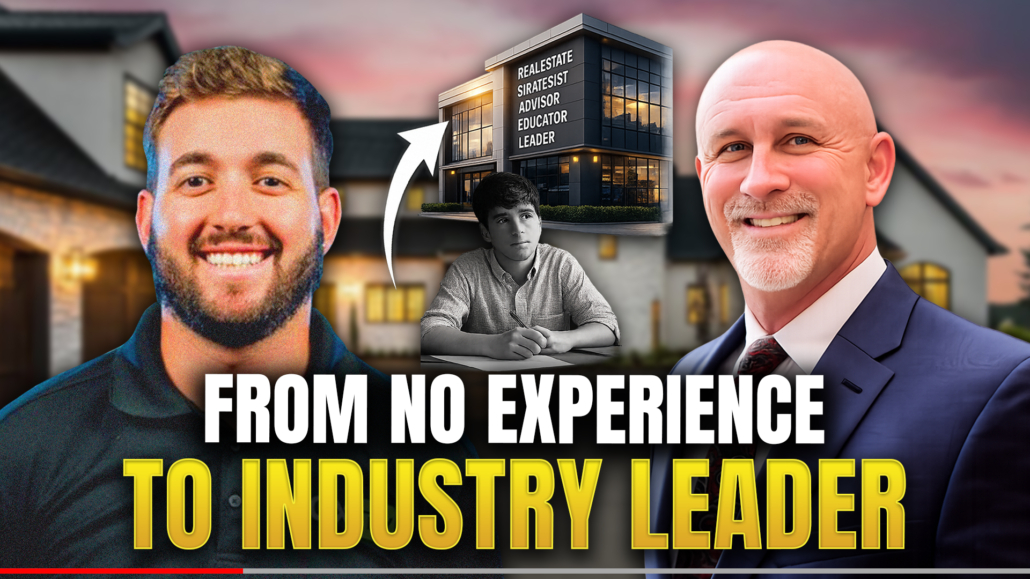
#152 How to Negotiate Commercial Leases Like a Pro | Greg Schenk
How to Negotiate Commercial Leases Like a Pro features Greg Schenk breaking down the costly mistakes most business owners make when signing or renewing commercial leases. In this episode of the Real Estate Masters Podcast, Greg explains how tenant representation works, why landlords often have the advantage, and the negotiation strategies that can save companies thousands of dollars. He also shares his journey from corporate sales into commercial real estate, the mindset shifts that created financial freedom, and why relationships and education matter more than transactions.
===================================================
If you want to learn how to run your business in 5 hours or less…. Go to https://www.5HourBusiness.com
Subscribe to my YouTube channel:  / @tonyjavierbiz
And if you’re into flying and want to follow my Aviation journey, check out my other YouTube channel at / @tonyjaviertv
===================================================
If you want to dominate your Real Estate Market with TV commercials, go here: https://www.ClaimMyMarket.com
If you want to connect with me and my network, go to https://tonyjavier.com/connect
If you want to check out Tony’s Real Estate Resources and Vendors go to https://www.TonyJavier.com/resources
===================================================
Show Transcription:
I have a doctor that’s phenomenal and he goes, Greg, you need to get out of your comfort zone every day. Every day you’ll grow more as a person if you do that. For me, it’s not about material things. It’s about being able to do what you want, when you want, with whom you want, where you want. And I’m fortunate I have that ability and I want to help others do the same. So many people stay at a company in a business no matter real estate or whatever. They want the benefits. Give me the insurance benefits, whatever, which is the most lamoest thing in the world. Most people don’t know that our business even exists. They’ve heard of a listing agent. They probably have heard of a buyer’s broker in residential. They might not have heard of a tenant rep broker. So a lot of it is just educating people. There’s what’s called a notice period in the lease. It could be anywhere from 30 days to six months. The landlord’s going to send a written notice. Your lease is coming up. You’ve got a renewal option or what do you want to do? Here’s the new rate. And they just sign it. So they do no market research.
Tony Javier (00:56):
Welcome to the Real Estate Masters podcast where we bring you the top real estate investors in the country. If you also want to be in the top 1%, you are in the right place. Listening to podcasts like this is exactly what helped me to scale my real estate investing business to seven figures, flip over a thousand houses and more importantly, step out of being the operations of my business over a decade ago so I could start and grow other businesses. So get ready to learn from the best and start building a business that works for you and not the other way around. Enjoy.
Noah Kesslin (01:29):
What’s going on guys? Greg, thank you so much for taking the time. I kind of want to take a step back and just see how you got into real estate in the first place.
Greg Schenk (01:38):
Well, first of all, thank you for having me today. That’s a great question. If you would’ve given me a thousand careers out of college, commercial real estate would not have been one of them. I’d never even heard the term. I’d heard of residential real estate. I had one of my friend’s fathers in that, but never even gave it a though in college. I took a job after school. There was no jobs when I got out of school. Interest rates were 17%. Thank you, Jimmy Carter. And I was living in Columbus, Ohio. I went to Ohio State. I got out of school, wanted to stay in Columbus, no jobs. I interviewed with three of the best companies I thought I’d get into sales, but I didn’t really know what I wanted to do. I took a job to move me to Southern California. I lived on the beach there for four years and I sold foreign car engine parts, pistons, bearings, valves, something else I knew zero about. I ended up being very good at doing that and that gave me a lot of confidence. And out of the blue one day, one of my buddies goes, “I think you’d be good in commercial real estate.” And I said, “What’s that? ” And he turned me onto a buddy as his. I went over and kind of shadowed him and said, “Okay, this looks interesting. You can control your own destiny.” Then I flew back to Ohio for a friend’s wedding and I had a gut feel Columbus was going to grow and I’m a big believer in trusting your own gut. And I left a job with a company car expense account and a salary, which in Southern California didn’t go far. And I moved back straight commission, even had to pay my own move to take a straight commission job. But I set a very high goal. I said, “I’ll give it two years and if it doesn’t do good, I will go back.” And everybody said, “You’re just nuts. You’re crazy. What are you doing?” I had no contacts. I had no car. I had not a nice suit. I didn’t have a nice pair of shoes. I had nothing, but I had a good work ethic. So I set those high goals and within two years, I made Rookie of the Year in top five and nine years later I did the biggest deal in the state of Ohio and I left the biggest company in the country and I went on my own. And the same thing happened. Everybody said, “You’re nuts, you’re crazy. What are you doing?” And the same exact thing happened. It turned out to be the best thing that I ever did in my life and September will now be 30 years of having my own company of representing tenants, buyers, and investors.
Noah Kesslin (03:42):
That’s awesome. That’s awesome. And then for the listeners, what does the business exactly look like today?
Greg Schenk (03:50):
Sure. So the business is called tenant representation. What that means is we help companies improve their bottom line on their real estate facilities. That could be renewing a lease, restructuring a lease. That’s probably 80% of it. Most companies, just like you could refinance your mortgage on your home, when your lease comes up, you can renegotiate with your landlord. Most people rubber stamp it and never knew they could do that. And that’s anything from lowering your rent, getting more improvements, which could be paint and carpet, could be negotiating more parking spaces, better HVAC systems, signage, whatever their hot buttons are. Or we’re helping them relocate to a new facility that could be to lease a building, build a building, purchase a building. And then we’ve got affiliates in 50 markets in the US and a hundred around the world. So if you’re in North Houston and you need office space, I’ve got a guy in Houston that’s an expert in that market. So we’ll refer business back and forth. The majority of my business is in Columbus, Ohio, but I spend the winners in Miami the last five years. So I’m doing business all over the place. And then to differentiate myself, when I left the biggest company, I started speaking and teaching around the country. So this year also will mark 30 years of speaking and teaching. I do continuing education for brokers as well as attorneys and accountants. And then I talk about the market and how to prosper in it. Those are the main things that I do is educate people, not sell them, which really help me differentiate myself from everyone else.
Tony Javier (05:13):
Want to get motivated sellers that nobody knows about? Introducing 10XTV. If you want to create credibility in your market, find deals that nobody else knows about and crush your competition, you need to check into TV commercials. It is the new buzz in the real estate investing industry since we introduced it several years ago. I’ve been using TV commercials myself for the last 12 years and it’s absolutely crushed it. So if you want to learn how to get on TV and to do something that little to know people are doing right now, go to claimmymarket.com. Again, that’s claimmymarket.com. We usually only work with two investors per market. So if you’re interested, reach out to us and book a call to see if you can claim your market before anybody else does. Now back to the show.
Noah Kesslin (05:55):
I’m curious what the main problem you were trying to solve when starting your own business. I would say when you left the big company in Columbus to your own business, what was that main thing that you were trying to maybe solve or do for yourself that made you leave?
Greg Schenk (06:14):
Well, I gave them 50 cents of every dollar that I made for nine years, which was a lot of money. And when I did the largest deal in the state in 95, it was a whole lot of money. It was the bureaucracy of dealing with a big company, but I had a huge commission dispute that they didn’t stand behind me. So it was kind of like the writing was on the wall that they didn’t really give a shit about the individual. It was a big 70,000 employee company. I never dreamed I’d have my own, never in a million years, something that I desired, but I knew that I could do it better. Bigger isn’t better, the lesson better is better and I gave a much level higher of service. I did start working more with privately held companies than big Fortune 500 or Fortune 1000 companies. So I’m dealing directly with the president of the company and I like that. Sitting eye to eye, what’s your goals? Where you been? Where are you now? Where do you want to go? We’ll help them put together a strategic plan and then we help them implement that plan. And instead of selling something to somebody, listing agents put signs out and try to lease or sell you that building. I help companies get what they want. I’m the only one in my city that does it exclusively. And again, I’ve banded together with other people around the world that do the same thing. So we’re advisors, consultants first and resultants second and people like that. Their guard comes down. We’re relationship driven, not transaction driven. Some of my assignments are two years. So I’m putting 100 hours plus into an assignment. So you’re really developing a relationship and it’s been very satisfying and gratifying. And every dream or goal that I had from a little kid who grew up with nothing, my dad left when I was 12. I worked two jobs through high school and college. I mean, we had very, very little. So to get now that I can travel the world and do what I want is just a dream come true and speaking to teaching and helping others do the same is really, really gratifying to me.
Noah Kesslin (08:07):
That’s awesome. I feel like a lot of people, they work for someone, whether it be something like you were talking about where they get into a commission based where they’re unhappy in it. A lot of people don’t leave and they don’t go on their own. What do you think the main hindrance of that? And it could just be confidence in themselves, but what do you think the main thing that keeps people from going out on their own?
Greg Schenk (08:37):
Fear or getting out of their comfort zone. And I’m really lucky. I have a doctor that’s phenomenal and he goes, Greg, you need to get out of your comfort zone every day. Every day you’ll grow more as a person if you do that. So many people stay at a company in a business no matter real estate or whatever. They want the benefits. Give me the insurance benefits, whatever, which is the most lamest thing in the world. Even if your insurance is costing you two grand a month, okay, 25 grand compared to the hundreds of thousands you could make doing something on your own, having your own business. So I begged some of my coworkers to come with me. None of them would. They’re all very successful. So it’s not like you don’t make money in one versus the other, but the satisfaction, the gratification. The biggest thing I did is I didn’t change my lifestyle one iota. The 50 cents of every dollar that I gave that company, I invested. I bought stocks or I bought properties. I own properties in 12 states and partnerships. So I get dividends from those properties that lets me travel the world. I had a goal to do 50 trips in five years. I did 53. Last year I went to Switzerland. I went to Greece. I went to California three times and did some other … I’m a big football fan, did a lot of trips from my Ohio State Buckeyes. So for me, it’s not about material things. It’s about being able to do what you want, when you want, with whom you want, where you want. And I’m fortunate I have that ability and I want to help others do the same.
Noah Kesslin (10:11):
I love that. What do you think the most common misconception is about what you offer as far as the business piece of it?
Greg Schenk (10:20):
Well, most people don’t know that our business even exists. They’ve heard of a listing agent. They probably have heard of a buyer’s broker in residential. They might not have heard of a tenant rep broker. So a lot of it is just educating people. The law changed in 1989. Before that it was called Let the Buyer Beware and buyers were getting screwed left and right in both residential and commercial. So when that law came about, I moved all my business. I started in 86. I moved all my business over from doing both listings and tenant rep into tenant rep, because I never like to sell anything to anybody. I like to help people get what they want. So for me, it is educating. Sometimes they have their attorney do it, sometimes they do it theirself. And the analogy that I use is it’s like going to court without an attorney. You could do it, but you wouldn’t be very bright. You could do your own taxes, but why not have a CPA who’s an expert? So we’re an expert in the market. I study the market like three hours a day. I know every listing agent. I know the owners. I know which owners have money to do build out and which don’t, which ones are going to treat you great and which ones aren’t. Which ones are slum nords? Which ones are big REITs. So you don’t learn that online. You don’t learn that from AI. You learn that from experience and out there talking to people. And that’s what we discuss with them again, what their goals are, helping them put together a strategic plan. A lot of companies now are working from home half the time so they don’t need the size space that they need. They don’t need the type of space. They may want nicer space but a lot smaller. So we’re helping them go through all those different scenarios to see what works best for them. We don’t put a square peg in a round hole. Everything’s on our reputation. 100% of my business is either from past clients or people that have heard me speak or teach or my reputation. So I’m very fortunate in that respect.
Noah Kesslin (12:15):
Yeah, I love that. What mistakes do you often see your clients before they become your clients? What’s the most common mistake that you see them make that you think could be really easily avoidable besides just like hiring you to do it? What’s the actual mistake that they make in the process of it that you’re like, “Oh, I would’ve done this so differently.”
Greg Schenk (12:39):
Well, again, about 80% renew the lease, they renew without any negotiations. They rubber stamp it. There’s what’s called a notice period in the lease. It could be anywhere from 30 days to six months. The landlord’s going to send a written notice. Your lease is coming up. You’ve got a renewal option or what do you want to do? Here’s the new rate. And they just sign it. So they do no market research. Obviously the market’s changed a lot in three years, five years, seven years, 10 years. Most people do a three to 10 year lease. Medical could do a 20 year lease. Our small clients do three to five or bigger ones do five to 10 year leases, but the market’s changed unbelievably. Office vacancies are the highest they’ve ever been in 40 years, mostly because of the stay at home thing with COVID and now the work from home that so many companies are doing. So it’s changed the landscape entirely. The nice buildings are pretty full, but the BNC older buildings are crap. So most people make that mistake. They just renew, they don’t do any research and the landlord is not their friend. The landlord or their landlord’s listing agent is out to get the best deal for the landlord, not the tenant. So most of the time they’re losing money. And then there’s usually about a half a dozen lease clauses that basically screw them over. And one of them is the notice period clause that you want as long a period as possible because if you decide to move and you only have 30 days, there’s no way you can move in 30 days. And then there’s a thing called a holdover penalty, which could be double the rent. So you decide to move and all of a sudden it takes you five months to move and you’re paying four months a holdover penalty and double the rent. Nobody’s going to be too happy with that. So most of the time they don’t read their lease. It could be 80 to 100 pages. Who wants to read that? The fine print. Okay. I don’t want to read that, but that’s what I got to do. So I negotiate the business terms and conditions and then get with their real estate attorney, or if they don’t have one, I get them one and work in conjunction with them to make sure those five or six clauses are more evenly balanced or more in their favor. But those two that I just mentioned are the two biggest ones that can really come back and haunt you. We have a 44 point checklist that goes over all of that. So I negotiate again the business terms and conditions, but so many people, they never look at those items, whether they need more parking or security or they’re unhappy with the way the restrooms are cleaned, whatever their hot buttons are. I never assume anything because it’s always different for every client that I work with.
Noah Kesslin (15:19):
Yeah, for sure. You kind of touched on it a little bit earlier, but the word success to me is very intriguing. Everyone has their own definition for it. Everyone’s got their own way of measuring it and striving for it. How do you define the word success and how do you measure it and how do you strive for it every day?
Greg Schenk (15:44):
Well, that is a great question. So for me, my dad left when I was very young and I didn’t want to be a burden of my mom. So I started work at a very young age. I wanted to be self-sufficient. I sold suckers in fifth grade to go to basketball camp. I started as a golf caddy in fifth grade. I caddied eight years and got the scholarship called the Evans Scholarship from Golf Canning Scholastics and Financial Need. I bought a car the day I turned 16. I got out of college a quarter early. I was so tired of being poor. I mean, that’s my dri So success was at first, don’t be poor. Now I had a couple of friends that grew up with money. They owned car dealerships so they were filthy rich as far as I was … They could do whatever the hell they wanted, basically. We call it FU money. I’ll try to be politically correct on the podcast here, but I’m in Miami and the wealthiest area of Miami where there’s rentals for 40 and 50,000 a month and homes for over a hundred million dollars. If you’ve read anything in the paper, everybody’s leaving New York and California moving less than a mile from where I’m staying. It’s mind boggling. That success is different than my success. I don’t care, as I said, about material things. So some people want a big house, a big car, this and that. Mine is my freedom of my time and I’m a single dad, so spending time with my son, my friends, my family, my mom, thank God she’s still healthy That to me is what it’s all about. Control over your time. If I want to go to Hawaii tomorrow, I can do it and nobody can stop me and that is a really, really good feeling. So financial security, health, as I told you, I work out every day. I take my health really seriously. The older you get, your quality of life really changes when you’re healthy versus not being healthy. And if you want to travel, you obviously need that energy and that ability to do it. I went to Switzerland last summer. One of my favorite trips went hiking every day when it was out is just amazing. So that’s really success in a nutshell for me. And I don’t think I scraped the surface yet because I want to help a lot of people learn financial literacy, learn how to invest in property, learn how to put together a budget and quit bitching. Most people just bitch and they want the government to help them instead of becoming personally, financially responsible, which I’m a huge proponent on learning financial literacy education. I think I ought to be taught in fourth or fifth grade. If you learn it then a light goes on and you’re like, “I can control my whole life.” And the first guy I studied, this is really important. W. Clement Stone said what the mind can perceive and believe it can achieve. Whatever we really think about and really believe it, we can do it and I’m living proof of that because I grew up with nothing special. For a lot of people, were their parents, savers or spenders? Did they grow up with money or not? Did they learn about risk tolerance? Were their parents risky? Would you risk something to make more? As we talked earlier, some people are in a salary job. There’s no way they would leave that. No way. And very few people can handle being on straight commission and others want to take that chance and do it. I never thought I’d be on straight commission. I never thought I’d be a business owner or an entrepreneur. I never thought I’d be investing in investment property. None of those things ever crossed my mind. But I think the more you get out of your comfort zone and educate yourself and hang around the right mentally stimulating, uplifting, outgoing people, the more you’re going to succeed. When I left my old company, I started a think tank group. We have seven guys that all were with the big company. We’re in different markets, so we’re not competitors and we’ve helped each other so much. One of the guys, we built a strip center, a retail strip center in 2008, so 18 years ago and we’re making like 20% return off it. At first we didn’t make a dime so we’ve learned and grown with that. So hanging around the right people. It’s always easy to find good time, Joe, to go to the bar and have a beer, but somebody to sit down and say, “What really is on your mind? What are your goals? Are you getting out of your comfort zone? Is someone holding you accountable to your goals personally, financially? All of those, the more you’re going to go as a person.
Noah Kesslin (20:11):
Yeah, 100%. 100%. If you were going to start from scratch today, business goes away, everything goes away, but you get to keep all the knowledge that you’ve learned over the years. What would be the first thing you focus on? What would you focus on first?
Greg Schenk (20:32):
Well, it’s all about the relationships for me. Who you surround yourself? So in my business, you need a real estate attorney. You need an accountant that understands real estate. You need a commercial banker. You need an insurance person. You need a fee-only financial planner. You need a contractor. You need an architect. Those seven or eight different groups to help you because I don’t know crap about construction. I need an expert in that area. I stay in my lane. I can find the site. I can negotiate. I need help from all those other … I don’t know the tax laws. I’m not going to bullshit. I make one mistake. There goes my reputation. So surrounding yourself, making the relationships with those people, I call them trusted advisors. When usually I get referred business, it could be from somebody’s attorney, their accountant, their banker, their friend, their coworker, whatever on that. But the people that don’t have those usually struggle or go out of business. If I’m representing a startup company, I’ve probably helped a hundred startup companies. Many of them don’t have those right people. They may have an attorney but not a real estate attorney. They may have an account, but not an accountant that understands the real estate laws and the write-offs, the legal write-offs and all that kind of … And that’s maker great. That’s huge. And so getting those people and then continuing to learn. I mean, I go to half a dozen conferences and seminars and things like that every year to continue to learn. I have the equivalent of a PhD in real estate, not 1% of people have that. I’ve got like 200 hours of post-grad in different real estate and investing and negotiation, things of that. So that’s the biggest part, who you’re surrounding yourself, who your relationship with. We all have 24 hours. So who are we surrounding ourselves to go out and develop those relationships?
Noah Kesslin (22:25):
Yeah, 100%. Well, Greg, I appreciate you so much for coming on the podcast today. Everyone, thanks for watching and we’ll see you next time.

