
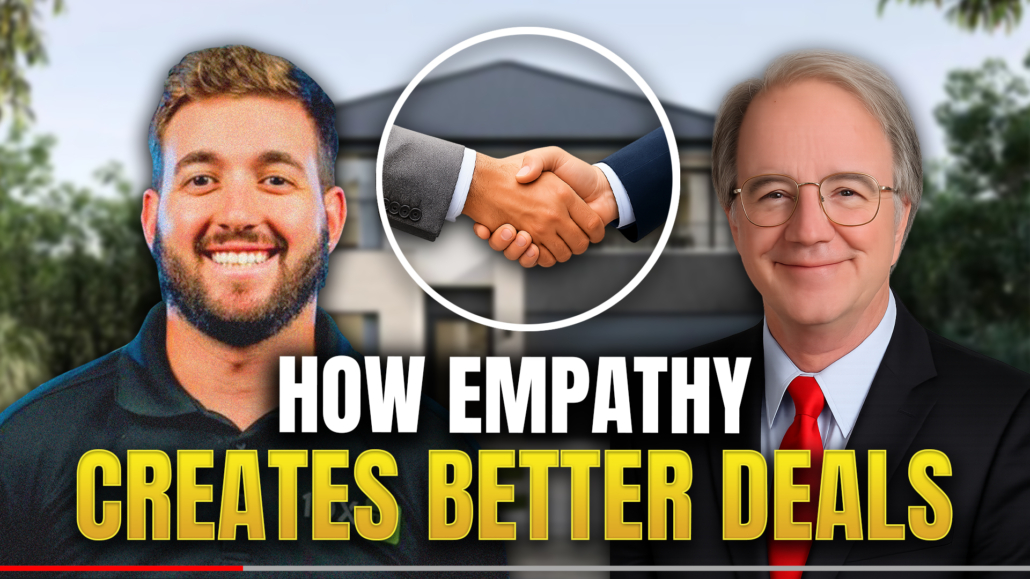
#155 AI Real Estate Negotiation | Tim Burrell
AI Real Estate Negotiation | Tim Burrell explores how AI is changing the way real estate investors, agents, and negotiators prepare for deals. Tim Burrell shares lessons from 46 years in real estate, including how to use AI research before negotiations, build rapport with sellers, solve problems creatively, and create win-win outcomes through collaborative negotiation.
===================================================
If you want to learn how to run your business in 5 hours or less…. Go to https://www.5HourBusiness.com
Subscribe to my YouTube channel:  / @tonyjavierbiz
And if you’re into flying and want to follow my Aviation journey, check out my other YouTube channel at / @tonyjaviertv
===================================================
If you want to dominate your Real Estate Market with TV commercials, go here: https://www.ClaimMyMarket.com
If you want to connect with me and my network, go to https://tonyjavier.com/connect
If you want to check out Tony’s Real Estate Resources and Vendors go to https://www.TonyJavier.com/resources
===================================================
Show Transcription:
The biggest thing that has been well received about the AI negotiator book is how to do research using AI before you start negotiating. Start off on a collaborative basis with people. Most realtors have an interesting time learning how to negotiate in a collaborative manner. If you do that correctly, it’s like working together to solve a puzzle. It’s so much better. You come up with so much better results and they ask them, what is the most important factor in the negotiation? The last majority of time it’s ever. If I give you the closing date, there’s a huge value on your side of the ledger. Now I can get a similar value on my side of the ledger just because I understood what your situation is and what your problem is. So that’s that unfortunately a whole lot of people overlook do your homework.
Tony Javier (00:43):
Welcome to the Real Estate Masters Podcast where we bring you the top real estate investors in the country. If you also want to be in the top 1%, you are in the right place. Listening to podcasts like this is exactly what helped me to scale my real estate investing business to seven figures, flip over a thousand houses and more importantly, step out of daily operations of my business over a decade ago so I could start and grow other businesses. So get ready to learn from the best and start building a business that works for you and not the other way around. Enjoy.
Noah Kesslin (01:16):
What’s going on guys? Tim, thank you so much for joining us today. I know you’ve been in the business for 46 years. If there was one thing that you could attribute to your success in the space over the last 46 years, what would that one thing be?
Tim Burrell (01:32):
Figuring out that the new cheese is in the market and technology at least as quickly as anybody else does, if not quicker. Awesome. The second most important thing is I’m relatively good at solving problems.
Noah Kesslin (01:44):
Solving problems is always a good thing for sure. What brought you into real estate in the first place?
Tim Burrell (01:52):
My buyer was a real estate broker. My father was a contractor. All my life I’ve been doing this stuff. The other thing, when I went to law school, I’ve got a few years of me. This was way back a long time ago. I could be a law clerk for $5 an hour. By then I was a master carpenter. I started working in construction at six and so I was in one school and so that was three times as much money. So I swung at him one of the summers as opposed to being a law clerk.
Noah Kesslin (02:19):
And what does the business look like today?
Tim Burrell (02:23):
It’s transitional. And you’re sitting here just wondering which way it’s going to go. 51 months ago we saw the interest rates drop down below six. All life is wonderful. All of a sudden it’s shot up dramatically. It transitions that rapidly. It causes all sorts of disruption in the market. The uncertainty and the rest of the economy is also making it more entertaining. So part of my business is fixing and flipping properties. Another part of it is making presentations, teaching people about AI. And another part is just regular old fashioned real estate. And so with these transitions, it’s very interesting. It’s actually good for the teaching business. So the uncertainty makes people want to learn all sorts of things. I recently put out the book, The AI Negotiator, and it’s been very well received and I’ve been doing a number of classes. For example, they hired me originally to go down to Fayetteville and give a presentation down there just to get people up to speed with AI. It’s going to dramatically change our business. Not quite as much as having the internet come in did, but the transition is going to be substantial and so people need to get ready for it. And that’s been one of the things that has been my advantage, figuring things out fairly early and then helping other people with it. That’s partly why I wrote the book. Also, it’s really nice to give back. After this many years, real estate’s been good to me. And so if I can help other people move along, then it does me good.
Tony Javier (03:44):
Want to get motivated sellers that nobody knows about? Introducing 10X TV. If you want to create credibility in your market, find deals that nobody else knows about and crush your competition, you need to check into TV commercials. It is the new buzz in the real estate investing industry since we introduced it several years ago. I’ve been using TV commercials myself for the last 12 years and it’s absolutely crushed it. So if you want to learn how to get on TV and to do something that little to know people are doing right now, go to claimmymarket.com. Again, that’s claimmymarket.com. We usually only work with two investors per market. So if you’re interested, reach out to us and book a call to see if you can claim your market before anybody else does. Now back to the show.
Noah Kesslin (04:26):
What would you say is the biggest change? I know there’s a lot going on with real estate right now, some of what you mentioned, but if there was one thing, the biggest thing that you’ve seen be the change in the last two months in real estate, what would that
Tim Burrell (04:41):
Be? And artificial intelligence. We used to be looking for church engine optimization. Now we’re looking for some optimization so AI can find us. The other thing that has really changed dramatically, my specialty is negotiating. I teach continuing education classes and negotiating. I write books on it. The biggest thing that has been well received about the AI negotiator book is how to do research using AI before you start negotiating. For example, if I’m going to bring you an offer, before winning an offer, I’ve got a super prompt that I put in there, stick your name into it and find out quite a bit about you so that you just don’t come in cold. And that way I can start on the right foot, begin with a friendly approach to it, have some kind of report and validation building. Report is the two passes. And so if you can start off on a collaborative basis with people, most realtors have an interesting time learning how to negotiate in a collaborative manner. If you do that correctly, it’s like working together to solve a puzzle. It’s so much better. You come up with so much better results, but to do that, you have to start on the right position. So if I put my super prep in there, I find out about the other party. The other party is not my apartment. The other party is the other half of this deal together and then we can begin very well. The AI has gotten dramatically better. In the book I talk about you need seven steps for a super prompt of really good, good information. AI has gotten so much better in the last couple of months. You can put stuff in that has like two or three of the components and you’re still doing some good information.
Noah Kesslin (06:20):
Yeah. Why do you think so many investors overlook the negotiating piece and really harping on that?
Tim Burrell (06:30):
I think investors are fairly savvy in terms of knowing that your ability to negotiate is going to make a difference on whether you get the deal or not. And you really need to look into, this is a part that I teach a lot, but the vast majority of people you’re exactly right, overlook part of negotiating is empathy. The harder project on negotiating is a very good source of information and they won award each year. They interview the person they think did the greatest negotiation in the world and they ask them humor, what is the most important factor in the negotiation? The vast majority of time it’s empathy. And this is why I’m talking about start collaboratively, find out some common ground, discuss things with somebody so you can work together as opposed to just barging your head and saying, “Well, look, this is this. ” You negotiate by wolfy wolf people, not by threatening them. And you negotiate by fighting out something about them and what’s really important to them. Your benefit negotiating is asymmetry. You’re looking for something that is really important to the other party that’s not that costly to you. Say for example, I come to you and you have a big forepleasure problem and your tongue is looming. Well, the closing bleed is critically important to you. It makes a huge difference. To me, I made cash. I got the cash. Closing date’s not that critical. If I give you the closing date, there’s a huge value on your side of the ledger. Now I can get a similar value on my side of the ledger just because I understood what your situation is and what your problem is. So that’s the point that unfortunately a whole lot of people overlook. Do your homework. Research the folks you’re dealing with. Find out something about them, chat with them, understand what their position is. And then the other thing that people overlook is they think negotiating is all take, take, take. Your biggest part of negotiating is find out what’s critically important to the other party and make sure they get it. And that takes a while for people to wrap their head around. Negotiating and giving. Well, if you give that person the thing is critically important to them and that they really value the sale’s going to close. If they come in there saying, “Well, there’s nothing in this thing for me. ” It’s going to be a lot harder to close that transaction. So in terms of things that are overlooked, I think it would be an understanding that you will negotiate collaboratively as opposed to in a distributed manner, in a hostile manner, in which you also find important other people and make sure that they get something that is critically important to them out of the deal. Give you an illustration. I recently closed a sale at $312,500 on a condo. This is the same condo had sold about a month and a half before for 280. So we got more than 10% more because I found out that the other person needed certain items out of the negotiation. The price wasn’t a critical factor for him. My seller really liked the price, but what we did is to find out what’s critically important to him solve those parts of his equation and we got a great price. He got all the other factors that were critically important to it. That’s good negotiating. Everybody comes out much better off than when they started.
Noah Kesslin (09:46):
Well, what’s the most common misconception about what you offer as far as the negotiating sales training, if you will, from a buyer side like getting into that program?
Tim Burrell (10:04):
My training is actually continued education mostly. And so my classes are evergreen. They’re online. And so it’s very simple. One of the things about it is a whole lot of people say, “Oh, I want to get in a classroom with somebody and have those little roles,” which is fine, but the vast majority of us are way too busy to take a big chunk of a day and go drive for hours and sit there when stuff comes to you. And so you go to real estate negotiating academy and you just log in and you can take a course. I mean, four hours of my time for 69 bucks, you’re not going to beat that. But that’s one thing that I find really misunderstood. Going into the class and sitting there for a few minutes and zoning out and being in routine. So many people, there’s a difference between teaching and presenting and so many people go to something and they see a presentation false entertainment. It’s like watching a play. It’s not going to change your life. You’re not going to pick up stuff from it. On my online classes, you have to learn things and take some tests and show whether you’ve got it. And if you don’t have it, you get to go back through it and pick it up. Frankie, I should have thought a lot initially. The biggest difference between actually learning or just going to a nice play and having a nice afternoon and meeting some friends and then getting your CE credit, you want something that’s going to change the way you do things that you’re really going to learn.
Noah Kesslin (11:40):
As far as your flips go, how are you finding most of your properties?
Tim Burrell (11:44):
Vast majority of my income basically by connections. A lot of people know me and know what I do. So when realtors or other people come … And one woman called me up and said, “This property nobody’s ever going to buy.” Well, I did and it had a horrendous property. It was kind of interesting. The guy had so much stuff in the house you could hardly go through. And one of the more entertaining parts is when you go in the living room, there’s a gun from the Navy ship, just this huge thing that should be sitting on the middle of a deck somewhere sitting in this living room.That was entertaining. Believe it or not, they were wanting to buy that. I was thinking it was going to cost me a fortune to get rid of it. In fact, no, I made some money getting rid of it, but most of my stuff is by knowing people that know what I do and know I can solve their problems. Other situations are ones where you have folks that … Well, again, there’s much more to negotiating than just the price. I have people that have problems in terms of moving. Well, I tell them, “Look, I’ll close and sale whenever you want. I’ll also find any place to move. Oh, you need subsidized housing?” Oh my goodness, that’s an incredible rarity. I happen to have sources to get to subsidized housing. We put the deal together. I find the subsidized housing. They get to move with dignity. Everything works out. I get a decent price and it all works out. The other process I’m doing now is starting a service to help people that are facing foreclosures. When you have a foreclosure notice, people bombard you with letters and knocking on your door and things of that nature. I’m using a different technique, but this is just now starting where I’m going to provide information and provide eBooks, online information, things that … People in foreclosure situation, they haven’t been there before. They need help. And unfortunately, my parents had their house foreclosed out from under them. I’ve been on that side of the door. So providing the help does my heart good. And if you tell people that … So many of the other people say, “I want to come in and steal your house.” Well, I come in and say, “If you want, I can show you how to go out and get a loan from a division of the state of North Carolina that’ll bring your payments current and you get to keep your house.” And other investors say, “That’s absolutely stupid.” Well, that same person, whenever anybody else gets in trouble, who are they going to call or whenever they want to sell their house, whom they got to call? So knowing your field and doing what’s right for the other people is it’s going to come back to you. What goes around comes around. There are other things where I can help them market the property and the Wigler MLS. I have to get the foreclosure stopped first. I’ve gone to a lot of foreclosure hearings at the courthouse. I’ve never walked out of one of them without delining the foreclosure. And so there’s a lot of that assistance I can provide and differentiating myself compared to everybody else who is not interested in helping them, just interested in stealing their house. If you can get that differentiation out there, it makes a huge difference.
Noah Kesslin (14:51):
Yeah, for sure. When it comes to the word success, everyone’s got their own definition for it, their own way of measuring it and striving for it. How do you define the word success? Excuse me. How do you measure it and how do you strive for it?
Tim Burrell (15:07):
56 years of marriage, the most fabulous woman in the world waking up every morning just to another joyful day. That is success. Now, one is kind of nice. It doesn’t solve your problems, but if you have enough money, the problem has to have another zero behind it before it really bothers you. So financial success is wonderful. From my standpoint, personal and family success is what life is all about. My kids are happy. My grandkids are all kinds of fun and things of this nature is really what life is all about. Now it’s nice to put in a number of deals and you can sit there and counter transactions and have plaques and have all this. I’ve got boxes of plaques I put up in my attic. That’s not to myself, but it’s the books and the relationships. And frankly, we put this in my long-term relationships with a whole bunch of clients and all these friends. To me, that’s success. Financial success is good.That’s a wonderful thing. Nothing wrong with it, but that’s not my measure.
Noah Kesslin (16:10):
Yeah. I’m sure you’ve been a big influence to a lot of people in this space, but who’s been the biggest influence for you in this space?
Tim Burrell (16:20):
Oh, no. There’s a good question. I’d have to say the lady who was my realtor when I moved here, Linda Kraft. And Linda is a phenomenal realtor. Her husband, Jay Izzo, just interviewed me on, he has a podcast also, but they have been very helpful in moving that. The other person I would have to say is Amy Stare with Star Power. Amy has been absolutely spectacular on producing a wonderful organization that trains realtors from all over the United States and really has an educational philosophy about it as opposed to just, “Oh, we’re going to put on a flashy show.” No, she’s going to train people and provides value and provides regular follow-ups and regular information. So I’d Amy right up there as one of the best people I’ve ever dealt with. I
Noah Kesslin (17:10):
Love it. I love it. Where can people learn more about you if someone is interested in learning more about negotiating with you or just has some more questions for you? Where can they go? Where can they find you?
Tim Burrell (17:25):
My simplest thing is my email, which is tim@timburrell.com and you’ve got my name there on the screen, so that’s pretty easy. If they’re interested in AI and negotiating the book, there’s a website, AInegotiator.ai, bresh.ai, it’s not. Com. You can find that. The Real Estate Negotiating Academy is where you can find in the online classes. Well, one thing of value that you can give to your people, I talked about before you start negotiating, here’s something we can do right now just to take home and make their life better. The super prompt that I use to find out about somebody else I’m going to negotiate with, we can get that for free. Just send an email and in the subject line, just put super prompt, make sure it’s two words and you send it to realestatenegotiating@gmail.com. To remember that we all know about real estate negotiating. Everybody knows about Gmail. So send a thing that says superprompt, realestatenegotiating@gmail.com. I’ll send it to you and then all you have to do is fill in the other person’s name in three spots. Before you negotiate, you will find out a bunch of things you have in common. You’ll find out the trip wires of things you don’t want to talk about and you’ll find out a number of ways to establish a rapport and a trusting field to begin with. If you’re going to negotiate collaborative, you have to establish trust. Confrontational negotiations, things that don’t work together, you don’t need to have all that work. So do your homework, start off on a trusting manner. You’re going to come up with a better result. Your clients are going to get a better experience and happy clients with better experiences. They like to refer their friends to you. So the biggest thing you can do in the long line is to learn to negotiate gracefully, put together good deals, make your clients successful, and give them a really delightful, smooth experience. So if that’s super prompt, it’ll help people that maybe I can provide a little giving back to the real estate community.
Noah Kesslin (19:38):
I love it. I love it. Tim, thank you so much for coming on with us today. Really appreciate your time. Everyone, thanks for watching and we’ll see you next time.
Tim Burrell (19:48):
Thank you.

