
#137 How Willie Mandrell Built $200M in Real Estate
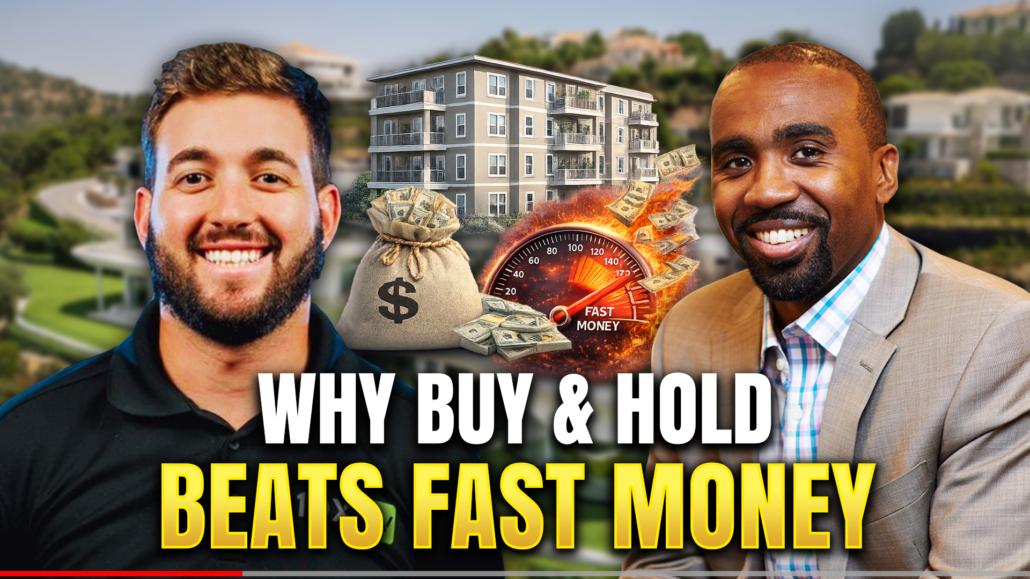
How Willie Mandrell Built $200M in Real Estate reveals the strategy behind Willie Mandrell’s massive portfolio and how he scaled from humble beginnings to over $200 million in real estate transactions. In this episode, he shares how persistence and consistency shaped his success, why buy-and-hold investing is often overlooked, how he built a 130-unit portfolio in Boston, and how his network became his biggest advantage. He also breaks down converting churches into apartments, avoiding costly investor mistakes, and why long-term thinking is the key to real wealth.
===================================================
If you want to learn how to run your business in 5 hours or less…. Go to https://www.5HourBusiness.com
Subscribe to my YouTube channel:  / @tonyjavierbiz
And if you’re into flying and want to follow my Aviation journey, check out my other YouTube channel at / @tonyjaviertv
===================================================
If you want to dominate your Real Estate Market with TV commercials, go here: https://www.ClaimMyMarket.com
If you want to connect with me and my network, go to https://tonyjavier.com/connect
If you want to check out Tony’s Real Estate Resources and Vendors go to https://www.TonyJavier.com/resources
===================================================
Show Transcription:
Right now we are about 130 units in Boston. Mostly I would say 85% of those are Section eight, rentals, Metro Housing, Boston Housing. We bought the building for 900,000, put about $1.2 million into it. After financing holding costs and everything else, we’re into it for a little bit more, but I think the building today is worth about 3.5. We do more educational seminars. We have a group in Boston called Boston Wealth Builders, about roughly 3000 members that have come through that group and we teach them how to invest different things that are talk about property management, we talk about development, we talk about everything. And through that group, we have a lot of inbound leads. As entrepreneurs, we go into business, we get really good at something and then it tends to bore us. We’re making money, we’re profitable. The biggest deals that I’ve had, the most success that I’ve had over the years have come from just little bits of knowledge that have come from my network.
Tony Javier (00:51):
Welcome to the Real Estate Masters Podcast, where we bring you the top real estate investors in the country. If you also want to be in the top 1%, you are in the right place. Listening to podcasts like this is exactly what helped me to scale my real estate investing business to seven figures, flip over a thousand houses and more importantly, step out of being the operations of my business over a decade ago so I could start and grow other businesses. So get ready to learn from the best and start building a business that works for you and not the other way around. Enjoy.
Noah Kesslin (01:24):
Willie, what’s going on? I appreciate you coming on. I know you’ve done over 200 million in real estate transaction. If you could tie that to one thing that you think really took you to that 200 million, what would that one thing be?
Willie Mandrell (01:40):
Persistence. You have to be the type of person that’s willing to fail and get back up and then fail again and get back up. And that’s what running a business is all about at the end of the day. Being a real estate investor or a developer is essentially just being a business owner, whether it’s a bakery that you’re running or an auto body shop, it’s persistence. It’s just getting up every day and being able to work through failure. Every day I have something that I’m disappointed about, something that went wrong. I’ve had bad weeks, bad months. It’s just consistency, persistence and consistency.
Noah Kesslin (02:11):
Yeah, 100%. And how did you get into real estate? What was your experience hopping into it?
Willie Mandrell (02:19):
Real estate was something that my grandmother was into. She kind of accidentally, I’m a Boston native. My grandmother, 1953 or something like that, moved up to Boston from the South. 1953 was a tough time for a Black woman to move to Boston. It was pre-segregation integrating of schools, busing and everything else. She came up here, had a tough time, worked odd jobs, and someone introduced her to just kind of buying a boarding house. It was a boarding house in the South End. For those of you familiar with Boston, they know South End is a high end neighborhood now, but it wasn’t back then. It was the slums that she bought it and did really well for herself. And then when I was coming along, it skipped a generation. My father and my uncle wanted nothing to do with real estate, got mixed up into drugs and a bunch of other things. 70s, 80s, rough time for growing up in that era in Boston. I came along and she basically told me, “Look, I’m a black woman in Boston. I have a sixth grade education. You’re going to have the benefit of going to high school and going to college. Look what I’ve done, build on that and just continue. I’m not going to hand you anything. I’m not going to give you anything in terms of financials, but I’m going to pass down this education and this example of what you can do in this business.” And I from there went to Northeastern University, graduated and bought my first multi at 23, so 2006, but basically 20 years ago and just been buying ever since and just fell in love with the business. It’s been, for me, a way to build and get myself out of poverty and then look back and take care of my mother and then look forward and take care of my children as well. So it’s been a great business, great experience over the last 20 years.
Noah Kesslin (03:54):
I love it. I love it. And what does your business look like today?
Willie Mandrell (03:58):
We are primarily in the buy and hold business. I don’t do a lot of flips. I don’t do a lot of condo conversions. I dabble here and there and every time I do, I lose money. Right now we are about 130 units in Boston. Mostly I would say 85% of those are Section eight rentals, Metro Housing, Boston Housing. We do some student rentals. I have about six to 12 units, six to nine units or something like that where formerly they’re Northeastern students where I used to go as well. And then we have some others that are in different neighborhoods. But I would say primarily we’re in a Section eight business, 130 units, mostly buy and hold. I’d say that portfolio is probably worth about 60 million today.
Noah Kesslin (04:37):
Yeah. Why do you think so many investors overlook the buy and hold aspect? A lot of people do, but they don’t do it maybe as much as down the road they wished they had. But why do you think so many investors kind of overlooked that piece of it?
Willie Mandrell (04:52):
Slow money. Slow money. Everything in today’s world, if it’s not Instagrammable and it’s not sexy, people don’t want it. That’s the thing is like everybody wants the fancy car, the jewelry, the big house. They want something that they can show off on Instagram to tell people that they made it. It takes a different individual to sit on something and I get caught up in it as well. I’m 42 years old and I get caught up in the same thing. I see friends on Instagram that are developers and they’re building these sexy condos and they’re putting the high end finishes in there in the cafe appliances and I’m throwing Frigidaire into my buildings and granted and some of the less end, lower end stuff that you put in for rental units and it’s not as sexy. And if you can do that year after year after year, it wears on people. I think we live in an instant gratification society and people want things right now. And the rental business that doesn’t really work that way. It takes time. You buy buildings. Buildings that I was buying 10 years ago are now paying me today. Buildings that I’m buying today are going to pay me in 10 years. Flipping a house and getting $100,000 check or $50,000 check or whatever, depends on what neighborhood you’re in, it tends to be a lot sexier of a business than the buy and hold and fixing toilets for two decades.
Tony Javier (06:04):
Want to get motivated sellers that nobody knows about? Introducing 10X TV. If you want to create credibility in your market, find deals that nobody else knows about and crush your competition, you need to check into TV commercials. It is the new buzz in the real estate investing industry since we introduced it several years ago. I’ve been using TV commercials myself for the last 12 years and it’s absolutely crushed it. So if you want to learn how to get on TV and to do something that little to know people are doing right now, go to claimmymarket.com. Again, that’s claimmymarket.com. We usually only work with two investors per market. So if you’re interested, reach out to us and book a call to see if you can claim your market before anybody else does. Now back to the show. Well,
Noah Kesslin (06:46):
What do you think the most common misconception is in the real estate community about buying holds that you would say is not correct?
Willie Mandrell (06:55):
Misconception that I just mentioned fixing toilets, that you’re doing that shit every night. I’ve been in this business for 20 years and I can tell you this probably in 20 years, there’s probably been three times that I’ve had an 11:30 PM emergency call. For the most part, people are not up taking shits in the middle of the night. They’re doing their thing during the day and they’re sleeping and they’re waking up the next morning. We’ve had some rough months. We’ve had some rough weeks. We’ve had some rough years. COVID was a couple tough years for us, but for the most part, I would say the biggest misconception is that you have to be like the old 1980s, 1990s image of it, like the janitor type landlord where you have a belt full of keys and you’re kind of going from door to door and you’re the superintendent knocking on everybody’s door click. That’s no longer the image. Everything that we do now is almost online. We have very little contact with most of our tenants. We give them access codes that are completely digital. We have all of our landlord forms are digitally signed, DocuSign.loop. It’s a completely different market than it was 20 years ago.
Noah Kesslin (08:03):
You mentioned something before we got on about converting old buildings and churches into apartments. I kind of want to touch on that piece a litle bit. It was very fascinating. What exactly does it look like and just kind of explain that process a litle bit.
Willie Mandrell (08:19):
Yeah. So I would say COVID, we rewind 2020, obviously COVID took out mass gatherings. Offices, space, a lot of office space, a lot of big cities were struggling, still are struggling because we pulled everything online and employees and employers started to see that, yes, your business can actually work online. We don’t necessarily need to be in the office. Employees are starting to be a little hesitant to come back to the office and work the same way for faith-based organizations as well. You have these big massive churches. And when I say that, not every single church has these Catholic steeples. Some of them are just very boxy buildings. Those are the type of things that we’re looking for that we can easily convert. But you have the same situation. COVID pulled back a lot of people to having church sessions online. A lot of these churches went belly up. They were being financed by the attendance, by donations, by tithing. And when COVID hit, those donations stopped. Those buildings are now up for sale. We’re having those just as much as the office space. We’ve been able to buy three buildings with another under contract that were formerly churches. I would say one that we’ve completed that was probably the most interesting to me is it was a 6,000 square foot building. We chopped it up into six residential units, three bedroom, two bath units, and now we’re holding that in our portfolio. Really cool project. It took a lot. I think we bought the building for 900,000, put about $1.2 million into it after financing holding costs and everything else. We were into it for a litle bit more, but I think the building today is worth about 3.5.
Noah Kesslin (10:13):
That’s awesome. That’s awesome. What are some key strategies that you’re using to find your properties?
Willie Mandrell (10:20):
It’s been an evolution. So I mean, when I first got into the business 20 years ago, I was doing a lot of door knocking. I didn’t have anything. I tell people when we’re doing our coaching programs and everything else, I tell people that there’s a certain point in your business where you have more time than money. That changes over time and then you end up with more money than time. So me coming into the business, I have more time. I’m door knocking. I’m cold calling. I’m sending a lot of letters as we go. I’m driving for dollars. If you guys are not familiar with that, I’m basically just going around looking for ugly homes, things that stick out in the neighborhood and I’m knocking on those doors. Today we’ve evolved a little bit. We do more educational seminars. We have a group in Boston called Boston Wealth Builders, about roughly 3000 members that have come through that group and we teach them how to invest different things that are talk about property management, talk about development, we talk about everything. And through that group, we have a lot of inbound leads. There are real estate agents, real estate developers. “Hey, I come across this deal. I know this is in your backyard. This is your niche. Can you help me? Can we partner on this? ” Or, “Hey, send me a $5,000 check and I’m going to connect you with the seller and you take over the lead.” So to answer your question, it’s an evolution. It’s converted over time. But I would say today, most of our leads are coming from real estate agents, other developers and investors within the neighborhood that know who we are and know we have the capability of closing on these things pretty quickly.
Noah Kesslin (11:52):
Gotcha, gotcha. A lot of investors, a lot of them make simple mistakes. What mistakes do you often see that you think could be really easily avoided?
Willie Mandrell (12:03):
I can tell you that the mistake that I often make is I get bored and I try to do other things that are outside of my wheelhouse. And this is not just real estate, this is business in general. I think as entrepreneurs, we go into business, we get really good at something and then it tends to bore us. We’re making money, we’re profitable and it’s the Instagram thing. It’s the social media thing. It’s, “Hey, this guy’s doing this. Jim’s doing this. Steve’s doing this. I think that looks cool. Let me go and invest in that. ” We don’t know much about it, but we’re diving into it and that’s when we tend to lose money, that’s when we tend to get off track. I was called a long time ago and it’s very difficult concept to stick with, but stay bored. Stay in your lane. Do that thing really, really well, become the expert, push out all the competition and just stay there. And I think if you do that, I think there are a lot of shiny objects in the industry as well. People, and especially in real estate, I mean, there’s tax liens, there is fix and flip, there’s buy and hold, there’s selling land, there’s Airbnb, there’s so many different shiny objects. And as soon as you hop online, everyone’s trying to sell you on their way of investing in real estate or investing in something. And I think you just have to choose a course, become an expert in that particular niche and just go for it. And even within the buy and hold, I’ll break it down even further. There’s single families, there’s multifamilies, there’s urban and suburban. So what we do is I buy three families or a triple. If you’re in the New England area, it’s a triple decker, what we call it here. And it’s only in a couple different neighborhoods. Even within Boston, I don’t buy all over Boston. We buy Dorchester, Roxbury, Matapan, Triple Deckers and maybe we dive into, once I’ve had a litle bit more experience, we dive into four units and six unit buildings. But I don’t even … I think the biggest question I get asked most often, are you going to go buy 10 unit buildings and 20 unit buildings? That’s a whole nother animal, whole nother beast. There’s sophisticated investors, sophisticated real estates that come with that. I’d rather stay in my lane and stay in my niche and make the margins that I’m making.
Noah Kesslin (14:13):
Yeah, for sure. Kind of a similar question, but different at the same time. What do you think separates the top operators from everyone else in your experience?
Willie Mandrell (14:25):
The top operators, you have to be able to survive the downturns, essentially, is what it comes down to. I think the top operators are the people who are able to … I’ll give you an example. I came into the business in 2006. For those of you who are old enough to remember, 2007, stock market crash. 2008, housing market crashed. It was a terrible time. I could have immediately hopped out of the business right then and there and said, “You know what? This real estate business isn’t for me. ” By staying in 2009, surviving 2010, 2011, we made some of the best transactions we’ve ever made. We were picking up buildings here in Dorchester or in Boston that were 400,000 that are now 1.4 million several years later. Same thing with 2012, 2013. If you were able to ride those three years out, you’ve made some great, great transactions. Then the new guys and girls started hopping into the business in 14, 15, 16. By in 2020, COVID hit. We read it out a lot of people again. COVID hit. A lot of people went back to work. This is not for me. Real estate industry shuts down. I remember we had three or four active projects during COVID that were immediately shut down because we couldn’t have people on job sites. Really, really hurt us financially. You come out of COVID, 21, 22, 23, there’s also some great opportunities. Those are the ebbs and flows of the business, of the market. If you’re able to survive those, the ones that are going to really win are the ones that come out the few businesses that come out on the other side of those upswings or those downswings for the upswing, if that makes sense.
Noah Kesslin (16:08):
Yeah, 100%. When it comes towards success, everyone’s got their own definition for it. Everyone’s got their own way of measuring it and striving for it. How do you define the word success? How do you measure it and how do you strive for it every day?
Willie Mandrell (16:24):
I think success when I was younger, when I was in my 20s, it was just all about making money. Again, came from rough situations, humble beginnings. As people like to say, it’s a little cliche, but it’s true at the end of the day. So it was all about just getting paid, just making money, just doing everything I can to put something in my pocket. Today’s success looks a lot different. It’s being able to spend time with the kids. We’re trying to see all 50 states between … My kids are six and eight now. We’ve seen half of the country and we want to see the other half before they go off to college. It’s spending a good amount of time with friends. It’s making sure that one of my regrets is in my 20s, my grandmother taught me a lot and I was just hustling, just going out every day. And there would be months that would go by where I’d realize that I didn’t call her, I didn’t see her. And after she passed, I felt really bad about that. So now it’s looking around and saying, “My in- laws are getting a little older. Let me go spend some time with them and make sure that, like I said, my kids are spending time with them and take them on trips with us.” It’s making sure I give my mom a call and we just talk about just nothing, just sit down and have a lunch. So I think as you age, as you progress in your business, success is going to look different, but today it’s freedom. I think that’s what it’s all about. We’re all getting money or trying to make money to get to a point where we can have a litle bit more freedom in our lives.
Noah Kesslin (17:56):
Yeah, I love that. I love that. Let’s say all the properties goes away, your whole portfolio, you were going to have to restart from scratch. You get to keep all the knowledge that you’ve learned over the years, but the actual business, so to speak, goes away. If you were going to try and start from scratch and rebuild what you have, what would be the first thing you would focus on?
Willie Mandrell (18:23):
My network. And I love this question because I think about this on a regular basis and I think about it because there’s people generation to generation. When I was coming up, and sorry if I get distracted because I’ll get back to your question, but when I was coming up, people used to always say, “Well, it’s really, really tough because you’re buying buildings at 400,000.” The generation before you were buying them at 40,000. Now they’re a million 1.2 and the generation now is saying, “Well, I can’t do it. You were buying them at 400,000.” There’s always … Well, when I was buying, rents were 1,500 bucks. Now they’re $4,200 in the same neighborhoods. So I think there’s always this generational thing where people say, “Well, Willie’s this age and he’s this and he had an opportunity to do this and that’s no longer the case.” Real estate has been around long before Willie, long before my grandmother. It’s always going to be the case, there’s always going to be opportunities. So to get back to your question, when I was starting off, I tried to be the smartest guy in the room. I read every single book. I mean, there’s the shelf behind you. There’s 140 books up there. Most of them real estate related to Rich Dad, Poor Dad, The Millionaire Real Estate Investor, everything Gary Keller wrote. And there’s nothing wrong with that, but I thought that would take me to the next level as being the smartest guy in the room. I realized that it’s not. It’s what actually takes you to the next level, the people that you know and the network that you have around you, I would begin there. I would make sure that everybody knows that I’m in this business. These are the things that I’m looking for. And the biggest deals that I’ve had, the most success that I’ve had over the years have come from just little bits of knowledge that have come from my network. Meaning, yeah, I understood a lot, but it was, “Hey, Will, did you know that Eagle Bank is doing DSCR loans and they’re over here doing, and they’re not looking for a 700 credit score, whatever me. ” “Oh, okay. Well, yeah, I was struggling because my credit score was only 650. Hey, thanks. I can go over there and now all of a sudden I’m rolling. “Hey, Will, did you know that Eastern Bank is doing lines of credit and it’s no taxes and they’re really just looking for business owners to grow their portfolio?” Oh, okay. Those things all came from just talking to people, the network that’s around you. So I would go out immediately and if you say that I get to keep the stuff that’s in my head, that makes it even easier because the easiest way to grow a network is, in my opinion, I went on Meetup 12 years ago, meetup.com established Boston Wealth Builders. And again, 3000 members have come through those doors now and said, “Hey, yes, I’d like to learn something from you. ” And even when it was something that I didn’t know, I’m connecting two different people, meaning, “Hey, I don’t know a lot about family trust and legals.” Well, I do have this attorney and this attorney wants to build her business and I have a network of 2,000 people over here. Let me connect the two, which again, spirals into a larger network.
Noah Kesslin (21:22):
Yeah, I love that. I love that. Where can people connect with you if someone is interested in learning more and reaching out to you? Where can they find you?
Willie Mandrell (21:32):
Yeah, so two different places. I mean, you can come if you’re in the New England area. We have live events, we do rehab tours. And even if you’re not in the New England area, you can still join the platform. We do a lot of Zoom calls and everything else and educational events. It’s bostonwealthbuilders.com. And then me directly, williemandrell.com, W-I-L-L-I-E M-A-N-D-R-E-L-L.com.
Noah Kesslin (21:53):
Awesome. Awesome. Any final advice for investors looking to grow, scale, or maybe even simplify their business?
Willie Mandrell (22:01):
Today is we’re in March of 2026, get in the game. There are a lot of people sitting on the sidelines right now. And this is what I mean when I said those times where investors are lucky. They’re not lucky. Just sometimes timing plays off. Right now, don’t follow the crowd. The crowd is sitting on the sideline waiting for better times. They’re waiting for interest rates to drop. They’re waiting for someone on CNN or CNBC to tell them it’s an economic boom and they should jump in. Don’t wait for the crowd to move. Get in now, get in the game. Real estate is … There are no tech solutions in my mind that Elon Musk is going to come with that is going to supplement our need for housing. We need housing, right? Cars may be able to drive themselves everything else and AI is coming. But again, we need housing. Housing is going to be around. It’s been around. It’s one of the oldest businesses. It’s going to be around for a while. Get in the game and be patient and that’s it.
Noah Kesslin (23:01):
That’s awesome. I love it. Willie, thank you so much for coming on. Everyone, thanks for listening. We’ll see you next time.
Willie Mandrell (23:08):
Appreciate you having me.

