
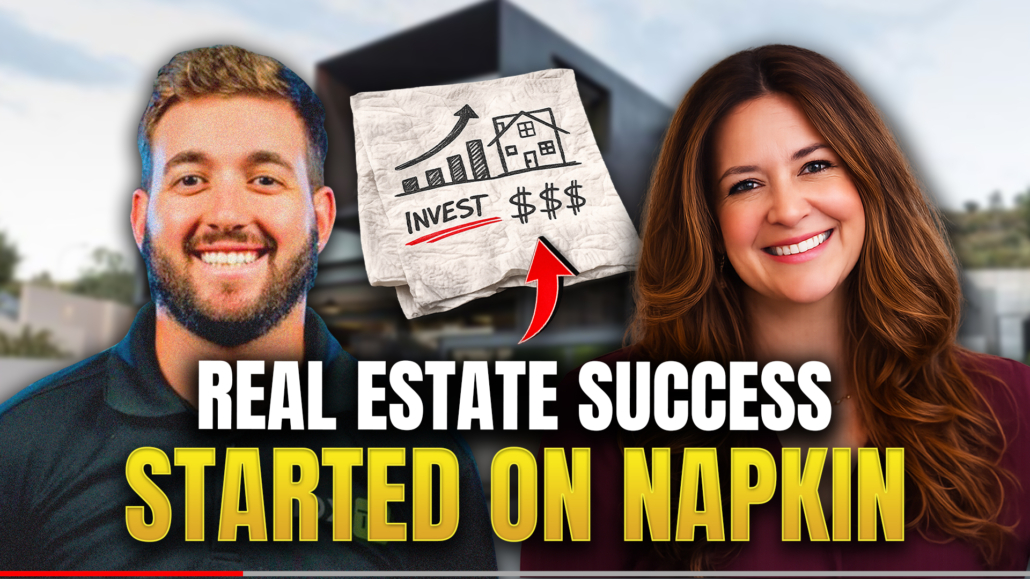
#142 Building a Real Estate Brand That Scales | Jen Kolde
Building a Real Estate Brand That Scales breaks down how Jen Kolde helped grow Minnesota Home Guys from a napkin business plan into a real estate investing company with a full team, TV marketing, strong operations, and a growing franchise model. In this episode, Jen shares how they got started with no real estate background, why culture fit matters more than resumes, how TV helped build trust and brand awareness, and why systems, hiring, and community are key to scaling a real estate business the right way.
===================================================
If you want to learn how to run your business in 5 hours or less…. Go to https://www.5HourBusiness.com
Subscribe to my YouTube channel:  / @tonyjavierbiz
And if you’re into flying and want to follow my Aviation journey, check out my other YouTube channel at / @tonyjaviertv
===================================================
If you want to dominate your Real Estate Market with TV commercials, go here: https://www.ClaimMyMarket.com
If you want to connect with me and my network, go to https://tonyjavier.com/connect
If you want to check out Tony’s Real Estate Resources and Vendors go to https://www.TonyJavier.com/resources
===================================================
Show Transcription:
We started TV almost right out of the gates. We had everything set up online and we were getting PPC, PPL, some SEO. We had our website up. So leads were flowing in that way. We realized early on that that was a game changer in the sense that you’re getting your brand out there. You guys took it to the next level as well, just helping us navigate the best way and the best times and the best places and what that all looks like. But as far as the brand goes, now we have James and Maddie doing a commercial together. We’ve done that for about a year now. People just feel connected. So that’s been huge. And as far as our brand awareness for us and credibility, because actually she was on the phones at the time too. And so people would call like, “Oh, you’re actually in the commercial.” So making that connection, the acquisitions agent, once they hand it off, they can kind of keep track of the CRM because the transaction coordinator’s updating like, “Oh great, it’s been sent to title. Oh, great. They’ve got the lead waiver for this. ” All the different people.
Tony Javier (00:59):
Welcome to the Real Estate Masters podcast where we bring you the top real estate investors in the country. If you also want to be in the top 1%, you are in the right place. Listening to podcasts like this is exactly what helped me to scale my real estate investing business to seven figures, flip over a thousand houses and more importantly, step out of daily operations of my business over a decade ago so I could start and grow other businesses. So get ready to learn from the best and start building a business that works for you and not the other way around. Enjoy.
Noah kesslin (01:32):
What’s going on guys? Jen, thank you so much for taking the time and joining us today. I know you have a wealth of knowledge in this space. I am curious though to know how you guys got into real estate in the first place.
Jen Kolde (01:44):
Well, hey, Noah, this is great. We always connect at a lot of events, so thank you for having me. This is going to be fun. We knew nothing about real estate. I had no background in real estate. James was a firefighter and I was just working the corporate gig, W-2, program management and customer service and project planning, special events, that type of thing. So all operations behind the scenes. And Jayden, we lived in the neighborhood. We were neighbors and he had a couple flips going on. And James’s fire schedule, he worked 10 days a month so he was kind of usually wandering around board. And they connected and James said, “Hey, I’ll help you out on a couple of the rehabs.” And they got together and did a couple of those and realized, “Hey, we might be onto something.” And went down to the local bar and sat down on a napkin, kind of wrote out their business plan and said, “Okay, well, we’re going to try this out. ” And it kind of took off. And then the two visionaries realized, wait a minute, we don’t know how to do all this stuff behind the scenes. So they dragged me along and we just jumped in and here we are. It kind of kept building and building and spiraling. And now Minnesota Home Guys has maybe, I think we’re at 18 team members and then franchising. So it’s going on 10 years now and that’s where we are. It started in a bar with a napkin.
Noah kesslin (03:05):
That’s awesome. And I know it’s been a while, but do you remember what it was like before getting into real estate investing, just lifestyle wise, like the differences?
Jen Kolde (03:16):
Lifestyle wise, I mean like a lot of people know you’re just on the hamster wheel and you get up, you nine to five, at least I did. That was my role, I guess. Drive an hour in traffic, you do the whole thing, our commute back and forth and just as people say, working for the man. And Jayden was doing the same thing and Jayden, he’ll describe it as soul crushing. He always says, “Yeah, you work for somebody for 30 years, you get a watch and then you’re sent on your way.” And he goes … But you kind of don’t realize the opportunities out there. People always talk about real estate and you see people investing and doing the flips, you see all the TV shows. How do you make that jump? And for us, it was an opportunity and we just kind of ran with it. I mean, it wasn’t anything we were looking for. It just kind of happened.
Noah kesslin (04:14):
Yeah. Kind of falls in your lap.
Jen Kolde (04:16):
Yeah, like a lot of things. You have to be open to taking that opportunity. You have to be, “You know what? I’m going to … ” For us, it was absolutely a leap of faith. Like I said, we didn’t know anything about real estate, but luckily between the three of us, our superpowers all kind of came together and Jaden’s the engineer. James is more the mechanical and then I’m the operations and you need the different superpowers in order to build something.
Noah kesslin (04:46):
Yeah, 100%. 100%. It’s crazy how a bar and a napkin turned into all this. Just for the people listening, obviously we know each other, but just for the people that don’t know, what does your business look like today? And then kind of talk about the franchise piece a litle bit.
Jen Kolde (05:00):
Yeah. So like I said, Minnesota Home Guys is kind of the home base. We started that. It was James, Jayden, myself, and that was June of 2017. By November, we were already, “Okay, we need an acquisitions person.” And we just kind of kept adding from there and all the kind of growing pains along the way, you’re learning now we know how to hire, we know what to look for, get a CRM and all these different pieces that we’ve put in place. But yeah, so now Minnesota is running, like I said, we have about 19 team members. Some of them are virtual and it took us a while to lean into that. But again, it’s finding the right person, having the right system communication and the right tools in place. And so now we’re franchising and that happened actually very organically as well. James was on a podcast and firefighter does 200 transactions a year and a guy in Knoxville saw it and didn’t even listen to the podcast, just picked up the phone or emailed him or something. He’s like, “Hey, wondering if we could connect. Love to hear more about what you’re doing.” And that evolved from just a mentorship into, well, hey, why don’t we give you our business in a box and sell a license. We were doing licensing at first. And then San Antonio came along and I think that was you met Jose at an event and said, “Hey, you should talk to these guys. They’re in real estate. They can mentor you type thing.” So that ended up being our second licensee. And then Jayden’s brother’s business partner’s brother is in Orlando and was looking, he’s like, “Hey, I’d like to talk to you guys. Do you do any kind of coaching?” Well, funny, we do. So that happened very … So now here we are. We’re like, well, maybe this is the next evolution of the company. So now we’re going into the franchising, which is a completely different beast, completely different monster.
Noah kesslin (06:50):
It’s crazy how you go from the bar and the napkin to the email that transpires into a licensee and now to the franchisee. It’s really a testament to just when opportunities come to jump on them.
Jen Kolde (07:06):
Absolutely.
Tony Javier (07:07):
Want to get motivated sellers that nobody knows about introducing 10X TV. If you want to create credibility in your market, find deals that nobody else knows about and crush your competition, you need to check into TV commercials. It is the new buzz in the real estate investing industry since we introduced it several years ago. I’ve been using TV commercials myself for the last 12 years and it’s absolutely crushed it. So if you want to learn how to get on TV and to do something that little to know people are doing right now, go to claimmymarket.com. Again, that’s claimmymarket.com. We usually only work with two investors per market. So if you’re interested, reach out to us and book a call to see if you can claim your market before anybody else does. Now back to the show.
Noah kesslin (07:49):
Without getting too distracted, of course, you guys are very on it. I want to go back to the hiring piece because I know you guys have had a lot of good with hiring and had a lot of bad with hiring. How important would you say is the, not necessarily the resume we’ll say, but the culture fit when it comes to hiring, how important is that and what would you tell people that maybe haven’t hired as many people as you guys have and are wanting to make the next hire? How important is Culture Fit over what they’ve done in their career so far?
Jen Kolde (08:26):
When you start out and you’re doing all the things, you almost panic hire. “Oh my gosh, I can’t do all of it. I have a friend who just got laid off, so okay, great. You can come on in and here, you can do this. “And even if they can figure it out, is it really the best fit for them? Again, you come back to culture as a great fit for the company. Yeah, they’re your buddy or your friend, but do they fit in the company? And as we continue to grow, we really dialed it in. We have a really deliberate hiring process now, which includes the predictive index and you’ll hear me talk about this on every podcast I’m on or every person going to Investor Fuel or wherever. It’s like, use the predictive index. And it’s more than just kind of a personality profile. It really tells you how people’s brain will process information, how they communicate. So that’s been a huge piece for us. There’s several steps to our hiring process and one of them, like you talked about, is the culture fit. It’s explaining that we say a prayer every Monday morning we have a Monday morning meeting and to open it up, we say a prayer and people that’s for us and we’re like, ” We don’t want people to be uncomfortable when they come in and if that is not where they are or what they believe or they’re just not their faith. So those little pieces are really important. So it has to be a good fit for us, but it also has to be a good fit for them. They have to feel comfortable working here. And so like I said, there are several steps that we’ve implemented to make sure that we’re finding that right candidate besides just the right skills. Like you talked about that right culture fit, it has to be a good fit for everyone.
Noah kesslin (10:30):
It’s funny, predictive index tells you a lot, especially because not every role is going to require the same PI, so many different roles. A sales role, you’re not going to want the same PI for a sales guy as you are going to be for an operations person. They’re going to be totally different people. At this point, I’m sure you could just look at a PI and know, but when you’re learning what PIs go with what position or role or if it’s a good fit for that role, what are you using to … Or in the beginning, what were you using to piece that together and see if that’s a good fit? So in the
Jen Kolde (11:09):
Beginning, we weren’t piecing anything together. Like I said, you have a pulse and we need someone to go on sales calls or to go work, be a project manager. And so you’re exactly right. I’m not going to go out in the field and be able to go into a house and do a scope of work for rehab, not my thing. Can I teach myself how to do that and could I eventually learn? Absolutely. But it’s going to exhaust me and it’s not how my brain processes information. It’s just I’m not the mechanical piece. Can James sit behind a computer and write a purchase agreement? No. And James is a maverick and you just got to let him run. You got to let him do his thing. And I’m literally my PI’s operator, nope, I’m going to sit here and I’m going to put all the pieces together. And yeah, in the beginning we weren’t aware of the predictive index and we learned probably a couple years in we were introduced to it but hadn’t really leaned into it much either. We’re like, yeah, that’s out there. Cool. It’s another tool. Probably five years ago is when we really leaned into it as a tool for hiring and it’s not the end all be all. I mean, there’s still the skills, the culture fit, all of that, but it’s just another piece that is going to make sure that you’re hiring the right butt for the right seat, let’s say. We were looking for a leads manager at one point and they’ve got to be personable on the phone. They’ve got to build that connection and kind of have that energy. And we had a candidate come in that one of our team members like, “Oh, she’s a bartender,” which are usually great because they’re engaging at the little local restaurant I go to, she’d be great. I brought her in and she sat there and it was like pulling teeth to get her to have a conversation. And so right off I’m kind of like, “I don’t know, maybe she’s just nervous, whatever. Let’s give her the predictive index.” And it came back the total opposite of the profile that you’re looking for. So maybe at the bar she’s just faking it till she makes it because that’s her source of income, but for this role it wasn’t going to be a good fit. And so between those two pieces, just kind of your interaction and then that predictive index, you’re like, “Yeah, this isn’t going to fit the position we’re looking for right now.” And you can take it. We really leaned into it.
Noah kesslin (13:54):
Yeah. I mean, obviously you can fake it, but you’re going to be miserable at work all day. If you are in the wrong seat, you’re going to know it. Nobody else may know it if you’re, like you said, at the bar, she just does a really good job because she’s really good at faking it. She gets home and she’s probably exhausted because that’s not how our brain works. So it’s huge for sure. Switching over to the investing piece, I know you’ve been clients of ours for a long time. How has TV really changed the impact on the day-to-day operations for your business? Because I know you’ve been doing it since the beginning, but how has that impacted it and what would you tell people that think they’re too new in the industry or too little to start TV?
Jen Kolde (14:46):
So we started TV almost right out of the gates. We had everything set up online and we were getting PPC, PPL, some SEO. We had our website up. So leads were flowing in that way, but James and Jaden being the visionaries that they are just put together a little cartoon commercial. It was the logo and little caricatures of themselves, just very simple, very clean. And we started almost right away with local vendors, getting it on the local stations, that type of thing. And we realized early on that was a game changer in the sense that you’re getting your brand out there. You’re going into the people’s living rooms instead of relying on them like, “Oh, I have a need. I’m going to get online and find out who can buy my house.” You’re putting the opportunity in front of them when maybe they didn’t realize that was something they needed or something that they could use or, and Susie is starting to get older and maybe we need to look at assisted living, her house hasn’t been touched. So this is presenting them with the opportunity before they maybe even realize it’s there. And we learned early on that that was kind of a service we were providing. And so we leaned into that. We worked with a few providers and now that you guys, it’s been funny with the commercials we have out there now, but you guys took it to the next level as well, just helping us navigate the best way and the best times and the best places and what that all looks like. But as far as the brand goes, now we have James and Maddie doing a commercial together. We’ve done that for about a year now. I was thinking it was last December or so when they filmed their first one and now Maddie goes, I told you this story, but she was in Costco and one of the sample people heard her voice and I was like, “Are you Maddie from the commercial?” Kind of took her off guard. She’s like, “Yeah, she goes, Oh, I heard your voice before I even saw you and they took a selfie and it’s like-
Noah kesslin (17:16):
It’s so funny.
Jen Kolde (17:17):
People just feel connected. So that’s been huge. And as far as our brand awareness for us and credibility, because actually she was on the phones at the time too. And so people would call like, oh, you’re actually in the commercial. So making that connection, people would call and be like, “Is that really your dad or is that just an actor?” I’m like, “No, that’s my dad.” So it’s been fun to see that evolution because people recognize the commercial, but to see them recognize now you’re real people instead of just the caricature. It’s been kind of cool.
Noah kesslin (18:00):
Yeah. It’s been nice to evolve the cartoon into the live person because I feel like the cartoon looked like James. I mean, you could tell it was
Jen Kolde (18:13):
Him. We talked lighter. We always tease him. We’re like, “Oh, your character’s a little…”
Noah kesslin (18:18):
Shame a little. But yeah, so it’s funny to go from that to now the live, which is great, which is kind of what we’ve wanted. And now that, especially Maddie, I feel like it’s so personable that it makes a huge difference.
Jen Kolde (18:36):
Sorry, your team has … We were doing it on our own. We were developing … Jaden was doing the commercials. He got online. I mean, he’s an engineer, got online and he kind of pieced it all together and he’s like, “Okay, here, what do you think? ” And he’s pitching it to people and with your team, Heather and Drew behind the scenes there and we give them an idea and they’re like, “Yeah, okay, cool. Let’s run with it. ” And then they’ll send back some options like, “Okay, here’s some scripts, here’s kind of what we’re thinking. Let us know if you want to tweak anything.” And getting the kind of feedback, that was one of the issues we had too with other vendors. They’d kind of just go off the grim. We’re like, “Is this working? What are our numbers? We’re spending this money. What are you seeing?” And we have monthly calls with Heather and Drew and make adjustments as we need to or at least get results. We at least know where we are and able to keep track of that. So you guys have been the most proactive, let me say, in helping us through that journey when it’s kind of this black hole usually, you just kind of throw stuff out there and see what happens.
Noah kesslin (20:03):
Yeah, for sure. I appreciate that. When it comes to the operation side, what do you think separates the top operators in this space from everyone else in your experience?
Jen Kolde (20:17):
You’ve got to, and of course this is my role and my superpower, but you’ve got to have a system behind the scenes. In the beginning, James and Jayden, when you’re trying to build something, you’re chasing all the shiny objects. Trying to figure out what works, grab everything out there. But even early on as they were doing that behind the scenes, I’m like, okay, what’s the process when you go on a sales call? What does that look like? And then when you come back, how does that information, okay, you need a contract. How does that information get out of James’s head to me so I can write up the contract, get it out for signatures, get it back to title. And of course early on it’s a lot smaller, but as you continue to scale and you grow, you need to be able to have that flow of communication, making sure the CRM is updated so the transaction coordinator can go in and see where things are. The acquisitions agent, once they hand it off, they can kind of keep track of the CRM because the transaction coordinator’s updating like, “Oh, great, it’s been sent to title. Oh, great. They’ve got the lien waiver for this. ” All the different pieces because there’s a lot behind the scenes that people don’t see and people when you think of a business, you think of the visionaries, you think of the closers, you look, what are the numbers? And sometimes it’s hard for people to see the value in the system behind the scenes, but that’s what keeps the machine running. That’s what keeps you moving forward so you can keep getting deals in, getting transaction in, getting contracts signed. And it’s everything, like I said, from how the lead comes in and how it gets processed, what does the leads team say? How do they communicate the information to the acquisitions team? So all those pieces behind the scenes are hiring, accounting, all the stuff people sometimes don’t think about. So building that out and having those systems in place. And again, it comes back to having the right people in those positions. Like I said, James is not going to sit behind a desk and make sure that the transaction coordinator, he’s just not. But you lean into his superpower, let him just go and keep running and we’ll figure it out back here.
Noah kesslin (22:50):
Yeah. When it comes to the franchisees, for someone listening, who would be the perfect person in your mind that you think you could really help them? What would that perfect person look like?
Jen Kolde (23:11):
We’ve got a couple different, and people say avatars, but a couple different profiles. One is someone that little is in business, someone who understands and it doesn’t have to be real estate. Real estate is really just the widget. Someone who has some business knowledge, looking for an opportunity. The other piece is this is not a … Looking at franchising now, 60% of them are fast food restaurants or food and you can get somebody, you buy it, you hire somebody to come in and run it and you move on to the next one. This is a little more you’re involved. You want to build something and it’s maybe somebody that’s doing onesie twosy or they’ve got … They’re in their area, they’re kind of rehabbing, flipping. They kind of just don’t know what that next step is. And so that’s kind of where we are is we’re helping people either scale and take that next step and do it and we call it the Home Guys way, but we’re also trying to kind of change the perception of how people think of real estate investors. We don’t necessarily have the best reputation. People think, “Oh, you’re taking advantage.” Honestly, we’re helping people who can’t go the traditional route or don’t want to go the traditional route for whatever reason. And that’s where we step in and we’ve got several options. So it’s really giving, like I said, people that want to scale, people that are maybe looking to get out of their W2 job like Jayden, it’s soul crushing. They’re doing it because it’s a job, but it’s not necessarily a passion or they want to build something for their family. There could be several different people that this appeals to, but yeah, that’s probably the people that we would want to talk to the ones looking to take that next step.
Noah kesslin (25:35):
So either in real estate, but either struggling or just getting into it or just doing a couple deals that want to grow or people that are looking to get into real estate ideally from other industries. I want to ask you this question. I ask everyone this question. It really fascinates me and I don’t think I’ve ever asked you this before off or on a podcast, but the word success is really interesting to me. I feel like everyone defines it differently. They measure it differently and they strive for it differently. How do you define the word success? How do you measure it and how do you strive for it every day?
Jen Kolde (26:14):
So yeah, that’s a cool question because it looks different for everybody. For some people it’s the Lamborghini and the big house and the whatever. For other people, it’s just the ability to, people always talk about the time flexibility. For me personally, it is that flexibility, the ability to … If Maddie needs something, I’m able to go, “Oh, okay, cool. Yeah, I’ll be there in a second.” That freedom, everybody talks about the time, freedom, the flexibility, and that is huge, but it’s for our family basically. And James will tell you this too, everybody is happy, healthy, and you’re able to support each other in whatever role that is. So that’s the emotional piece of it is just kind of that peace of mind. It’s almost a peace of mind that I’m not tied to this nine to five. I don’t have to take an hour of PTO if somebody has to go to the doctor or the other piece is we’re empty nesters now she’s grown, married, grandson. And so that’s a huge piece is if she needs help with the baby, I’m able to go, “Yep, cool. I’ll be right there.” We also like to travel. So some of it, obviously there is a financial piece to it. There’s a piece where you can go, “You know what? We want to take off for the weekend and go visit friends, usually Jeff and Chrissy from Investor Fuel.” They’ll throw something out like, “Hey, we’re going here for the weekend.” We can go, “Okay, cool. Let’s go. ” Meet you
Noah kesslin (28:13):
There.
Jen Kolde (28:13):
Yeah. Well, we’ll see you there. And having COVID changed the way that we operate and the world operates, you’re able to work remotely, that type of thing. But yeah, for us, it’s just being comfortable, just having steady, stable … Yeah, I guess I don’t know how else to describe it, except just a peace. Maybe it’s just peaceful. Maybe success for us is just a peaceful … I guess that just popped into my head, but that seems to be the best way to describe it. Yeah,
Noah kesslin (28:57):
I love
Jen Kolde (28:58):
That. If that makes sense? I don’t know.
Noah kesslin (29:00):
Yeah, I love that. The last thing I want to ask you before we hop off here, obviously we met from a group, a mastermind, there’s tons of them out there and you got to find the one that fits for you, but how important would you say it is for people in this space, whether you’re doing four deals a year, I mean a month or a year maybe to 140 or 400, whatever you’re doing or want to do, how important is it for anyone in this space to join a group? It doesn’t matter to the group, you got to find the one that works for you, but how important is it for them to get into a group?
Jen Kolde (29:38):
It’s huge. From the beginning, James and Jayden were trying different ones. They were members of a couple and once a month they were going out, but just having that support system and we finally found InvestorFuel, which fits us really well. Mike has done a great job of building a support system where it doesn’t feel like a competition and he’ll say it, you go in, he goes, “Just leave your ego at the door.” And no matter what level you’re at, people are, “Hey, here’s where I’m struggling this quarter. I ran into this issue, what do you think? ” And there are people who have either been there or struggling with the same thing or can advise. And even outside of going to the quarterly meetings, you’ve got the Facebook group and I’m going to say it to Jeff Lister again, he and his business partner at the end of last year were struggling. They’re like, they’ve been doing this for 20 years and they’re like, “What do we do next? We’ve kind of just plateaued and we aren’t energized by this anymore.” And they went to visit someone, another investor in Buffalo, New York. And then the next day they flew over here to Minnesota and they took a couple nuggets and we saw them, what, last month at the fuel event and they’re back at it. They’re like, “That’s what we needed. We needed a little oomph.” So it’s absolutely huge. You can’t do this by yourself. I mean, you can.
Noah kesslin (31:19):
Just lonely.
Jen Kolde (31:20):
It’s just lonely. Yes. And having that network of people and especially in this industry where it is not static, it does not stay the same. It’s constantly changing. And so seeing what other people are doing, how other people are pivoting, getting ideas and bouncing things off of each other, it’s huge. If you want to stay in this space and if you want to be successful and if you want to scale, and again, like you said, there are several of them out there, whichever one works for you, but you need to have a support system.
Noah kesslin (32:04):
Yeah. For someone that is watching this that is interested in learning more about the Home Guys way, where can they go? Where can they reach out to you guys if they’re interested in getting some coaching or maybe even franchising, where can they go?
Jen Kolde (32:22):
Yeah, absolutely. So homeguys.com is the website. They can get some information, find out more about us. You can email me, Jen@homeguysmn.com. Otherwise, James and Jaden are out there on the social, so you can go to YouTube and it’s homeguys_usa, I believe. Watch a bunch of podcasts, some information. James does a … We started this new Truck Talk series because he just gets in his truck as he’s going to projects and he
Noah kesslin (32:56):
Rambles. He likes to ramble. He does like
Jen Kolde (32:58):
To ramble. So you can see some fun stuff there. We’re on Facebook, Home Guys USA, Instagram. So yeah, same thing, HomeGuysUSA, but you can check us out homeguys.com or Jen@homeguysmn.com.
Noah kesslin (33:13):
Awesome. Awesome.
Jen Kolde (33:15):
Jen,
Noah kesslin (33:15):
Thank you so much for taking the time. It’s been a pleasure as always. Absolutely. And we’ll see you guys next time.
Jen Kolde (33:21):
Cool. Thanks, Na.

