
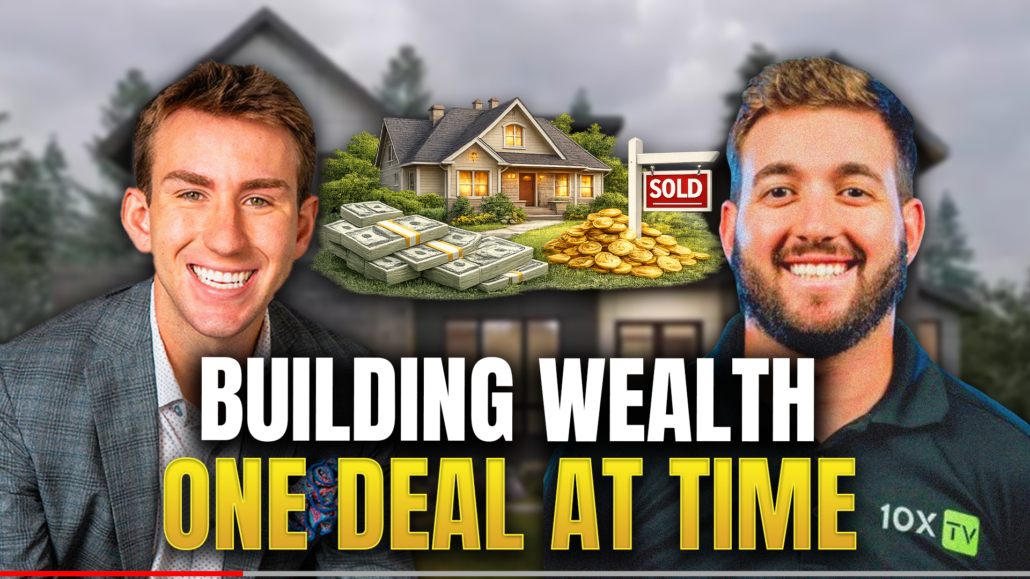
#141 He Cracked Real Estate With No Capital | Conner Kinney
He Cracked Real Estate With No Capital (Conner Kinney) dives into how Conner Kinney went from buying his first duplex at 19 to building a growing portfolio of rental units, multifamily deals, and millions in transactions—without outside capital. In this episode, he breaks down how he uses seller financing to acquire properties with as little as 2–5% down, why most investors fail with short-term deals, how he sources off-market opportunities through cold calling and driving for dollars, and the mindset shift needed to succeed in real estate. He also shares key lessons on conservative deal analysis, common beginner mistakes, and why taking action beats waiting until you “know everything.”
===================================================
If you want to learn how to run your business in 5 hours or less…. Go to https://www.5HourBusiness.com
Subscribe to my YouTube channel:  / @tonyjavierbiz
And if you’re into flying and want to follow my Aviation journey, check out my other YouTube channel at / @tonyjaviertv
===================================================
If you want to dominate your Real Estate Market with TV commercials, go here: https://www.ClaimMyMarket.com
If you want to connect with me and my network, go to https://tonyjavier.com/connect
If you want to check out Tony’s Real Estate Resources and Vendors go to https://www.TonyJavier.com/resources
===================================================
Show Transcription:
People are more in for the quick in, out and seller financing, it’s a very long-term game. Make sure that you have a minimum of at least seven years on your seller financing deals. That way you get a litle bit of wiggle room so if the market goes up or down, you can have other exit strategies besides being forced to sell. The business is fun because it kind of bounces off each other, but we’re doing the same marketing. It’s driving for dollars and cold calling for the fix and flips and wholesale deals as well. Don’t just buy a deal based on best case scenario. Make sure even at the worst case scenario, you can still come out on top. People think you’ve got to listen to all the podcasts, all the books. You’ve got to have all this experience. You’ve got to know everything when you buy that first rental or that first fix and flip. In real estate, you learn by being in the business and doing the thing.
Tony Javier (00:47):
Welcome to the Real Estate Masters podcast where we bring you the top real estate investors in the country. If you also want to be in the top 1%, you are in the right place. Listening to podcasts like this is exactly what helped me to scale my real estate investing business to seven figures, flip over a thousand houses and more importantly, step out of being the operations of my business over a decade ago so I could start and grow other businesses. So get ready to learn from the best and start building a business that works for you and not the other way around. Enjoy.
Noah Kesslin (01:20):
Connor, thanks so much for coming on. I know you’re doing millions of dollars in transactions. I am curious to kind of take a step back and see how you got into real estate in the first place.
Conner Kinney (01:30):
Yeah. So I actually, when I was 18 years old, I read, I’m sure you guys know this book, Rich Dad Port Ad by Robert Kiyosaki. And I kind of made a decision that college was probably not going to be the best move for me. Outside of high school, I always had this itch to build something of my own. And so I ended up, I actually went to school for about two semesters and then during that time I found a real estate investing club that I got kind of hooked on and started working for this investor part-time. That really took off and I was like, “Man, this is awesome. This is cool. You can really build wealth through real estate investing.” So I ended up dropping out of school and I bought my first rental duplex at 19 years old and that’s how I got started. And that deal really opened my eyes to say, “Wow, if I can buy these great rental properties, it really could build a lot of wealth for me.
Noah Kesslin (02:19):
” I love it. I love it. And what was your life like before getting into real estate?
Conner Kinney (02:23):
Yeah, I was terrible at school, I definitely knew academics were not my thing. My dad is actually pretty entrepreneurial so it was very encouraging to see kind of what he’s built himself. And so that kind of inspired me to do something of my own as well. A lot of people kind criticized me for dropping out of school, but my parents were actually pretty supportive. So I’m very thankful for that as well of encouraging me to, hey, really start my own business and go after my own thing. So that was really encouraging. I played sports in high school and I always, it was just fun to build something of my own. And so that’s really why I think real estate was for me and kind of how growing up what led me to real estate.
Noah Kesslin (03:07):
I love it. I love it. And just for the people listening, what does the business look like right now?
Conner Kinney (03:13):
Yeah, I’ve got 37 units. I just bought a 29 unit property. We do some fix and flip properties as well, buying them, fixing them up on market and then we’ll do some wholesale deals as well. And then right now I really target seller financing deals for my portfolio. So buying anything 20 to 50 units with seller financing is kind of what I’m looking for right now.
Noah Kesslin (03:39):
Awesome. What was the main problem that you were trying to solve when starting this business?
Conner Kinney (03:46):
The biggest thing for me was the lack of capital. So I own everything myself and I’ve never been given a dime by anybody to help me. And so I really had to say, “Hey, how can I get creative? I don’t have a high income job. I don’t have just this big trust fund. So how can I get creative with the capital that I make from my fixed and flip and wholesale deals?” And so that’s what led me to seller financing is, hey, I’m not having to put 20, 30% down on these properties. I’m negotiating 2%, 3% or 5% down, which allows me to get into these properties without any partners and own them on 100% buy myself while putting very little money down. And also it’s fun because I’m able to negotiate lower interest rates as well, which is very beneficial.
Tony Javier (04:33):
Want to get motivated sellers that nobody knows about? Introducing 10X TV. If you want to create credibility in your market, find deals that nobody else knows about and crush your competition, you need to check into TV commercials. It is the new buzz in the real estate investing industry since we introduced it several years ago. I’ve been using TV commercials myself for the last 12 years and it’s absolutely crushed it. So if you want to learn how to get on TV and to do something that little to no people are doing right now, go to claimmymarket.com. Again, that’s claimmymarket.com. We usually only work with two investors per market. So if you’re interested, reach out to us and book a call to see if you can claim your market before anybody else does. Now back to the show.
Noah Kesslin (05:14):
Why do you think so many investors overlook that piece?
Conner Kinney (05:17):
The seller financing piece? I would say people it’s a very niche subject because a lot of sellers aren’t interested in doing it. It’s very targeted and a lot of sellers are not willing to do it because they’re not in a position to do it. Typically, if somebody’s going to sell a piece of real estate, there’s some sort of pain behind it. We need the money from this property we have to sell. There’s some partnership dispute or something’s going on where there’s paying where they need to sell so they can’t do anything with seller financing. I target what I call long-term retiring landlords. So people who have paid off properties, they might be older and tired of managing the asset. They might not need a huge lump sum of cash. They might just want to continue getting monthly payments without having the headache of managing tenants, toilets, termites, and all the nonsense that comes with managing rental properties. And so it’s a very targeted market and it’s difficult. I do a lot of marketing and cold calling. It’s very difficult to find them and it takes a lot of time building the relationship following up. And I think people don’t want to do that. And so people are more in for the quick in out and seller financing, it’s a very long-term game. And so I think that’s probably one of the reasons not a lot of people do it, it’s just because they probably don’t have the patience for it.
Noah Kesslin (06:38):
Yeah. Well, what do you think would be the most common misconception about that?
Conner Kinney (06:45):
The biggest thing for what I’ve seen is probably doing shorter terms on the loan. So what happens is people will say, “Oh, the seller will finance it to me for two or three years at this 3% interest rate.” And they’re going, rates are at 6% right now. This is an incredible deal. The problem is that what they don’t understand is in two to three years, you have to either sell it, refinance, or pay it off in full. And so your deal is only as good as the length of those terms. So what I’d encourage people is make sure that you have a minimum of at least seven years on your seller financing deals so that way you get a litle bit of wiggle room. So if the market goes up or down, you can have other exit strategies besides being forced to sell or God forbid you lose some money on the deal because it’s not long enough terms. So you just want to make sure that you don’t do a shorter term. Maybe it’s a fear term minimum, but really I’d recommend at least seven years. That way you’re not forced to have to sell because the problem is you get the 3% rate, but if you got to sell and you got to refinance into a 6% rate, that deal might not be such a good deal anymore. So it’s very important to make sure you spread out those terms as long as possible.
Noah Kesslin (08:08):
Yeah. And how are you finding these properties?
Conner Kinney (08:11):
It’s cold calling. So cold calling, I like to buy typically small portfolios from sellers. So if they’ve got a couple duplexes here or a couple fourplexes, whether it’s driving for dollars or just going on Google Maps and looking at properties that I want to own and areas I want to own and cold calling them. And it’s a lot of following up. As I said, it takes patience, it takes persistence, but that’s how I’m finding them and then skip tracing them online, calling them up and saying, “Hey, I own some properties. I’d like to buy your property. Would you be interested in seeing an offer?” And the goal for me, especially with seller financing, it’s all about building the relationship. So for instance, on my very first deal that I did when I was 19, I cold called the seller, I met him at McDonald’s and we signed the contract on the bed of his pickup in the McDonald’s parking lot. So it’s all about the relationships, building the rapport, building the trust. Seller financing is all about trust. So you want to get them to trust you and if you can build an in- person relationship and meet them in person, shake hands, you can get opportunities that nobody else can get.
Noah Kesslin (09:27):
Yeah. And then for the fix and flip in the wholesale, are you still just doing cold calling
Conner Kinney (09:32):
And
Noah Kesslin (09:32):
Driving for dollars or what else are you doing there?
Conner Kinney (09:34):
It’s cold calling and driving for dollars as well with those. And it kind of bounces off of each other because what’ll happen is sometimes a seller says, “Hey, we want to sell this thing in two weeks and we just want the cash.” And so I’ll give them a cash offer that I can do a wholesaler fix and flip exit strategy on. Or if they say, “Hey, we really want this price,” that’s when I can maybe negotiate some seller financing. So a lot of my fix and flip and wholesale deals are just failed seller financing deals because they didn’t want to do it and I was able to give them a cash offer or able to assign it to somebody else. So the business is fun because it kind of bounces off each other, but we’re doing the same marketing. It’s driving for dollars and cold calling for the fix and flips and wholesale deals as well.
Noah Kesslin (10:22):
Yeah, for sure, for sure. When it comes to last year, a lot of people had a tough year last year. What were some key strategies that you used last year that you think made the biggest impact in your year?
Conner Kinney (10:38):
Yeah, it goes back to just running numbers conservatively, running numbers conservatively. So on the rental side of things, with where things are at in the world, affordability is a huge concern. And for my long-term tenants, typically we’re raising rent every year and you want to get the highest rent possible to maximize your cashflow. And so that’s definitely decreased. We want to make sure that maybe we’re not renewing or we’re not increasing people’s rents as much as we could be, but we really want to encourage people to stay in the units because I’m seeing the biggest thing right now is people are so focused on affordability. Now on the fix and flip part, it’s just buying right. A lot of things are sitting on the market longer. And so maybe you have a deal where it’s a good deal if it only lasts on the market for two or three weeks, but if it’s on the market for two to three months or six months, you might lose your butt on it. So you want to make sure that you’re really accounting for your holding costs, your taxes, your insurance, and any other unexpected problems that could arise. I mean, the market is tough right now and so you’ve got to make sure to not run your numbers conservatively. Don’t just buy a deal based on best case scenario. Make sure even at the worst case scenario you can still come out on top.
Noah Kesslin (12:05):
Connor, I’m curious when it comes to mistakes in this kind of business, mistakes can be very detrimental.What mistakes do you often see investors make that you think could be really easily avoided?
Conner Kinney (12:19):
Yeah. I don’t know if this is necessarily a mistake, but I would say understanding that you’re not going to know everything when you first get started. You’re not going to know everything when you first get started. It’s part of the deal. People think you’ve got to listen to all the podcasts, all the books, you’ve got to have all this experience. You’ve got to know everything when you buy that first rental or that first fix and flip. And real estate, you learn by being in the business and doing the thing. I’ve done millions of dollars of deals and I’m still learning new strategies, new things every day. And so it’s a constant learning process and I think a lot of people would be a lot further along if they could understand, “Hey, I will not know everything. I’m okay with that. I know a little bit and that’s enough to get me started. And then I’ll build some momentum off that and kind of learn as I go. ” And so that’s really the biggest mistake I see people make is thinking they have to know everything, thinking they’ve got to read all the books, they’ve got to do all this knowledge. And then oftentimes what happens is they overthink it and they don’t get started at all. So it’s almost an advantage if you don’t know everything because then you can just kind of be fearless and go right into it. And so I would say just don’t make the mistake of thinking. You have to have it all figured out. Understand you’re going to learn as you go, you’re going to make some mistakes, that’s part of the business, but ultimately the people who come out on top are the people who say, “Hey, I’m going to just move forward even though I might not know everything and I’m going to learn as I go. ” And that’s what’s led to my success because I had no family or friends in real estate when I first got started, but I knew other people were doing real estate. And so I said, “Hey, how hard can this be? ” And just went fully into it. I learned so much on that first rental property, but it’s benefited me to where I am today.
Noah Kesslin (14:18):
Yeah, I love it. When it comes to the word success, everyone’s got their own definition for it, everyone’s got their own way of measuring it and their own way of striving for it. How do you measure the word success? How do you define the word success and how do you strive for it every day?
Conner Kinney (14:34):
Yeah. To me success, obviously there’s the financial benefit of real estate, which is the financial success and then there’s the time success. Real estate’s intriguing to me because it gives me back a lot of my time and that’s fun for me. Now I’ve built the financial freedom and all that, but to me ultimately I enjoy what I do and so that is really success for me is being happy to wake up every morning and go, “Wow, I get to go work on this deal or I get to go meet this person and negotiate this deal.” Success for me is enjoying what you’re doing and not really thinking of it as work. It’s just you get paid for doing something that you love to do. Real estate is what I love to do. I love to build my portfolio. I love to share with people how I do it. And so that’s ultimately what success is for me is understanding I get to do this, a byproduct of it is I get paid for it, which is fun and I’m ultimately building wealth for my future family as well, which is super cool. And it buys me back so much of my time too, I can do whatever I want whenever I want, which is super fun as well. And it’s just fun to have that freedom.
Noah Kesslin (15:52):
What are you seeing as the biggest challenges in real estate right now?
Conner Kinney (15:57):
For me on the rental side of things, it’s buying properties, the cashflow, truly cashflow. And again, this is where seller financing has really helped me out is because I’m able to negotiate incredible deals with these sellers to be able to maximize cashflow. I think a lot of people are getting squeezed on their cashflow right now, especially because property taxes and insurance costs have just skyrocketed. And so that’s been tough is getting more creative on the financing side of things to be able to maximize your cashflow. On the fix and flip and wholesale side of things, it’s just buying deals at a better discount. It’s buying better deals. I think a lot of people in the last couple years kind of got a little greedy because buyers were just buying anything and now you’re starting to really see who’s getting the good deals and those are the only deals that are really moving. And so people kind of got burnt out and everyone’s buying more conservative, so you got to make sure you’re getting deals deeper. Now I’ve got a deal right now. It’s a fix and flip and I thought it was going to be a home run deal and it was going to fly off the shelf and it’s been on the market for six months. And now we’re under contract on it. We’re still going to do pretty well on it because we bought conservatively, but it’s just one of those things where it’s hard to see what the market’s doing right now and a lot of stuff is sitting on the market. So whether you’re doing the fix and flips, you’ve got to make sure you’re accounting for holding cost. Whether you’re doing the wholesale stuff, you’ve got to make sure you’re talking with your buyers saying, “Hey, what are you guys seeing? Where are you guys buying it? ” And making sure that you’re buying at a place where you can still make a good fee on top of it because it’s difficult right now. People are buying more conservatively. And so the wholesaler feels the biggest burden because they’ve got to buy it at the biggest discount. And so just understanding it’s more about quality lead than quantity of leads right now, making sure that you can buy correctly, buy conservatively, and then I think you’ll do well.
Noah Kesslin (18:04):
Yeah, 100%. If you were going to start from scratch today, the business goes away, you get to keep all the knowledge that you’ve learned over the years, but the business completely goes away. What would you focus on first to rebuild?
Conner Kinney (18:18):
It goes back to the deals. I would focus on how to source deals. For me, that’s been cold calling, finding, targeting people, cold calling them, getting deals. Everybody I talk to, whether they’ve done a thousand deals or one deal, they’re all looking for deals. And so if you can be the guy who can find deals and get these properties, you’ll do well. And so I would focus on the deal finding. I bought my first duplex when I was 19, the money I used for the down payment was from a wholesale fee that I got. And I quickly realized everybody I knew at the time was like, “Oh, we’re looking for deals. We’re looking for deals.” And so I was like, “Okay, I’ll just go find the deals. I’ll be kind of a bird dog.” And ultimately I got paid that assignment fee and that’s kind of what opened the door for me to wholesaling as well is being able to find discounted properties at a good rate and then flipping them on the market or signing them using that cash and then go buy rental property. So if I’m just getting started, totally focus on how do you source deals? Can you find off-market properties? Can you build a system? And if you can do that, you’ll never go hungry.
Noah Kesslin (19:37):
I love it. I love it. What drives you personally to keep innovating and succeeding in real estate?
Conner Kinney (19:45):
Yeah, to me it’s just I want to maximize my potential. I really enjoy … I genuinely think it’s fun. I think it’s fun to buy properties. I think it’s fun to negotiate with sellers. I love the game. It’s all a game to me and I think it’s so much fun. I have two older sisters and a younger brother, they all have their own companies as well. And so we all kind of motivate each other to keep pursuing our goals and keep building our businesses. And so they really motivate me as well. And again, I think it’s fun to do deals. It’s so much fun. There’s always something new that gets thrown at you, whether that’s good or bad. And obviously a byproduct of doing deals is making money, which everybody loves as well. And so I’d say that’s the fun for me is being able to do what I love. It’s fun to go into this great unknown of not knowing what’s to come next and understanding, “Hey, this is going to be super fun. Let’s go do it.
Noah Kesslin (20:48):
” I love that. I love that. If someone’s interested in learning more or maybe someone’s in the DFW area and wants to JV or has a property they want help with, where can they reach out to you? Where can they connect with you?
Conner Kinney (21:04):
Yeah, the best way to reach out to me is either through Instagram, it’s @connorkenney, C-O-N-N-E-R K-I-N-N-E-Y. And then my website is connorkenny.com. I actually have a free guide I made and a lot of people have told me it’s helped them buy a lot of deals. It’s just a five-step guide to how I buy a lot of my deals. And so if they want to go to my website, they can download that for free as well.
Noah Kesslin (21:29):
Awesome. Awesome. Well, Connor, thank you so much for taking the time and coming on here today with us. Everyone, thanks for watching and we’ll see you next time.
Conner Kinney (21:38):
Thanks so much for having me.

