
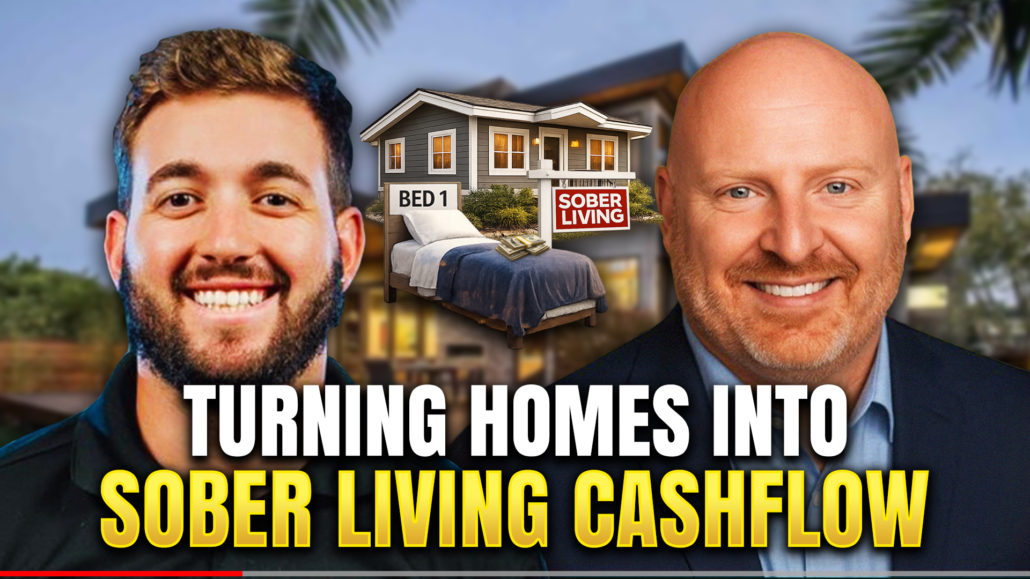
#166 The Real Estate Niche No One Talks About | Jim Boad
The Real Estate Niche No One Talks About | Jim Boad dives into how Jim is using single family homes as sober living properties and why this overlooked model has become such a powerful real estate strategy. In this conversation, he shares how he got started in real estate after leaving the army, why COVID pushed him to pivot away from traditional rentals, how sober living homes actually work, where the funding comes from, the biggest mistakes operators make, and why relationships with treatment centers and case managers matter more than marketing to the end user. It is a practical breakdown of a unique niche that combines cash flow, impact, and a completely different approach to single family investing.
===================================================
If you want to learn how to run your business in 5 hours or less…. Go to https://www.5HourBusiness.com
Subscribe to my YouTube channel:  / @tonyjavierbiz
And if you’re into flying and want to follow my Aviation journey, check out my other YouTube channel at / @tonyjaviertv
===================================================
If you want to dominate your Real Estate Market with TV commercials, go here: https://www.ClaimMyMarket.com
If you want to connect with me and my network, go to https://tonyjavier.com/connect
If you want to check out Tony’s Real Estate Resources and Vendors go to https://www.TonyJavier.com/resources
===================================================
Show Transcription:
There’s really two models that you can run. The first model where you make someone like a house leader like, “Hey, you’re doing really good. I’m going to give you the break in rent or I’m going to give you the bigger room and you’re just going to kind of keep an eye on the house, let me know if things are going wrong.” Absolutely, you can just start one of these homes because technically all you’re doing is you are a landlord. And the difference is that instead of me having tenants, I have participants in a program, but we only run about 10 to 12% of people actually self-pay us. Almost all of our money comes from some other entity. When you don’t have anybody behind you and telling you that, “Hey, you got to set that compassion aside today because you have eight other people that live in this home and you’re putting them at jeopardy if you don’t get this person out right now.” The big marketing that you end up doing for this where I think a lot of people get off is people think that they’re marketing to the end user.
Noah Kesslin (00:48):
What’s going on guys? Jim, thank you so much for coming on. Super intrigued for today’s episode. Guys, we have someone that is taking single family residents, single family homes, and turning them into sober living facilities. He’s got 50 active beds right now and coaches people all over the country that also have many, many beds. Jim, first off, thanks for coming on, but I’m curious to kind of see how you got into real estate in the first place.
Jim Boad (01:17):
Absolutely. Super excited to be here. I started in real estate back in 2001 after I got out of the Army. I was pretty lost on what to do. And my mom gave me a book called Buy It, Fix It, Flip It, Profit. It kind of just set me down that fix and flip path. I fixed and flipped homes and then got into new construction. I really got into new construction about four years ago, five years ago. And I mean, that’s just really the condensed down version of it. I just started flipping homes with my friends and family. My best buddy came and helped me work on them. My mom, my dad, my sister, my wife all became realtors to kind of support it because I got pretty decent at it. I was doing about 10 flips a month, so it supported my whole family.
Noah Kesslin (01:53):
That’s awesome. First off, thank you for your service. What was your life like before investing? I mean, going from the Army where it’s very structured, very set in stone what you’re doing for the day to real estate is like a very. If you don’t have that structure, I mean, you can totally go away with it. So how was that going from the Army to something like this?
Jim Boad (02:18):
I never really thought I would be in the Army. The Army was kind of my last resort. When I graduated high school, my senior year, I lived with a bunch of friends. My parents moved back to Arizona and I stayed in Washington. I literally just got a phone call. The phone rang one morning and I answered it and it was an Army recruiter. And I looked around at all the drunk people sleeping in the house and was just like, “Yeah, I better talk with you. I’m not going to end up in a good place if I stay here.” So it wasn’t like it was a mission in life that I wanted to be in the military. I did actually met my wife while I was in the Army and that’s what got me out of the Army because I did actually love the Army. I loved that discipline and that structure. It did help me. One of the things I say about the Army all the time is the Army will never make you something you’re not. It’ll just make you what you’re going to be that much faster. So if you’re going to be a bad person, it’s just going to flush that out of you really quick. And it flushed out of me structure and models and systems that I never knew I cared about, liked, or really wanted in my life. And that book actually really helped because it gave me a structure to follow. So it really made it simple for me at that point in my life, just I like structure, here’s a structure, go.
Noah Kesslin (03:21):
That makes a lot of sense. Okay. I didn’t really think about it that way. And then just to kind of explain it a little better than I did for the people, what does the real estate side of your business look like today?
Jim Boad (03:32):
Today, what my real estate business looks like is all I do now is I either remodel or I build new construction and I build them to suit just for this sober living. So a couple of just little key things that I do different. I don’t build master bathrooms in my homes or master bedrooms, but what I do is I will frame in a master bedroom entryway and then I’ll just buck over it and then out in the hallway have another door. So that way in the future, when I go to resell these one of these days, if I’m not reselling my whole business as a sober living business, I can sell this just as a single family home, give it a master bedroom, master bath and those things. But that is all I focus on real estate right now and I love it.
Noah Kesslin (04:09):
And all the homes or all the rooms per se, are they all the same exact size, same exact build or some bigger than others, some smaller? Do you try and make them as even as possible or how does that kind of look?
Jim Boad (04:23):
I work on making them as even as possible. Definitely I do do bigger masters just because ultimately I do think about the resale end of it because that would crush me at the end if I could sell these things one of these days when I want to retire. But I make nice big bedrooms. I do two closets in every bedroom, which ultimately isn’t going to be a problem when I go to resale either. But it’s just, I really try to accommodate because we do do two people per room for the sober living.
Noah Kesslin (04:48):
Gotcha. And I mean, I guess the problem sounds very obvious, but I mean, what was the main problem that you were trying to solve when starting switching into the sober living space?
Jim Boad (05:01):
There were two things. The first and most evident one was I really started doing this when COVID hit. I live in Washington State and we got hammered with restrictions. I mean, honestly, it was like I woke up one morning and just no one paid their rent. And I reached out to every one of my tenants, “Hey, what’s going on? How can I help? Did you lose your job?” “No, I didn’t lose my job. Everything’s going good, but I don’t have to pay rent anymore. “What do you mean you don’t have to pay rent anymore? No, I don’t have to pay rent anymore. It came down. There’s nothing you can do. And they were absolutely not wrong. There was literally nothing I could do. There were two ways to get people out of a house in Washington at that point, if you were going to move into it or if you were going to sell it. So I started down that path of selling all of my homes. And I was devastated. I mean, I literally would just sit at night and look at this list of red of my utilities are behind, my mortgage payments are behind. I mean, I still have to go do repairs on all these homes because legally you still have to go do repairs when they called. So that really started to devastate me. And then the other thing was I’ve always wanted to help. I grew up with a drug addicted family. My parents were very, very hardcore drug addicts and alcoholics. I mean, we fled in the middle of the night on a Greyhound bus from my biological father. So this has always touched my heart and my soul. And I’ve always wanted to do something, but I’ve just always been busy in real estate. Since I started, I’ve been busy in real estate. I’m fixing and flipping. I started new construction. It was just, I’ll get to it. I’ll get to it. I’ll get to it. And God, the universe, whatever, just kind of said, “Hey, you’re done. It’s time to get to it.” And I haven’t looked back.
Noah Kesslin (06:36):
Why do you think so many investors overlook this piece? Because it doesn’t sound very difficult to implement in a typical house.
Jim Boad (06:46):
It’s not. I think the biggest reason people overlook it is awareness because it’s honestly nothing I’ve specifically though about like, “Hey, I want open sober living homes.” I looked into open elderly care homes, way different animal, very challenging licensing requirements. You can end up being responsible for medications and all kinds of things. And they’re almost always a licensed home where these are an unlicensed home, which one, I don’t think most people think that I don’t need any special license to do this. I literally can open one almost anywhere, almost any time. So lack of just information and awareness on it.
Tony Javier (07:20):
Want to get motivated sellers that nobody knows about? Introducing 10X TV. If you want to create credibility in your market, find deals that nobody else knows about and crush your competition, you need to check into TV commercials. It is the new buzz in the real estate investing industry since we introduced it several years ago. I’ve been using TV commercials myself for the last 12 years and it’s absolutely crushed it. So if you want to learn how to get on TV and to do something that little to no people are doing right now, go to claimmymarket.com. Again, that’s claimmymarket.com. We usually only work with two investors per market. So if you’re interested, reach out to us and book a call to see if you can claim your market before anybody else does. Now back to the show.
Noah Kesslin (08:02):
Does someone have to be like, for example, if it was a nursing home, I’m sure you’d have to have a doctor or some sort of nurse that lives there to help everyone in there. Sober living, it’s just them, right? It’s just the people buying the beds, right? There’s no one else in there.
Jim Boad (08:19):
No, there’s normally not. There’s really two models that you can run. There’s the first model where you make someone like a house leader like, “Hey, you’re doing really good. I’m going to give you a break in rent or I’m going to give you the bigger room and you’re just going to kind of keep an eye on the house, let me know if things are going wrong.” And then there’s the model that I run and I really promote people to run more than that model is I hire staff and I have people that come in on a regular daily basis and check on everything and do the drug tests and make sure they’re following the chore lists. We still kind of tap somebody who’s kind of a lead in the house, but I just don’t love that model because you have someone in there with the ability to relapse because they are in a treatment center. Not treatment, they’re in recovery. And then two, the ultimate goal for everyone is we want to get them assimilated back into society. We want to get them out on their own and living in their own place and living their own life. So I don’t like that turnover of staff when I have a business that’s not going anywhere, but when my leadership constantly is, it makes my life hard because I constantly have to retrain somebody.
Noah Kesslin (09:23):
Right. Well, what do you think the most common misconception is about this model?
Jim Boad (09:30):
I think it’s that, especially, let me go with what neighbors think. They think I’m bringing this horrible thing into their neighborhood. They think I’m bringing active drug users in and I’m bringing active gang members in and I’m doing all these horrible things because we do work with the Department of Corrections. So we do take people that are processing back into society from prison. So they think I’m bringing child molesters and all these things into their neighborhood. But what they don’t understand is that these are a well structured and well-run group home is going to be your best neighbor. They have rules. They have to keep the yards clean. They have to keep the houses clean. They have quiet hours. We have the power to kick them out almost immediately when they do things wrong. So we’re really good neighbors. So that I think is the biggest misconception. And I think as an operator, I think it’s the licensing. People think, ah, I’m not qualified to do this. I’m not licensed or certified and I don’t have the means for this.
Noah Kesslin (10:25):
When it comes to the licensing or lack of licensing, it seems like you can kind of just buy a house, section off the rooms, or if you’re having two per room. Is it that simple? I mean, is it that easy to do? And then we talked a little bit before this, but government funding, you don’t need any certifications or anything for the government funding or is that a separate issue?
Jim Boad (11:00):
So it is a two-part one. Absolutely, you can just start one of these homes because technically all you’re doing is you are a landlord. And the difference is that instead of me having tenants, I have participants in a program. And there’s something else that’s a kind of cool caveat behind this is people in addiction and recovery are classified as disabled. So you do run into ADA, which a lot of people I deal with. My city only allows five people that aren’t related to live in a home together where there’s actually a lot of case law out there. Oxford House is a big company that does this. They run sober living homes and they’ve won two big cases up here in Washington and all over the country, they’ve won cases where cities sue them and say, “You can’t have 12 people in this house.” And they’ve went through federal court and they’ve won. So there’s actually quite a bit of good case law on that. Because like I said, at the end of the day, you’re basically just a landlord.
Noah Kesslin (11:59):
And
Jim Boad (11:59):
Then the second part of that is there is funding that does require a certification. So NARR, the National Association of Recovery Residents has a chapter in every state. So if you get licensed with them, which licensing with them is very simple. I mean, you do a really basic application. They come out, they walk your house, and just like you have to have exit signs above your doors and fire extinguishers in the kitchen areas. I mean, basically what HUD would come out and do or Section eight would come out and do to make sure that you’re not a slumlord.
Noah Kesslin (12:31):
And then
Jim Boad (12:32):
You pay them for that certification every year. And then you can take different pools of money. Because here in Washington, we got a lot of that opioid money. And the only way that the state will release you that money is if you’re Walker, it’s Washington Alliance of Quality Recovery Residents. You have to be certified with them. It’s a few hundred dollars a year and it’s a very simple process.
Noah Kesslin (12:53):
And I’m sure it pays for itself to do it. Absolutely.
Jim Boad (12:57):
Because you can tap into that pool of money that you just can’t have. There’s still, if you don’t want to go through that, which I don’t know why you wouldn’t, but if you don’t want to go through that, there’s still a lot of money out there and there’s still self-pay. But we only run about 10 to 12% people actually self-pay us. Almost all of our money comes from some other entity.
Noah Kesslin (13:16):
And when it comes to finding your properties to purchase, I know you said you’re transitioning more to the coaching side with still having your active. Where are you finding the best homes for this?
Jim Boad (13:31):
It kind of runs just along what you would do to find really good rentals. You want them to be close to services. You want them to be close to bus lines. Because one of the big things to think about with the people that are coming into your homes is they’re all going to be mandatory, have to go to certain meetings. They’re going to have to go to AA. They’re coming out of a facility, so they still have inpatient or outpatient services and things that they have to do and meet up with a case manager. And if they don’t meet with their case manager, their funding can stop. So you don’t want to go really rural unless that’s going to be your model, which you can run them rural, but you’re limiting your scope of people because I’d say about 30 to 40% of the people that I bring in have a car. So it’s important to be close to services. And I do live in a small town, so I could be on the cusp of town and I’m still less than a mile away from all of the services. But you don’t want to be 20 miles out of town and no bus lines or anything. You’ll just limit yourself on what you could have.
Noah Kesslin (14:33):
And when it comes to mistakes, I’m sure there’s a lot of mistakes that you can make in this, what do you think the most common mistake is in this that you think is really easily avoidable?
Jim Boad (14:46):
I’m going to say there’s two. The first one is not removing people right away when they relapse, because people are going to relapse. And when you don’t have anybody behind you and telling you that, “Hey, you got to set that compassion aside today because you have eight other people that live in this home and you’re putting them at jeopardy if you don’t get this person out right now.” Because it’s hard. I ran into it at two o’clock in the morning on our. We don’t snow a lot here, but it was our biggest snowy day the first year that I opened. And I was petrified and I didn’t know what to do. I didn’t know how do I remove this person? I can’t throw somebody out in the snow. But if you don’t, then you could jeopardize that whole house relapsing. And ultimately what I did was I ended up putting that guy in a cab up to the hospital and he had to wait up in the waiting room at the hospital where it was nice and warm until the morning till he could go get himself back into a clinic.
Noah Kesslin (15:39):
Because when I think of that, obviously you’re looking out for him, but like you said, I mean, if he’s in there high and doing it and you don’t kick him out and the other residents see that you’re not kicking them out, they’re like, “Oh, well, I can do that and not get kicked out.” So I definitely see what you’re saying. And then you said there was two main ones. What would be your other main one?
Jim Boad (16:05):
Yeah. And then, oh man, I totally blanked on the other one. I got all excited about that one.
Noah Kesslin (16:11):
No worries. I’m sure just like in regular fix and flipping or wholesaling, there’s top operators and then there’s guys that might do one or two deals a month in this case, maybe have one sober living. What would you say separates the top operators from everyone else in this sector?
Jim Boad (16:34):
Models and systems. Really just having a procedure that they follow. And the other thing, which those models and systems run into your marketing as well because the big marketing that you end up doing for this where I think a lot of people get off is people think that they’re marketing to the end user where you need to be marketing to the facilities. You need to be talking with the case managers and caseworkers. You need to be talking with the people at reentry over at Department of Corrections and constantly letting them know. We let them know twice a week where we’re at. Hey, on Monday we have X amount of beds available. Hey, on Friday, we have X amount of beds available. So we’re constantly reaching out to all of our vendors and letting them know what’s going on. Hey, we’re opening up a new home in this area. Do you guys need men’s or women’s homes in that area? So it’s high touch. And I think a lot of people think they just can come in and like anything, they think they can float, “Hey, I got two listings. I’m the king of the world. Yeah, but that was your sister and your uncle. You got to keep marketing, man.”
Noah Kesslin (17:34):
Right. So you’re saying, so you’re not actually going after the end user that’s going to be coming into the house. You’re going after the caseworkers. Okay, that makes a lot of sense.
Jim Boad (17:49):
And I see where people get spun up on it because you think that’s where I’m going to go. But when you don’t know, you don’t realize either that, like I said, I’ve never gotten a call off of my website or a flyer that said, “Hey, I’m trying to get sober. I want to move into your home.” I get calls that say, “Hey, you’re on the list down here at X, Y, Z facility. I’m getting out in two weeks. I need a bed.”
Noah Kesslin (18:13):
And it’s mostly. So it’s kind of like a referral basis in a way. Wow. I didn’t even think of that. Okay. That makes a lot of sense though, because it’s not like they’re on Google in there and they might have a computer, but that’s super interesting. A lot of people define the word success differently. They measure it differently. They strive for it differently. How do you define the word success? How do you measure the word success? And then how do you strive for it every single day?
Jim Boad (18:53):
The money equation has left my definition of success a long time ago. I’ve been absolutely broke and I’ve been semi-wealthy. So really right now what defines success for me is the amount of people that we can get into these homes and keep in our homes and move through it. Because once they move through our homes 90 plus days out, their rate of recidivism really definitely drops. And it’s watching these people get a car, get a job. I mean, I can’t express to you how many people we’ve seen come into our business and get new teeth. And teeth change your whole world and your whole life. It’s mind blowing to have somebody who won’t look you in the eyes and doesn’t want to talk. And then they get teeth and their teeth forward and, “Hey.” Those are the things that make me feel successful. Look, we helped this guy. We helped them get to here. And then on a personal level, it’s time is success to me now. That’s my biggest metric. How much time can I give my wife? How much time can I take and do the things that I want to do? So it’s changed a lot over the years because I used to think about cars and watches and trips. And I can literally hang out on a Sunday afternoon with my wife at home and take a walk around the block. And that was a more successful day for me than taking a trip to Europe with my wife and being on the run and spending tons of money.
Noah Kesslin (20:20):
Yeah. I love that. Well, what is the biggest challenge that you’re seeing with real estate right now?
Jim Boad (20:26):
The biggest challenge that I personally see with real estate is it’s that mindset of buyers. We got all these people that think that they should have a two and 3% interest rate and like, “Well, I’m not buying a home till the rates are back down.” And it’s like historically guys, those are insane rates. I mean, my first house that I bought was at a 9% interest rate and I was getting a prime rate at the time. I mean, in the 80s, people were buying condos in the 18%, 20% interest rate and they were still buying them. I mean, they’re only 5.9%. I’m not buying. So there’s a little bit of a mental shift that I think people have to go through in real estate because one of the things I’ve always believed in is the best time to buy real estate is now. It just always is because where’s the market going to go? Can I time it going up? No. Can I time it going down? No. So buy now, if you’re buying it to especially live in a home. I have friends that bought in the peak of that market before it crashed. They had to live in their home for 10 more years, but then they sold their home and they made $150,000 in profit just by living in their home. So those are the big mindset shifts that I really think that people need to be able to express to their buyers when they’re an agent or their friends and family, “Hey, buy a home now. Don’t wait for low interest rates. You can refi if you have to.”
Noah Kesslin (21:45):
Yeah. Yeah, for sure. When it comes to the business now, if you were going to explain to someone just starting out in this space. Well, let me phrase it differently. Let me challenge you a little bit. So let’s say your business completely goes away. You get to keep all the knowledge that you’ve learned in the space, but you are going to rebuild what you have now. And it could be whether it’s more efficient, like you said, like bigger homes, but less of them. What would you focus on first to rebuild if the business completely goes away?
Jim Boad (22:24):
First thing I would focus on is relationships. I would start reaching out to. Let’s say I was in a different area and I didn’t have any contacts. I would instantly, and I was going to be doing the same thing. I would Google up inpatient drug clinics near me and I would just grab that list and I would start calling. I go to a huge range. We bring people in from over 300 miles away to come into our facilities. So I would just start close and I would just keep working out because I guarantee you when you Google that in your area, you will find drug rehab clinics. And when you call them, they’re not going to be like, “Oh no, we have an abundance of houses and beds.” They’re going to go, “Please, we need men. We need men beds now.” They’re always doing that. Or it’ll be women. The areas can be different. But that’s what I would do. And that’s the first place I actually even start any student, “You want to do this? You need to make sure when there’s a need, start calling.” I can almost always tell you there’s a need, but still, this gives you that power. And then start finding the people you need to talk to and start calling them on a regular basis. Start emailing them on a regular basis. I like to pop in and give coffee cards away because ethical bribes work. So people love coffee. And if they don’t love coffee, they have ganish over here at this coffee stand. So there’s something there that they will like. And that’s where I would tell anybody to start. And I’d tell anybody to start that in almost any business because your relationships ultimately end up being your business almost always.
Noah Kesslin (23:47):
Would you do that before buying your. You go out, make those relationships and then say, “Hey, I have a property closing this date. We’re going to have beds ready this date,” so that they already have them kind of lined up. That’s kind of your goal on that, I’m assuming.
Jim Boad (24:02):
100%. Because the best property in the world that you can’t fill doesn’t make you any money. And
Noah Kesslin (24:08):
I
Jim Boad (24:09):
Would rather have a list of people waiting to move into the home that I have. Plus that gives you a lot of power because I do show people how to rent houses as well because not everybody can afford to buy a home that wants to do this, but you can get into a rental. And when I could come to you and say, “Hey, Mr. Investor, look, I have a list of 30 people that are ready to move into my home at $850 a piece. I’m going to fill this house. I’m going to cash flow it. This is all guaranteed money because it’s coming directly from these three programs.” It gives you all that power that you need as opposed to, “Hey, I’d like to rent your home and I’m going to try to fill it up. But if I don’t have it filled in the first month, I only have one month’s worth of rent to give you.” It’s a totally different dynamic and conversation.
Noah Kesslin (24:49):
When it comes to subleasing, would it have to be a perfect home? Or for example, if they had a big master bathroom or something, would you have to find a good home that’s already ready? Because obviously if you’re going to sublease, you’re not going to knock the walls down or change anything. So would it have to be kind of what you’d already want or how would you look at that?
Jim Boad (25:13):
It’s definitely what you already want. And really when we’re talking sublease, go four bedroom minimum. And then if you could find bigger homes, then that’s awesome. But you don’t have to do anything special to them. The master bedrooms and bathrooms, they work fine. It’s just when you have the option to not do that, it makes it a little easier. You don’t have people fighting over that and then it gets distributed between more people. So when I first started, I didn’t do anything special. I just put people in the homes that were there. And I’m just blessed that I build and renovate my own homes. So I get to do that. But if you can find four and five bedroom homes, they’re what makes the most sense because you are getting paid per bed and you really want to do two beds per room. And you want to do two bedrooms, not just purely out of the financial aspect, which it changes everything. But when you put. The only time I’ve ever had people relapse is in rooms alone because They just get to kind of suck into their own place. They get to get comfortable and feel like they can hide things. There’s accountability when you have two people in a room that’s a much higher level than just a solo room. So that’s why I really push that hard. Now, don’t go and try to jam three and five people per room. Now you’re getting into being a bad operator. Now, if it’s a 20 by 20 room and three beds in there makes sense because everybody can still get up and move and have dressers. Cool. That makes sense. But don’t throw two sets of bunk bed in a basic little 10 by 10 room because now I can cash flow $2,200 off this room. That’s bad business.
Noah Kesslin (26:52):
Who has been the biggest influence on yourself in this space when it comes to the sober living?
Jim Boad (27:01):
Sober living’s been a hard one because there’s not a lot of influential people in this realm. There’s two other people that run coaching programs. And I jumped into a coaching program initially because it’s really what got me started. I literally was doom scrolling one day looking at all my red and I just had to clear my mind. And I ran across a company that had a little online program and I took it. And that’s really what jump started me into this. But honestly, one of the biggest ones that I watch, listen to and follow on a daily basis is Alex Ramosi. It’s his marketing style. I love the information and it’s business. So what he talks about, it relates to every business that I own. So it directly relates to marketing and content. And you have to be getting your things out there and in front of people, whether that’s these case managers, whether it’s doing ads online to try to get people into my course and help them start and scale sober living homes. I own a restaurant, whether it’s getting people in there to buy my new ribeye steak. It’s just that marketing and that constant. You got to be out there and be in front of people and understanding how much content you really have to do because only such a small percentage of your followers, you have 10,000 followers, only three to 5% of them are going to see what you put out. So if you’re putting out 10 pieces in a day, you’re going to get 15, 20, 30% of your followers to see it. Where if you put out one piece, you’re just going to get the small section. So that’s what’s really changed my game in every aspect of every business I own.
Noah Kesslin (28:32):
Yeah, 100%. I love it. Well, where can people connect with you? If someone is interested in learning more, if someone is wanting to get into that space, where can they connect with you? Where can they talk to you? If they are interested in joining your coaching program, where can they go?
Jim Boad (28:50):
Jimbode.com is my website and that’s got a lot of information about my coaching. I’m online. I’m on all social right now. So just my name, Jim Bode. And you can either. In social, you can engage and I give a lot of stuff away. And then jimbode.com is where it’ll really tell you about the program and what I can help you do, help you scale and grow.
Noah Kesslin (29:12):
Awesome. I love it. Well, Jim, thank you so much for coming on. It’s been an absolute pleasure. Everyone, thanks for watching and we’ll see you next time. Awesome.
Jim Boad (29:22):
Thank you.

