
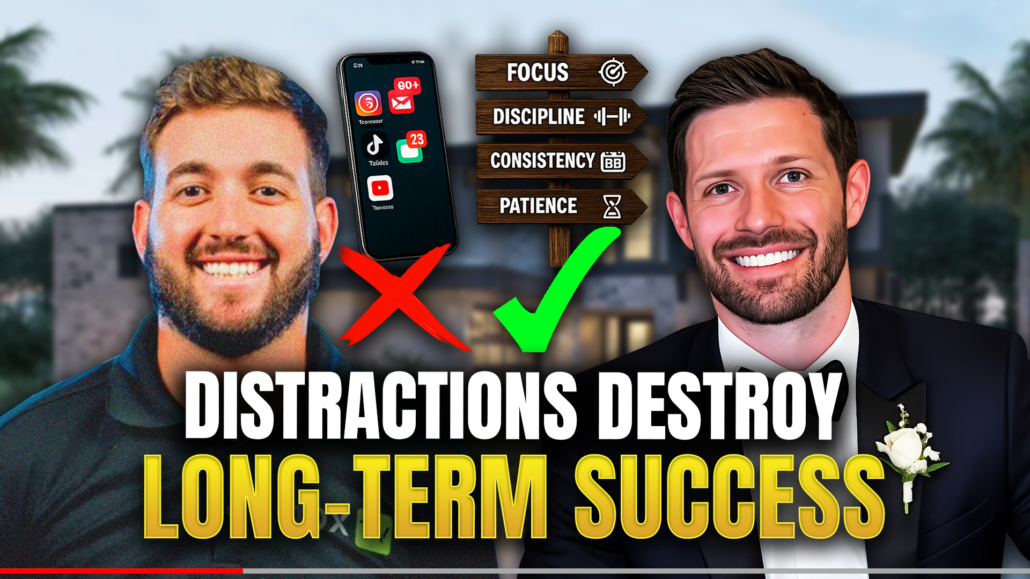
#170 AI Is Changing Real Estate Sales | Bill Beck
AI Is Changing Real Estate Sales | Bill Beck explores how artificial intelligence is reshaping the way real estate professionals generate leads, follow up with prospects, and build more efficient sales teams. Bill Beck shares how AI-powered systems like Rafy can help investors and wholesalers reach deeper into their pipelines, automate conversations, and empower existing salespeople rather than simply replace them. He also discusses why many investors resist AI adoption, how close AI voice technology is to sounding fully human, the importance of systems and company culture, and why entrepreneurs need to avoid shiny object syndrome as technology continues to evolve.
===================================================
If you want to learn how to run your business in 5 hours or less…. Go to https://www.5HourBusiness.com
Subscribe to my YouTube channel:  / @tonyjavierbiz
And if you’re into flying and want to follow my Aviation journey, check out my other YouTube channel at / @tonyjaviertv
===================================================
If you want to dominate your Real Estate Market with TV commercials, go here: https://www.ClaimMyMarket.com
If you want to connect with me and my network, go to https://tonyjavier.com/connect
If you want to check out Tony’s Real Estate Resources and Vendors go to https://www.TonyJavier.com/resources
===================================================
Show Transcription:
We generally also like to avoid confrontation. So some people look at it as like, “I’m going to bring this in. It’s new, it’s different, but it’s also probably going to cause confrontation that I need to deal with.” Exploring the dark forest, right? We always have to go explore. What’s the better way of handling this? What’s the better technology? What’s the better sandbox to plan as we’re building it? Success is not the destination, it’s the platform to do what matters. And it’s like this philosophical quote that you get from a billionaire, of course. But I like to remind myself of that because there’s a lot of people who are marching towards success, and I’m always challenging myself with how much sacrifice it takes to get there. I would be very intentional about, and this is still something I have to battle with, and I think we all do, the shiny object syndrome of like, “All right, I have all this knowledge, which means I know how to do all this cool shit in theory, but that also can turn into a distraction super, super quick.”
Tony Javier (00:53):
Welcome to the Real Estate Masters Podcast, where we bring you the top real estate investors in the country. If you also want to be in the top 1%, you are in the right place. Listening to podcasts like this is exactly what helped me to scale my real estate investing business to seven figures, flip over a thousand houses, and more importantly, step out of daily operations of my business over a decade ago so I could start and grow other businesses. So get ready to learn from the best and start building a business that works for you and not the other way around. Enjoy.
Noah Kesslin (01:26):
Bill, thank you so much for taking the time. I know you’ve been in the space for a while. I know Rafi is an up and coming company. I’m super excited to dig deeper into it today, but I am curious how you got into the space in the first place.
Bill Beck (01:41):
Appreciate you having me. Excited to be here and talk about it. So yeah, just like any journey, it starts with some form of pain that we were trying to figure out. I have a wholesaling shop. We’re largely focused in New Jersey. I have a 16-person team. We do a decent amount of volume, but just like any shop, whether you’re a one-man band or a 20-person team, everyone seems to experience the same sort of volatility at every level, and that’s just the inconsistency of your sales room. You’re just trying to get Jimmy and Johnny to hit their KPIs every week. We get done with the week, we look back and we’re like, Some weeks great, other weeks okay. And other weeks you’re like, damn, that was bad. What did I do wrong? And I think a lot of it, you just kind of come back to this, yes, your sales room is always a revolving door, but how do we get that consistency back? And that was kind of the initial point for us of feels like a really lucky time we’re in with this technology that’s available. And if we’re going to kind of tout ourselves as these systems mindset people that know how to leverage technology, let’s go ahead and take the plunge here and start building.
Noah Kesslin (02:46):
100%. And just for the people listening, just to give them an idea, what does your business look like today?
Bill Beck (02:51):
Yeah, so Rafi is a lean and mean team. We have a lot of developers on board. I am one of the in-house domain experts as far as the real estate space goes. I’ve been in real estate for the better part of 15 years. I got all my war stories, not just with building a sales room, but building everything. Dispo, transaction coordination, marketing, all the fun things you do when you’re leading a 16-person team and trying to hit revenue marks every month. But Rafi, right at this moment, we have a awesome product that more or less is supporting with. The way I like to talk about it is we’re all familiar with Captain America. We’re just trying to create a bunch of Captain Americas on your team because a lot of people have this fear when you go on the AI forum boards of, is this replacing my team? Is this going to take my job? And this is not just real estate sales, this is across every industry, pretty much every position. And that’s not the way that I like to talk about it. I like to think about it in a way of, no, we are supercharging what your team is already doing. We’re allowing your, whether it’s your follow-up specialist, your appointment setters, whatever you call them, we’re allowing them to get deeper into the pipeline by nature of using Rafi as a virtual teammate to jump on the phone, have those qualification calls, send out texts and emails in concert with the voice. It’s all intelligently thinking together. So that way you don’t have to look at your numbers every week and say, man, if only we could have gotten deeper into our, let’s say, long-term follow-up bucket, we probably would’ve found a few more gold bricks. That’s what we’re accomplishing today for many users in our system.
Tony Javier (04:28):
Want to get motivated sellers that nobody knows about? Introducing 10X TV. If you want to create credibility in your market, find deals that nobody else knows about and crush your competition, you need to check into TV commercials. It is the new buzz in the real estate investing industry since we introduced it several years ago. I’ve been using TV commercials myself for the last 12 years and it’s absolutely crushed it. So if you want to learn how to get on TV and to do something that little to no people are doing right now, go to claimmymarket.com. Again, that’s claimmymarket.com. We usually only work with two investors per market, so if you’re interested, reach out to us and book a call to see if you can claim your market before anybody else does. Now back to the show.
Noah Kesslin (05:10):
Why do you think so many investors overlook this part of the business? And why do you think some investors are hesitant to move towards something like Rafi as an AI replacement or supercharger?
Bill Beck (05:26):
Right. Yeah. So I think this is just the classic case of any sort of adoption when you look back over the course of history. You can go back to social media, the advent of social media, you can go back to the advent of just the internet. These things are such a big splash in the world and you have a lot of people that are in the space that have been in the space for decades. So what do we humans do across the board? It’s not even just work, it’s personal life. We get comfortable with what we’re doing because what we have been doing is working well. And this is one of those sort of adapt or die messages. I think most people have come around to it, even the guys that have been in the business for quite some time. I think those whispers internally in their mind, they’re coming around town to be like, “You know what? It does feel like if I don’t get some sort of horse in this race, these young bucks are going to catch up to me even though I have a tremendous lead on them.” So it’s just one of those, I’m comfortable. I don’t fully understand what it is. Can a quote unquote robot really talk to a human being? Because we all know how personal this game can be when you’re talking to a seller. You really have to dig in and have some deep empathetic moments and understand their situations. A lot of these folks are going through super distressed situations. Life happens. So a lot of people challenge, well, can a robot really get through that conversation? And I think the people who are on the front lines or the bleeding edge, as I like to say, they see how quickly the technology is evolving. And maybe more importantly, this is one of my more sort of fun observations as we’ve been building, is this whole psychology of what’s going on of we all understand a human-on-human conversation, but now we’re studying human on AI conversations. And how are those different? Of course, they’re not the same. A lot of people, once they realize they’re talking to AI on the phone, sure, some people want to hang up. Some people want to do the just spam operator. I just want to talk to a human. But other people, they’re very willing to have the conversation even though they know they’re talking to AI, but maybe they don’t care as much about being asked about their dog or how their weekend was or any of those sort of rapport building moments that we go through. They just want max efficiency. So I think that’s kind of the study of what’s going on here, at least until the technology gets to this point of true no one can discern if they’re talking to AI or not. I don’t think we’re fully at that level. We’re rapidly approaching that level. It’s pretty impressive what our technology and frankly even what some of our competitors’ technology is capable of doing, but we’re months away from getting to this point of you really won’t be able to distinguish.
Noah Kesslin (08:02):
Yeah. What do you think the biggest misconception is about what you’re offering?
Bill Beck (08:08):
Well, I think we’ve touched on at least one of those points. I think there’s a lot of people who are scared to bring this type of technology in and disrupt the apple cart of whatever the culture is that they’ve established and have their, whether it’s their sales team or maybe even some of the admin roles in their team start to feel that they’re being pushed out. No one wants to be put in. This is another thing. Us humans, we like to be comfortable. We generally also like to avoid confrontation. So some people look at it as like, I’m going to bring this in. It’s new, it’s different, but it’s also probably going to cause confrontation that I need to deal with. So I think that is a mindset shift of we don’t need to push people out. We look at this no differently. We all as entrepreneurs ask ourselves this conversation of how do we scale and multiply? And more times than not, most entrepreneurs are like, “I’m just going to throw more money at marketing. I’m going to add a couple more sales guys.” Well, this sort of falls in line with that sort of thing. Do you need to add more sales guys or do you just need to supercharge your current sales room and get a little bit deeper? The non-sexy topics are normally the things that you should be paying attention to. How do we recycle better with the leads that we already have in our system? Most people want new leads. New leads are going to save my revenue next month. Well, the people that are in the know, it’s like you already have whatever it is, a thousand, 10,000 leads in your system. How about we just do a better job of mining those? So that is one of the aspects. And I think the other mindset shift is what we spoke about with just this civilization society adoption. And I think we’ve started to see it probably for the better part of the last decade, but especially we all went through our different pandemic experiences, but that sort of pushed us into this whole Zoom meetings, Google Meets, virtual is more acceptable. So I think that kind of springboarded us into this direction of people are more willing to connect in a virtual space. And not too far away from that virtual space is like, okay, I was connecting with a human typically, but now virtually, am I okay with connecting with what feels like a human, pretty close to a human? And like I mentioned, we’re getting a lot closer to a human. So I think there’s this still resistance of, can AI really have conversations in a meaningful way that’s going to push my team forward? I think more people are accepting of, of course it can send out text messages and emails. No big deal there. It can handle that workload. But as far as the actual voice conversations go, I think that’s where you’re still hitting this early adoption point of the curve. And I think we’re in the middle of early adoption moving into that middle portion of the curve of people just truly accepting it. So I’d say those are the two biggest points.
Noah Kesslin (11:07):
It’s crazy even if you look seven months ago to now, where do you think we’re going to be AI-wise in a year, two years? Or to flip the question, how close do you think we actually are to not being able to tell if it’s AI or not?
Bill Beck (11:30):
Yeah. So I’ve been wanting to do this just in the time that we’ve been developing Rafi in our voice model. And I haven’t fully done this, but just listen to the first iteration that we put out there to where we’re at now and we’re whatever it is, a hundred plus iterations deep in, as I like to say, exploring the dark forest. We always have to go explore what’s the better way of handling this? What’s the better technology? What’s the better sandbox to play in as we’re building it? But what I think is happening, at least in the sales room, and at Rafi, we are focused on the sales room right now. We’re actually starting to work on a dispo playbook as we speak to help with the buyer end of the sales work. But our ultimate goal is to help, whether it’s wholesalers, agents, builders, flippers, any sort of real estate professional, we want to help with the whole life cycle of the transaction. And we just feel like the sales room is the biggest pain point. So we decide to start with the biggest pain point, but move to dispo, help transaction coordination. There’s some finances and reporting that go on behind the scenes. But by the end of this year, I am very confident in saying that you’re not going to see AI taking over, closing end to end, at least the majority of your deals, but I think you’re going to start to see a small percentage of your pipeline closed with AI end-to-end, whether that was a combination of text, email and voice call just over text, just void, whatever it might be. I think we’re going to start seeing some of those leading indicators of, look, it is capable of doing this. And I know there’s some people out there marketing right now like, “Hey, my AI voice caller is capable of closing all your deals.” And that’s fine. That’s good fancy marketing language. The reality is you still need a human in the loop for sure. And I think for quite some time, having a human in the loop is something you’re going to want to have. The whole feedback loop idea is huge. Even before AI, feedback loops, super important. That’s basically a fancy way of saying, “Hey, let’s communicate with our team well of what’s working right and what’s working wrong.” So making sure that you have folks and our users do a good job of this, of communicating back to us, “Hey, this is what we like. This is what we don’t like.” And then we go to work on seeing if we fix those things or not. I mean, listen, users can have a lot of comments of maybe being picky about this and that. So we have to be very careful about how we’re spending our effort and time and what we’re updating. But I do think, and I don’t think I mentioned this yet, but one of our biggest differentiating factors is we allow our users to customize their playbook. So we’ll basically take their SOPs, their scripts, and it’s not just a copy paste job. Of course, there’s a lot more of a mad scientist formula to how you convert that to AI speak. But we take all that and we say, “Hey, let us build this in your brand voice.” Instead of just getting some sort of generic outbound AI model. Everyone’s got their own little secret sauce. We might all be doing it 50% the same, but the next 50% is a little bit different. You have different exit strategies, you have different personas, whatever it might
Noah Kesslin (14:55):
Be. Yeah, for sure. For somebody listening to this, and it might seem simple, but who is your target avatar? I mean, if someone was listening to this and you’re like, “You are our perfect client,” who would that person be?
Bill Beck (15:12):
Any person that considers themself to be a real estate professional that gets to the end of their day, their week, the month, they’re looking back on their numbers and just thinking to themselves, “Why could I not convert more?” We can all agree that there’s at least one answer that we all share is if only I could have followed up more, if only I could have gotten more touches. Anyone facing that sort of anxiety or stress, and I like to keep it super simple because I could go more complex than that into all the ways that we can build Rafi around you with the customization of what we offer. But the simple answer to that is if you’re stressed out about how many touches that are going out every day, and maybe you’re a one-man band and you’re just like, “Hey, I just want appointments and live transfers all day. I don’t have time for this prospecting.” Even the 10-person team, I would love to have my closers just stacked up all day with appointments and live transfers and spending 0% of their time prospecting.That is the dream of any shop that’s out there. Have your best talent closing all day and not wasting a second trying to either power dial or single dial people to get them on the line.
Noah Kesslin (16:30):
Yeah, 100%. I ask everyone this question and it intrigues me every time. I feel like everyone defines the word success differently. They measure it differently. They strive for it differently. How do you define the word success personally and business-wise? How do you measure it and how do you strive for it every day?
Bill Beck (16:53):
Yeah, so the first thing that comes to mind with that, I went to a workshop last year. It was one of my favorite quotes of the year, and this is the owner of booking.com that was doing a two-hour presentation piece. And he’s a billionaire. He’s doing a lot of philanthropic work across the globe. But he said success is not the destination, it’s the platform to do what matters. And it’s like this philosophical quote that you get from a billionaire, of course. But I like to remind myself of that because there’s a lot of people who are marching towards success, and I’m always challenging myself with how much sacrifice it takes to get there, whether it’s with family, friends. We all sacrifice things to grind, put our head down, build wealth. So that is something that I sit with on a regular basis, and I’m very happy with the journey that I have personally been on, but I do not want to be one of those guys that’s like, great, look at all this wealth I’ve created maybe for generations, but also have a metaphorical gun to my head of what have I done? So my formula that I kind of preach, and it’s sort of corny, but I like to live with this, is culture plus people, plus systems equals positive outcomes. And it’s in that order for me because I feel like if you have not established a culture, how do you know who the right person is to have around you? And if you don’t have the right people around you, how do you plan on building and evolving your systems over time? And all of that, you’ll notice I did not say equals massive profit. Positive outcomes because positive outcomes I think is more of a all-encompassing bucket of, is everyone happy here? And I just had this self-reflection. I had to go to a forum meeting. I’m in this group called the Entrepreneurial Organization, and it’s not real estate focused. I like to have some sort of triangulation with other business owners and be a small fish in a bigger pond. But I really had to sit there and self-reflect on, all right, have I lived up to the potential of what I think I’m capable of? And not just for my own family. Of course, that’s what’s most important, but everyone else that works with me has their own family and friends. Am I doing enough to set them up for success as well? So my formula for success is of course, yes, the financial freedom thing. I want to have a lot of not just wealth in the typical sense, but I want time wealth as well. I want to go to the soccer games. I want to be able to do the trips with my wife or just be around my family more. Maybe even just sit on a rock if that’s what I want to do, just so I can think. And I’m trying to always find more time to think. But I want to see that for the people around me too. And that is What has started to become a little bit more rewarding for me. If you asked me this question five years ago when I was just coming out of my late 20s, it probably would’ve been a little bit more of this whole bottom line driven answer. But I’ve gone on a bit of a philosophical bender in the last five years, and I think it’s really helped just the leadership component and just seeing the field a little bit clearer for what really matters in life. And I feel like that’s a lifelong journey, but that’s my response to that.
Noah Kesslin (20:32):
I love it. I love it. If you were going to start from scratch today, you get to keep all the knowledge that you’ve learned over the years, but the whole business, Rafi, the real estate, everything goes away. What would you focus on first to rebuild what you have now? Would you go back to real estate? Would you just start with Rafi? What would you focus on first?
Bill Beck (20:56):
Yeah, I’m sure anyone could say it’d be lovely to have AI. Let’s go back to the 1800s. Here you go. Here’s AI. It’s dark sorcery. But yeah, I think if I still had all that knowledge, I would sit there and I have a pretty good idea of what my strongest skill sets are. And perhaps in this imaginary world you’ve created, I don’t necessarily have all the financial resources. I really just have my knowledge and my skillset. So I would be very intentional about, and this is still something I have to battle with, and I think we all do, this shiny object syndrome of like, all right, I have all this knowledge, which means I know how to do all this cool shit in theory, but that also can turn into a distraction super, super quick. I just got off a meeting earlier this morning with one of my leaders, and for the last couple quarters, one of our mantras has just been chop wood. Hey, let’s keep it super simple. It’s chop wood the same exact way. We don’t need to get super cute about things. And now we’ve kind of changed it because AI has taken over our life on both the Rafi side of the house and Rise, my wholesaling company, where we’re implementing AI pretty much wherever we can. And we’ve always been Very systems heavy mindset-wise. And when you have AI, it really multiplies that. But now you have to look in the mirror and challenge yourself when you’re sitting with your leaders of, are we over engineering? Are we just playing with toys or are we playing with tools? So that’s my more recent thing that I like to ask myself. Am I playing with a toy right now or am I playing with a tool? So to shorten up what I’m trying to say here, it’d be identify what your top skillset is and go pick one thing to be really good at for the first three month sprint and compound from there and don’t try to do this whole juggling act. For some people that might look like, all right, I really want to go nationwide. And some people hit that button too quick because it’s sexy, scalable. I see it on Instagram. But there is typically more than enough money for you to get from level zero to level 100 just in your backyard before you need to start hanging up all these shiny Christmas ornaments on your tree. Just stay locked in, know what you’re good at. Always network. Find people that can fill in the gaps around you. I really do believe that at heart, we’re all just essentially a bunch of chimpanzees that need to work with a tribe. And the better you build your tribe, whether it’s a wolf pack, whatever animal resonates with you, but you need to find what are your weaknesses. And as you have the ability to scale and you have those resources, start filling in those weaknesses around you. And that I think is what leads to a pretty heavy multiplier effect with the least amount of setbacks.
Noah Kesslin (23:55):
I love it. I love it. If someone’s interested in learning more about Rafi or just wanting to connect with you in general, where can people go to connect with you?
Bill Beck (24:08):
You can find us at heyrafi.com, H-E-Y-R-A-F-I.com. You can check out the products. We have some details more in depth about what’s going on. Set up a demo. You can even do a role play with Rafi just to see how it sounds and feels. You can find me on LinkedIn. I’m pretty active on LinkedIn. I’m starting to be a little bit more just present with my social media effort. And it’s the benefit of the team that’s been built around me. It allows me to do more of this sort of stuff I’m doing right now. Networking, just finding more relevant people to help us multiply the business. So yeah, those are the main ways to connect with me. Happy to talk. AI systems, happy to talk. JV deals, just generally speaking in the real estate space, I’m getting more involved in syndication deals across the country myself with bigger multifamily deals. But I’ve cut my teeth mostly on small residential wholesaling, whether that’s listing, buying and holding, flipping. I’ve raised a bunch of private money over the years. That’s been another skill set of mine. So happy to talk any one of those topics. I
Noah Kesslin (25:19):
Love it. I love it. Bill, thank you so much for taking the time. Everyone, thanks for watching and we’ll see you next time.
Bill Beck (25:25):
Appreciate it, man. I
