
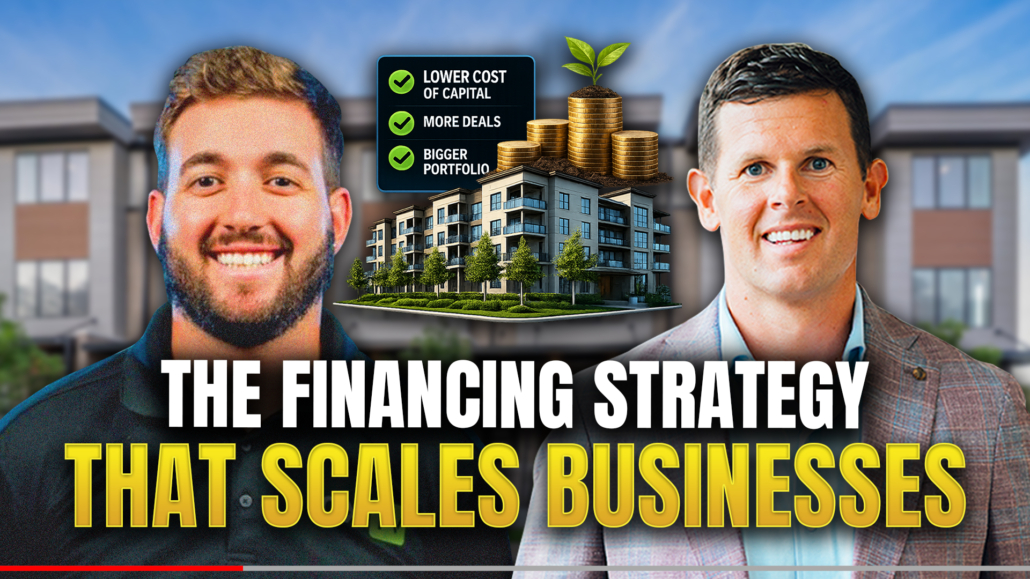
#164 The Tax Strategy Every W2 Worker Needs | Casey Gregersen
The Tax Strategy Every W2 Worker Needs | Casey Gregersen reveals how high-income W2 employees can legally reduce their tax burden while building long-term wealth through real estate. In this episode of the Real Estate Masters Podcast, Casey Gregersen breaks down cost segregation, bonus depreciation, the short-term rental loophole, and why most professionals overpay in taxes simply because they don’t know their options. He also shares lessons on scaling a real estate business, managing risk, building banking relationships, and creating financial freedom through smart investing.
===================================================
If you want to learn how to run your business in 5 hours or less…. Go to https://www.5HourBusiness.com
Subscribe to my YouTube channel:  / @tonyjavierbiz
And if you’re into flying and want to follow my Aviation journey, check out my other YouTube channel at / @tonyjaviertv
===================================================
If you want to dominate your Real Estate Market with TV commercials, go here: https://www.ClaimMyMarket.com
If you want to connect with me and my network, go to https://tonyjavier.com/connect
If you want to check out Tony’s Real Estate Resources and Vendors go to https://www.TonyJavier.com/resources
===================================================
Show Transcription:
We’re in the real estate industry. We feel like everybody knows how to do cost appreciation because a lot of us are doing it, but you realize these guys aren’t talking about it and they don’t have the connections and the resources to do it. If your husband or wife does not have another W-2, it’s not that hard to do it. But here’s the second part is if you’re both W-2 earners, then you wouldn’t qualify, then you just go with the short-term rental loophole. If you scale it the wrong way or maybe you scale in too fast doing fix and flip, man, it could scale you big time, but it can also completely crater you. When you do scale, like when you’re growing and you’re dependent on yourself, you know you can depend on yourself and you know that I can hustle and you know if something starts to go sideways that you can probably fix it. Or at least I feel like that’s the way I am. I’m sure a lot of entrepreneurs are the same.
Tony Javier (00:45):
Welcome to the Real Estate Masters Podcast where we bring you the top real estate investors in the country. If you also want to be in the top 1%, you are in the right place. Listening to podcasts like this is exactly what helped me to scale my real estate investing business to seven figures, flip over a thousand houses, and more importantly, step out of daily operations of my business over a decade ago so I could start and grow other businesses. So get ready to learn from the best and start building a business that works for you and not the other way around. Enjoy.
Noah Kesslin (01:17):
What’s going on guys? Casey, thank you so much for coming on today and sharing your over 15 years of experience in the game. I’m curious to know if there’s one thing that you could credit your time in real estate and your success in real estate over the past 16 years, what do you think that one thing would be?
Casey Gregersen (01:36):
Great question. Thinking about, I could go a lot of directions. I’ll go with building relationships with banks, I would say was the biggest one. Small banks. I did it early on and I’m really thankful it helped me grow. And to this day, I still use a ton of banks on our deals. And I just think it keeps my cost of financing a lot lower. Man, it’s also saved me a lot of times when I was fixing and flipping a property and I got good bank financing on it to start. And then when I couldn’t sell it or the market changed, I was able to just hold onto that property because I already had good financing in it. And I just know I’ve also lived through the times when I was using hard money or private money to do deals. And when you can’t sell that thing, you got no option other than just drop and take it in the shorts. So I think that’s been one of the biggest ones. And then that’s translated now into if you understand what banks want and the organization they want and the questions they ask and just kind of understand that it now translates to a private money lender or to an investor and you can speak to them in a kind of similar. It’s a different conversation, but it’s very similar. But I think just getting good at that early on and that communication, that organization has really helped me grow and scale because at the end of the day, to really build a business and really grow in real estate, the guys who’ve really done it well have used leverage correctly. So learning how to do it early on has been a big one. Yeah, that’s
Noah Kesslin (02:54):
Awesome. That’s awesome. And just for those listeners, what does your business look like today?
Casey Gregersen (03:00):
Yeah, we own about 450 units across Wyoming and Montana. Our goal this year is to do a hundred fix and flips. And so our business is basically the fix and flips. We’re doing that with the majority of the single family stuff. That’s more of the cash engine for our company that helps pay for all the marketing and pay for the staff and have a great team to run it. And then I’ve been able to build my portfolio with not only myself, but my partners and my limited partners. And now we’re even building them for other turnkey buyers. I’ve been able to build that alongside that with it. So that’s more the longer term buy and holds, and that’s where ultimately the wealth is created. And we now today, I manage about 50 million assets under management. But we got there from, again, fixing and flipping to using the banks to now partnering with other people. So yeah, that’s the goal this year is to do a hundred of those and continue to build the multifamily. The multifamily stuff, we’re doing a lot more of that too because man, we just bought a 30 unit. We bought last year about 120 unit. And each year we’ve just been buying more of these. And I probably love these the most of all of it because it kind of combines both, right? You get in there, you create a bunch of value by renovating because we’re looking for C and D class properties where we fix them up. These tired landlords have owned them for a while, haven’t had to make repairs, haven’t raised rents in forever. And we come in there. Like this 30 unit right now, we actually just, I mean, this might not be the most popular thing, but I think it’s a good thing. We evicted all 30. I mean, who knows how many these 30 tenants were even paying, but this place was being trashed out. People were smoking in it, just unsafe, not a good property. And so we went in, we served all 30-day notices to all the tenants. And now we can go into that and we can renovate all 30 units at once, turn this into a nice property where families can live there. That’s my thought is like, and we’ve done this before, right? Some people argue that, oh man, you’re just coming in there jacking up the rents. It’s like, no, we’re taking an asset that was unsafe that was being run by a slumlord and now we’re bringing value into it, creating a bunch of value, making it nicer, making the community nicer. And those from an ROI standpoint, from an impact standpoint, those are the biggest ones and probably what I’m most excited about adding to our portfolio.
Tony Javier (05:15):
Want to get motivated sellers that nobody knows about? Introducing 10X TV. If you want to create credibility in your market, find deals that nobody else knows about and crush your competition, you need to check into TV commercials. It is the new buzz in the real estate investing industry since we introduced it several years ago. I’ve been using TV commercials myself for the last 12 years and it’s absolutely crushed it. So if you want to learn how to get on TV and to do something that little to no people are doing right now, go to claimmymarket.com. Again, that’s claimmymarket.com. We usually only work with two investors per market. So if you’re interested, reach out to us and book a call to see if you can claim your market before anybody else does. Now back to the show.
Noah Kesslin (05:57):
I love that. And I know you’re starting a new kind of arm to the business about helping more W-2s get into it. What was the main problem that you were trying to solve when starting this arm of the business?
Casey Gregersen (06:11):
Yeah, totally. I just see so many people. It still blows me away. I talk to people in the neighborhood all the time, like guys that I coach with, like parents, I coach their kids. I go to real estate events. You just see it all the time where these people are making really good money in their W-2 job, but they’re just paying so much in taxes. And there’s a couple different types. Some people just think that’s just the way it is and that’s part of it. Nothing different. Some of them have started to educate themselves and understand that, oh wait, you don’t have to do all that. You could do bonus depreciation, you could do all these things. But they still don’t know how to do it or they’re still so busy that they can’t figure it out. Or maybe thirdly, they figured it out. They want to do it, but they can’t find a CPA who could do it. So I was like, man, how do we help solve this? And the other piece though is finding the property and managing it. Even if they understood it all and could do it all, they don’t. Well, A, they don’t want to do it and they don’t have the time. So it’s like, okay, they don’t have time. They don’t know how to do it. Why not we just make it turnkey? Super easy. I mean, there’s so many reasons to invest in real estate. We all know them. But if you’re just. A lot of these people just need to keep more money in their pocket and they get an asset that’s a bonus. But the biggest thing is they don’t want to write that big check at the end of the year.
Noah Kesslin (07:28):
Yeah, 100%. Why do you think so many people overlook that piece? Is it just lack of knowledge knowing it’s there or where do you see that most common disconnect?
Casey Gregersen (07:40):
I feel like a lot of people do know it. I am still surprised, as I mentioned, how many times people haven’t even heard of it. But I think again, it’s the knowledge and then yeah, it’s not as common knowledge. I guess we’re in the real estate industry. We feel like everybody knows how to do cost appreciation because a lot of us are doing it. But you realize these guys aren’t talking about it and they don’t have the connections and the resources to do it. So I think it’s a time thing and just a lack of knowledge and they just aren’t. And probably too, maybe it’s the season and age I am in life where I’ve got a bunch of my friends and families, they all have young kids and it’s just so busy. And you’re just trying to keep up with your job and your kids and all that stuff. And you don’t have enough time to go do a bunch of research on cost segregations and how to go do all this stuff. It’s really a time thing probably more than anything.
Noah Kesslin (08:33):
Yeah. On the flip side, what do you think’s the most common misconception that W-2s have when it comes to what you’re offering them?
Casey Gregersen (08:43):
Yeah, I think one big one is just the fact that, and this was my misconception too, early on you’re like, oh, well, if I write that off against my property, I can’t write it against off my W-2 income. They just figure I work at this, that’s part of being an American, work at a W-2 job is I’m going to get this, whatever my pay stub is, whatever my net pay is, they’re going to take all that money out and that’s just going to the IRS and they don’t know any different. They don’t know that it’s possible. But then I feel like, but once they realize that, wait, no, my spouse could become a real estate professional. Which again, maybe just seems like, oh crap, that seems like a gray area or that seems like a lot to do. No, if your husband or wife does not have another W-2, it’s not that hard to do it. But here’s the second part is if you’re both W-2 earners and then you wouldn’t qualify, then you just go with the short-term rental loophole. But I would say people then argue, well, crap, I don’t want to manage an Airbnb and I don’t want to make sure. It’s just fear of the unknown and not having somebody lay it out versus no, it’s really simple. You buy a turnkey, you go document those hundred hours, we get you with the right CPA that helps protect you and do it the right way. And then it’s just all very doable. But I think they just still just don’t understand how easily they can accomplish it.
Noah Kesslin (10:00):
Casey, I’m curious talking about TV marketing. What are you doing right now to find most of your deals and what’s working for you?
Casey Gregersen (10:07):
Yeah, and I definitely am into the TV stuff now for sure. We’ve been talking about it. We’ve been doing since 2020, so about six years. We started off with direct mail. We still do direct mail. It works great. We’re now doing more paper lead, more pay-per-click. Pay-per-lead has also always been a good one for us because we are in such a small market where our paper lead cost is only like 75 bucks a lead. So They’re cheap enough to where we can miss a bunch because they’re going to be a lot of crappy leads. That’s just part of the beast. But we get it so cheap that we do still convert them and we look at our ROI and it still works. And then we’ve done cold calling and Facebook ads, and now we’re doing some radio stuff too. So we’ve done the most consistent by far is direct mail. But yeah, honestly, we’ve been talking a lot about. We’ve looked at it for years, honestly, and been in other masterminds where they’ve crushed it on TV and gotten curious enough about it that I feel like it’s probably one of our next step, especially from the perspective of what we’ve learned about is the omnichannel marketing where they see your direct mail piece, they see you on Google, or they see you on Facebook, and now they’re seeing you on TV. It all works together. We’ve been just trying to crack the code of doing it in a smaller market, but we’re pretty excited to work with you guys and look into that.
Noah Kesslin (11:22):
100%. What mistakes do you often see investors make that you think could be really easily avoided? Maybe the top one or two things that you see?
Casey Gregersen (11:32):
Man, I think underwriting is a big, big one. And then just, I think, man, just things are going to go wrong. I’m going to speak from a fix and flip standpoint. And I’m just telling you, I’ve done it for years and years and years, and we still lose. We still have deals today where we screwed up the rehab or we missed on the ARV, and it just happens. And there’s some things you can’t even control. The market adjusting, interest rates going higher. And that can majorly impact your rehab. And that’s why years ago, we actually started doing this right after COVID when rates, the Fed was jacking up rates every, it felt like it was every month for a while. And you’re like, oh my God, when this is going to stop? And all the investors were like, holy cow. Everyone’s kind of pulling back. They’re stopping marketing. Are they going to keep fixing and flipping? And I was asking myself the same thing. I’m like, man, I Don’t even know what the true ARV on this house is. So that’s when we started structuring our deals a little bit differently. And now we partner with the sellers. We find deals with a lot of equity, and then we go in and we do the exact same thing a fix and flipper would do, but we just don’t take all the risk. We share that risk with a seller. We also share part of the profit. But the reason I answered your question with that is I just think there’s a lot of fix and flippers that it’s just, I don’t know, man. It’s a risky business. It’s a fun one and you could make a lot of money and it’s really cool to see how you transform houses. But it’s a lot of work. And I’m just telling you it’s. And maybe that’s, honestly, that’s the other part is, Noah, the other part is if you really want to scale, if you scale it the wrong way or maybe you scale in too fast doing fix and flip, man, it could scale you big time, but it can also completely crater you. So that’s why I think a lot of people probably mess up and make mistakes there. But the way we do it and the way we’re trying to scale, we’re trying to do a hundred fix and flips this year. But I’m also like, man, that could mean if all of a sudden we start missing on a bunch of them, that could just completely turn into a complete disaster. But the way we mitigated this, no, we’re structuring with this method. We call it the revive method where even if the market completely turns on us, we’re not going to be sitting on 50 flips that won’t sell. We got them because the seller has so much equity, we can drop our price and get things moved. So I think that’s it. It’s like, how do you manage risk? Long-winded way of saying, how do you manage risk when you’re fixing and flipping?
Noah Kesslin (14:00):
Yeah, 100%. That 80 / 20 rule, if you can keep that 20% of the deals that you do lose money on really, really small, then it definitely works out in your favor for sure. There’s a lot of people in this space that are kind of onesie-twosies. They’ll do a couple deals a year, maybe one or two deals a year. And there’s people like yourself and Tony that are doing a bunch of fix and flips and a bunch of deals a year. What would you say, in your opinion, separates the top operators from everyone else in your experience?
Casey Gregersen (14:33):
I think it’s building teams and systems, especially knowing Tony and seeing how he’s done it and how he’s delegated. Without a doubt. I mean, it’s hard though. I mean, it takes a lot of capital and even more, I think even more courage. And maybe willing to risk it all because now when you do scale, when you’re growing and you’re dependent on yourself, you know you can depend on yourself and you know that I can hustle. And you know if something starts to go sideways that you can probably fix it. Or at least I feel like that’s the way I am. I’m sure a lot of entrepreneurs are the same. But then when you got to go delegate and you want to elevate yourself and go do more productive things, more higher impact things, that means you’re going to leave these other things and delegate them. And so you got to find the right people, but you’ve also got to have enough runway and you’ve got to made enough money or have enough predictable income coming in that you can go higher and get those good people. So I think that’s the difficult part of it. But once you start to do it and you start stacking these things and stacking other people, and now they’re doing it even better than you were and making even more money and elevating, that is the way to scale. Honestly, that’s the level I’m starting to really want to get to next and seeing guys like Tony and how they’ve done it. The proof’s in the pudding.
Noah Kesslin (15:46):
100%. 100%. More on the personal side, how do you measure success? The word success is super intriguing to me. I feel like everyone’s got their own definition for it, their own way of measuring it, their own way of striving for it. How do you define the word success? How do you measure it? And then how do you strive for it in your day-to-day life?
Casey Gregersen (16:08):
Yeah, I’ll go a different answer here. And again, I wish I could say I was perfect at it, but it’s something I’m continually working on. It’s like when you look back, and I’ll relate it to people who have kids, you can work really hard and not be there for those important moments and all of a sudden too many people do this. You wake up one day and your kids are all gone. Here’s the opposite of success. What I would say is you wake up one day in 20 years and your kids are gone and there’s no connection. They don’t really want to hang out. They don’t want to be around you. They don’t want to do their own thing. They don’t want anything to do with your business. And maybe even worse, they resent your business because you spent so much time in it. So it’s like you can go make all the money, do all the things. But if you don’t bring your family along and get their buy-in and involve them in it and make it fun, that’s my goal. And ultimately I will call this very successful if I can build that to where the kids want to be a part of it. I mean, I’m not saying they all need to come work for me someday. I would love for them to do that and help grow it. But even if they go grow in their different ways, I just hope that they look back and like, wow, we had a great upbringing. We experienced some incredible things. We were a family. And yeah, I mean I think that, and then just them to pass it along to their kids and just have that relationship. At the end of the day, if you don’t have that relationship with them when you grow up, it’s like, what was it all for?
Noah Kesslin (17:38):
Yeah, 100%. I love that. If you were going to start from scratch today, let’s say the business completely goes away. I’ll let you keep all the knowledge that you’ve learned over the years, but the business, the money, everything goes away. How would you and what would you start with? What would you focus on first to rebuild what you have now?
Casey Gregersen (18:02):
Yeah, it’s a really good question because sometimes I look at, we’ve built a lot of assets and I’m like, man, if I could just cash it all out knowing what I now know and take that cash and go reinvest it, what could I do with that? So I think if I had to start it, and let’s say, yeah, I’m assuming you’re saying I don’t have the cash, completely had to reset it. Hopefully you haven’t lost all your relationships, right? That wouldn’t be one of the biggest things is like –
Noah Kesslin (18:27):
Nope, you can keep that.
Casey Gregersen (18:29):
Keep the relationships. That would be the biggest one. So I would lean on that and just, here’s what I would say. I would be like, where do I know that I can bring value and where do I know I can solve problems? And just if you lead with that and just communicate and go back to those same people that you built a relationship, be with, “Hey, what do you need? How can I help? What problems can I solve?” And I would lead with that and just start bringing value that way. And I think it would just naturally, organically, you’d find value. You’d find where you can create value because just understanding what people need and where they’re stuck and being a creative problem solver. I guess maybe not everybody has that, but I do think everyone has a component of it. And if you can just understand how do you go figure out a problem for someone else, then you can monetize that for sure all day.
Noah Kesslin (19:14):
I love it. I love it. I’m sure you’ve been a big influence and a mentor to people in this space, but who’s your biggest influence or mentor in the real estate space?
Casey Gregersen (19:25):
Ooh, good one. Yeah, I could list a couple. I mean, early on it was like I listened to Brandon Turner forever and he was definitely kind of a family first guy. A lot of times just remembering him learning what to say no to. And now I’m really seeing that these days of once you grow, you got to know what to say no to. I know Brandon’s been great. Pace Morby’s been a huge, huge mentor of mine and really helped open a lot of doors for me, really helped. I mean, he’s just always been, he’s a huge resource, a guy that I could just reach out to and text and be like, “Hey, I’m thinking about this. Hey, I’m thinking about…” I mean, a couple years ago I was like, “Hey, we’re thinking about doing this podcast marketing and investing to be on more podcasts to get more exposure.” And he’s like, “Yeah, well, here’s what I would do, X, Y, Z.” The cool thing about Pace is he’s got opinion on everything, which is great. And he’s seen a lot. So he’s been a really good one and just also a guy that prioritizes family and stuff. So I think that’s the big one. And then, yeah, and the last one is just Ryan Pineda, another real estate guy who’s done really good in content. And as I’ve gotten to know him, and he was on our podcast actually a couple weeks ago, and just talking about how he’s built a life and brought his family along too. And how it was actually really fascinating how one of my big goals is to speak on stages. And I was kind of asking him, he noticed that he doesn’t do that, but he’s also rapidly growing. And he’s just like, “I just made that decision that I’m working 32 hours a week now because on Fridays he’s playing golf and building connections and enjoying that.” So he’s like, “If I was going to be serious about that and be there with my family all the other hours, I couldn’t be doing that and traveling.” So he’s like, “I just made that decision.” So he’s been another just good example of being intentional with how you’re planning your time so you could be there for the ones. Back to that definition of success. He’s being intentional, making sure he’s there with the kids. So that’s been a big one. So try to surround myself with other guys that are doing it effectively and learning how to get to that level.
Noah Kesslin (21:23):
That’s awesome. I love that. I love that. Where can people learn more about you? If someone is watching this, maybe they have a W-2 with extra income or they’re just interested in anything that you’re doing, where can they reach out to you? Where can they connect with you?
Casey Gregersen (21:38):
Yeah, absolutely. Wherever you guys are at, definitely let’s connect on social media, Instagram, Facebook. You just find me at Casey Gregerson, YouTube, LinkedIn, wherever you guys are at. I share a ton of what I’m doing and I’d love to connect there. But even too, man, let me share this one too, Noah. I’ll just give my cell phone too. If you guys are out there and you are ready to either, like you say, a W-2 person that’s ready to invest, or maybe you’re an operator. I’ll give you a different one. Well, let me give you my phone number and then I want to share this one. Yeah, 307-317-2494. So I’m sure you’ll share that in the notes. Feel free to share that with anybody. But hey, here’s the last one is other investors who are doing deals. I know guys who are doing crushing it in TV or whatever they’re doing, but if you’re finding off-market deals, I mentioned that scenario earlier, we called it the revive method where we find deals and we partner with the seller and we flip it on the back end. Well, the contracts are a little bit nuanced and the presentation of it and just how we present it is a little bit nuanced. I’ve got tons of videos to show people exactly how to do it, but I’ve found that it’s not the easiest thing for somebody to just turn on and start plugging into their business. So we’ve been doing way more of it’s like if people have leads that are dead leads, and this could be a deal they got under contract and now they can’t sell because maybe they didn’t buy it low enough or maybe the rehab is just too big or too questionable or the ARVs aren’t quite there or the comps are all over and you can’t wholesale it because it seems too risky. Bring those deals to us because as long as the seller has. Here’s the only one thing we need in our buy box. As long as the seller owes less than 50% of what the house is worth. So if the house is worth 500 fixed up, as long as they owe less than 250, we can often take those deals down. So what I want to reach out and let people know in your audience is if you guys have one of those deals, or maybe it’s a deal you’re trying to get under contract, but the seller just, they won’t budge. They won’t sell it to you at 70% minus rehab, minus your wholesale fee. Therefore you’re like, “Man, I know I can’t sell this thing so I can’t get out of contract.” Kick those deals over to us and we’ll pay you guys a referral fee. Because again, essentially our buy box allows us to go up to 85. We’ve even gone up to 90% on deals. It’s similar to Innovation, but we’re changing the deed. So that’s the one key difference and it needs to be a fix and flip. So anyway, if anybody ever has a deal like that and they’re like, “Man, I know this is a deal, could work and they’re motivated, text me because I would love to find a way where we could take that deal and pay you guys. That way those leads that you paid, you paid good money to be on TV, right? Let’s monetize all those.” So I’d love to partner with more people like that.
Noah Kesslin (24:24):
Awesome. I love it. Casey, thank you so much for coming on. Everyone, thanks for watching and we’ll see you next time.
Casey Gregersen (24:30):
Sounds good. Thanks, Noah.

